BLACK BOX (Татьяна) Tatiana Pentes Doctor of Creative Arts (UTS) BLACK BOX digital media creator Tweets@Tatiana_Pentes Blog https://strangeblackbox.net http://www.strangecities.net
China Heart: Images: Tatiana Pentes & Geoffrey Weary
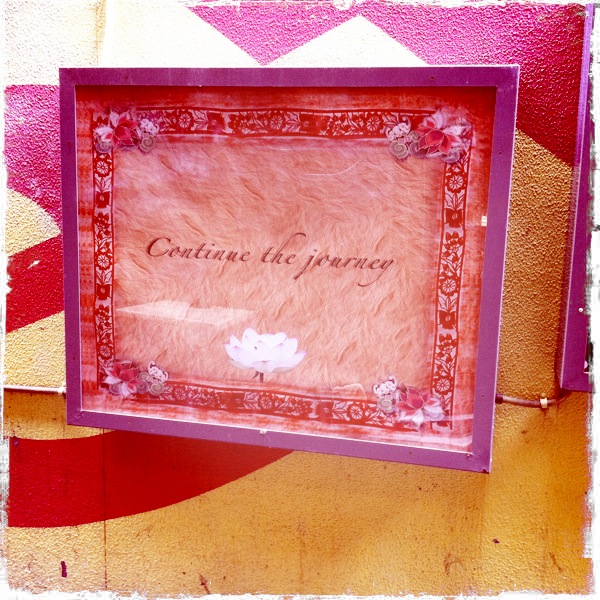
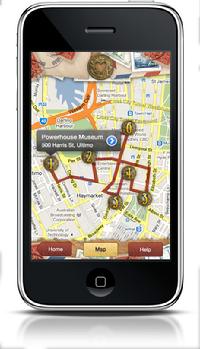
China Heart is a partnership with dLux Media Arts , the Powerhouse Museum, Gallery 4A, The Project Factory writer/director/producer Annette Shun Wah & sound design Kingston Sound – China Heart merges video storytelling, game play and historical re-enactments with real-life art installation and performance. Participants unravel a mystery, solving video and real life clues while following a walking tour through significant locations in Sydney’s Chinatown guided by the application’s GPS technology. China Heart is multi-platform and can be experienced via Androids, iPhones, some Nokias and web. China Heart is both a love story and a mystery — but it also uses an innovative interface to rediscover the experiences and history of Chinese Australian families, and particularly women, in the process of finding a home in Sydney. China Heart ran through Chinese New Year festival and was an Installation at the Powerhouse Museum, in addition the site of the old Trocadero in Albion Lane, and the Chinese Gardens, Sydney. Funded through Screen Australia and the New South Wales Film & Television Office. CHINA HEART dLux media arts Media Release
CHINA HEART iPhone APP: website: locative drama & installation on the site of the old Trocadero in Albion Lane, Sydney. Tatiana Pentes &Geoffrey Weary images.
Tatiana Pentes’ participation includes brand logo design, graphic interface design, look & feel of iPhone app, visual research, and editing & digital effects for the moving image & sound sequences.
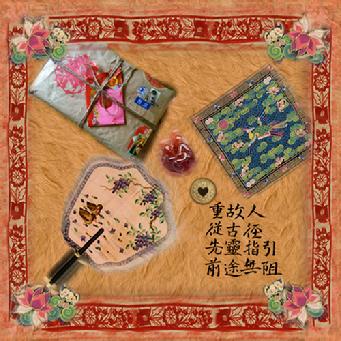
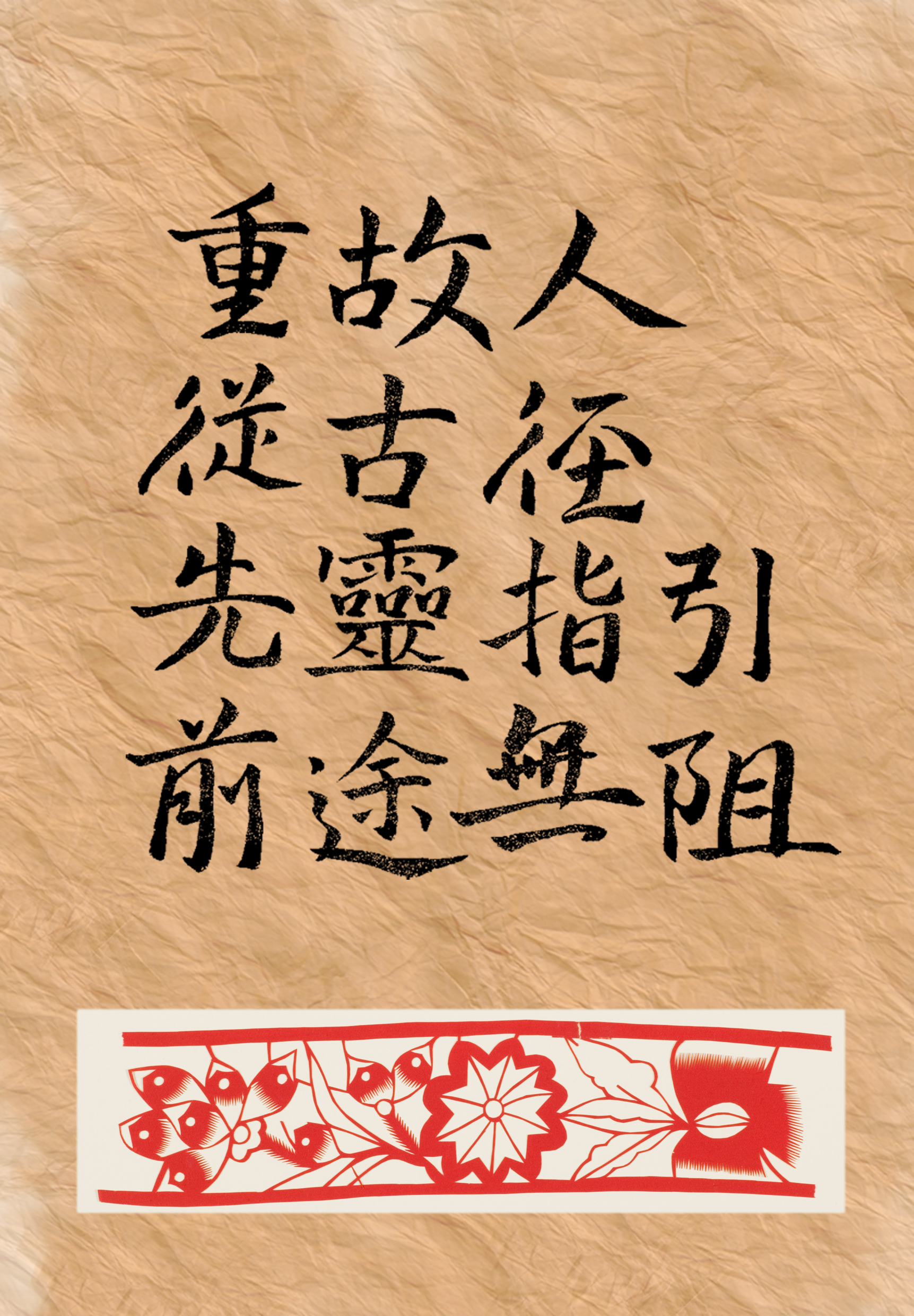
The objects from China: poster design by Tatiana Pentes
A love story, a puzzle and a challenge
Lian is a young woman whose plans to marry are stalled when she receives a mysterious engagement present with a strange message. Will she ever be able to marry her beloved David?
Players help Lian solve the puzzle of her family’s past and her cultural history guided by dramatic clues, oral histories and historic re-enactments downloaded on their own mobile phones so her wedding can take place as planned
Tatiana Pentes, WORSHIP SCULPTURE DANCE, Master of Art (Media Arts), CoFa, UNSW, 1995 [download paper]
Figure 1 Digital montage from A Few Small Snaps digital film artwork by Tatiana Pentes
ABSTRACT
This study documents the production of a set of digital film artworks installed in the College of Fine Arts gallery as the culmination of the Master of Art (Film, Video, Sound, and Computing), Media Arts. The digital film artworks are comprised of : (i) Worship Sculpture Dance: Odissi : Movements in Stone, the imaging an ancient devotional classical Indian dance form Odissi, from the state of Orissa, India; (ii) Zang Tumb Tumb 1, inspired by the Futurist sound poetry of Filippo Tommaso Marinetti, and the Luigi Russolo and The Art of Noise; (iii) A Few Small Snaps, the digital animation of a series of autobiographical self-portraits stimulated by a study of the Mexican self-portrait painting of Frida Kahlo; and (iv) Strange Cities2 an interactive CD-Rom new media script. Strange Cities script (writing) has been included to the Worship Sculpture Dance study as blueprint for potential future research and development. The aim of this creative research has been to focus on new technology as a contribution to a questioning of traditional (analogue) modes of art production.
The approach has been to explore & image traditional classical Indian forms of representation (dance, choreography, & music) and to re-interpret and translate these ancient forms as a new form of engagement. At the same time, the objective of this creative research has been interrogate transforming notions of the filmic, televisual, radio(audio)phonic, sonic and the (digital) computer medium, and to investigate questions of authorship and to challenge the uniqueness of the art object. This creative work is the outcome of conceptual and art historical research, focusing on the potential of an articulation of the philosophical, historical, cultural, formal and spiritual in a digital (computer) landscape.
Technological and Conceptual Framework
These digital films that have been produced and installed in the gallery context: (i) Odissi : Movements in Stone; (ii) Zang Tumb Tumb; and (iii) A Few Small Snaps, for the Worship Sculpture Dance forming a major creative artwork exhibition.
The objective of this creative research has been to question traditional (analogue) modes of art production, and the approach has been to explore & image avant garde European sound poetry, self-portraiture and traditional classical Indian sanskrit forms (dance, choreography, and music culture) and to re-interpret and translate these (analogue) forms (using a new stylus, pen & glue-stick) and to produce a critical engagement with these representations of Other. Simultaneously, the objective has been to interrogate transforming notions of the filmic, televisual, videographic radio(audio)phonic, sonic and moving image (animation) in the (digital) computer environment; to investigate notions of ‘self’ in a cross-cultural environment; to question the Western concept of authorship and to challenge the uniqueness of the art object.
These digital film artworks have been generated in the new multi-media environment of the computer. The installation of these digital films in the gallery context has provided the context for social interaction and engagment with the artworks in the form of an exhibition. The artworks have been produced using Macintosh computer software and hardware, and the following
software digital imaging and editing programs.
Worship: Sculpture: Dance: a digital film by Tatiana Pentes: special thanks Geoffrey Weary
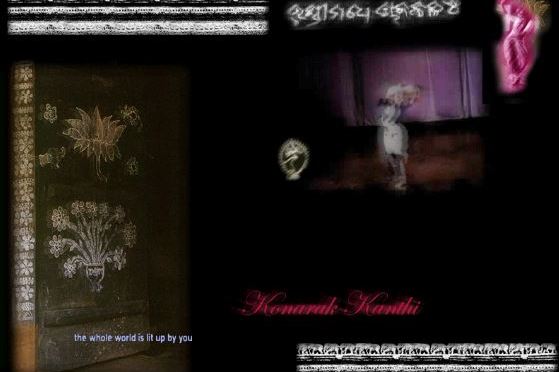
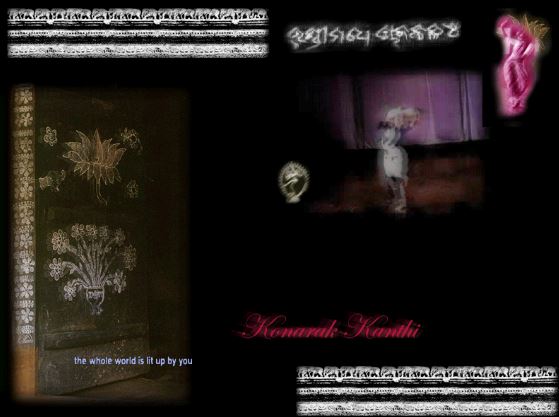
Image 2. Digital film still Chitritta Mukerjee, Odissi Dance Company performs Konarak Kanthi at The Performance Space, Sydney 1993, by Tatiana Pentes
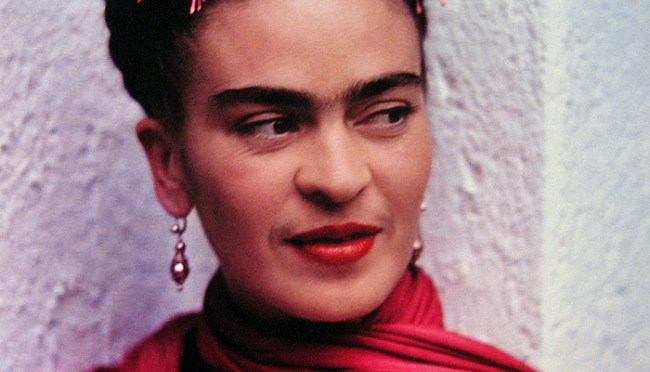
The articulation of ‘self’, ‘identity’ and the creation of an innovative feminine vocabulary in the self-portrait paintings of Frida Kahlo.
A dissertation submitted in fulfillment of the requirements of the Master of Letters (Art History & Theory/ Gender Studies), University of Sydney, 1998 (with Merit), book published VDM Verlag Germany, 2009. [download book Sydney eScholarship Repository]
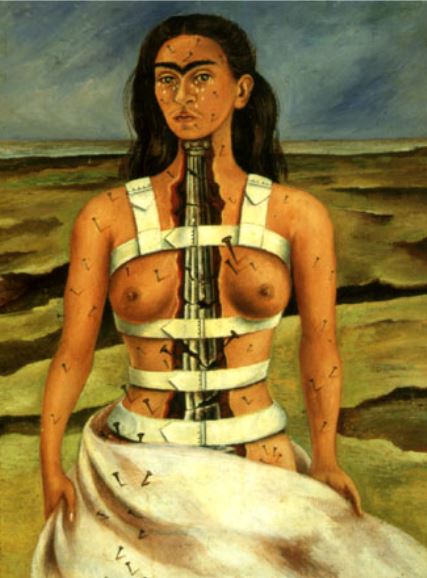
Frida Kahlo, The Broken Column (1944), oil on tin, Source: Herrera, Hayden, Frida : A Biography, Harper and Row, New York, 1983.
Feet what do I need them for
If I have wings to fly. 1953
Frida Kahlo’s Diary 1
Abstract: The Self-Portraits of FRIDA KAHLO
This book examines the self-portraits of Frida Kahlo and explores the way in which they articulate a ‘self’ and ‘identity’ through creating an innovative feminine vocabulary. The aim of this creative research is to explore the way in which Frida Kahlo represented her sexual subjectivity in the body of self-portraits she produced in her short life time. The self-portraits, some of which were produced in a state of severe physical disability and chronic illness, were also created in the shadow of her famous partner- socialist Mexican muralist/ revolutionary Diego Rivera. An examination of the significant body of self-portrait paintings produced by Frida Kahlo, informed by her personal letters, poems, and photographs, broadens the conventional definitions of subjective self beyond the generic patterns of autobiographical narrative, characteristic of an inherently masculine Western ‘self’. In Kahlo’s self-portraits the representation of the urban Mexican proletarian woman-child draws stylistically from the domain of European self-portraiture, early studio photographic portraiture, and the biographical Mexican Catholic retablo art, with its indebtedness to the ancient Aztec Indian
symbology of self.
The Impulse to Represent the Self: Narcissus
The first image was a portrait. In classical mythology, a lovely youth named Narcissus lay beside a pool gazing in adoration of his own reflection…In the Bible St Veronica compassionately pressed a cloth against Christ’s face as he stumbled to Calvary, and found His true image miraculously printed on the material…St Luke became a painter because, having experienced a vision of the Virgin Mary, he was inspired to produce a faithful portrait of her. 2 The self-portraits of Frida Kahlo significantly open up a new horizon in twentieth century painting. The works, created in Mexico in the 1930’s and 1940’s intersect with and extend the tradition of self-portraiture in the West. Contemporary modernist Mexican concerns to conserve, celebrate, and resurrect indigenous Mexican Indian culture were likened to the classical re-discovery of Greco-Roman antiquity in Renaissance Art. The portrait genre existed in Western antiquity and the early Christian world in the form of statues, busts, coins, sarcophagi and wall paintings. 3 The re-discovery of portraiture has been considered a definitive feature of the Renaissance, as exemplified by the artist Albrecht Durer’s project to represent the self. Durer fashions his 1500 Self-Portrait as an emblem of the powers of the individual creator, with the visual allusion to the vera icon of Christ.
“ Durer mythicises the identity between image and maker …endowing his likeness with the “omnivoyance” of a holy icon, he celebrates himself as a universal subject, whose all-seeing gaze is subject to none.” 4
Strikingly, there are parallels with Kahlo’s own impulse to represent the self in a period of Mexican history that has been termed the Mexican “Renaissance”. The legacy of Durer in Kahlo’s art is manifest in the close analogy between (i) bodies and texts, (ii) the artist’s self-portrait and the holy image (in the case of Durer, the body of Christ); and (iii) the Renaissance painter’s ascent from craftsman to artist, celebrating the artist’s art as the vera icon of personal skill. The Renaissance humanist notion of Man as created in the image of God is envisioned in Durer’s idealised 1500 Self-Portrait, where he is both created in the image of God and through artistic production creates as God. Kahlo’s repeated imaging of her incomplete barren body, a suffering and wounded body, places the woman-child at the centre of the universe, as universal all-seeing subject, yet corrupted and incomplete, as in Durer’s later self-portraits. Kahlo’s self-portrait works such as The Broken Column (1944); The Wounded Deer (1946); and The Two Frida’s (1939), recall the representation of the body in pain in Durer’s Self-Portrait as Man of Sorrows and Self-Portrait of the Sick Durer (a. 1512). In these works there is no illusory sense of self mastery in depictions of the wounded and incomplete body.
A shadow flickers across the history of the self-portrait, from Durer’s art in the Renaissance to twentieth century modernism – the original founding myth, the desire for self knowledge and the Fall. Transcending the Biblical manifestation of this myth and at the heart of the desire to regain the paradise lost of immortality is ever-present tyranny of the flesh – Death. Durer analogises his body and self in his self-portraits to the divine emblem of Christ, whose ability to transfigure Death in the Resurrection image and his eternal life, is reiterated in Kahlo’s self- portrait’s which iconocise her suffering body, expressing the interior landscape of the artist, and a psychological space of sensation, emotion, and memory.While these qualities are present in traditional masculine self-portraits, in Kahlo’s self-portrait work it is perhaps for the first time that Western painting has represented the specificity of feminine sexual subjectivity.
Photographic Portraiture
Frida Kahlo’s Jewish/German immigrant father Guillermo Kahlo was introduced to photography by his second wife (Frida’s Spanish/ Indian mother) Matilde Calderon de Kahlo, whose own father was a photographer. Matilde encouraged Guillermo to take up her father’s profession. This resulted in Guillermo Kahlo’s first major Commission – by the Secretary of the Treasurer under dictator Porfirio Diaz – to record Mexico’s architectural heritage for the 1910 celebration of the centennial of Mexican Independence. This won Guillermo the accolade of “first official photographer of Mexico’s cultural patrimony”. 5
Modern photographic portraiture had a profound influence on Kahlo’s self-portraits, which she often used as the basis of her paintings. In the work My Grandparents, My Parents, and I (1936) there is visual evidence to suggest that the portraits of her parents are directly based on their wedding photograph. 6
This highlights the legacy of the recent photographic medium upon modern painting, a medium with a tradition spanning centuries. As Roland Barthes writing on photography articulates… ” Painting can feign reality without having seen it. Discourse has signs which have referents… Contrary to these imitations, in Photography I can never deny that a thing has been there. 7
The self-portraits represent Kahlo’s reality, like the folk retablos in which the village artisan pins objects from the accident to the votive offering (a victims hair, samples of a vehicles wreckage), she symbolically rather than physically incorporates traces of imaginary and material objects. In all the roughly fifty five self-portraits produced the lens is turned back upon the viewer who is forced to apprehend the dominating subjective gaze of the model Kahlo, thus the surveyor becomes surveyed.
2. The Bus Accident, “Assassinated by Life”
Figure 2. Frida’s drawing of her accident in Herrera, Hayden, Frida: A Biography of Frida Kahlo, Harper and Row, New York, 1983, plate 10
Central to the Frida Kahlo narrative of self is a tragic bus accident, the injuries incurred of which she never physically or emotionally recovered. Indeed the physical injuries sustained in the accident when she was eighteen
years old prevented her ability to hold a pregnancy, and in later years, of being able to walk. Kahlo remembered the bus accident on the afternoon of 17 September, 1925: The accident took place on a corner in front of the San Juan market exactly in front. The streetcar went slowly, but our bus driver was a very nervous young man. When the trolley car went around the corner the bus was pushed against the wall…It is a lie that one is aware of the crash, a lie that one cries. In me there were no tears. The crash bounced us forward and a handrail pierced me the way a sword pierces a bull… 8 Frida’s lover Alejandro Gomez Arias described her situation:…Something strange had happened. Frida was totally nude. The collision had unfastened her clothes. Someone on the bus, probably a painter had been carrying a packet of powdered gold. This package broke, and the gold fell all over the bleeding body of Frida…and then I noticed with horror that Frida had a piece ofn iron in her body.” …They thought she would die on the operating table… The steel handrail had literally skewered her body at the level of the abdomen; entering her left side…“I lost my virginity”, she said. 9
The images of suffering, wounds, loss, grief, and barrenness appearing in much of her work could be derived from this fateful accident, an event scarring her body for life. The tears that she claims she never shed on that day seem to be endlessly reproduced in her pictures. The pain that she suffered throughout her short lifespan necessitated the long term and perpetual use of pain-killers and morphine. Indeed, all medical evidence pointed towards this substance as the cause of Kahlo’s suicide 13 July 1954. 10
1 Kahlo, Frida,The Diary of Frida Kahlo, Bloomsbury, London, 1995, p134.
2 Woodall, Joanna (Ed), Portraiture: Facing the Subject, Manchester University Press, New York, 1997, p1. (via the translation of Arabic texts into Latin)
3 Woodall, Joanna (Ed),op cit p1.
4 Koerner, Joseph Leo, The Moment of Self-Portraiture in German Renaissance Art, The University of ChicagoPress, London and Chicago, 1993, p242.
5 Herrera, Hayden, Frida: A Biography of Frida Kahlo, Harper and Row, New York, 1983, p5.
6 Herrera, Hayden, op cit p8.
7 Barthes, Roland, Camera Lucida, Flamingo, Great Britain, 1980, p76. [my italics]8 Herrera, Hayden, op cit3, p48.
8 Herrera, Hayden,op cit p48.
9 Herrera, Hayden,op cit p49.
10 Kahlo, Frida, The Diary of Frida Kahlo, Bloomsbury, London, 1995, p134.
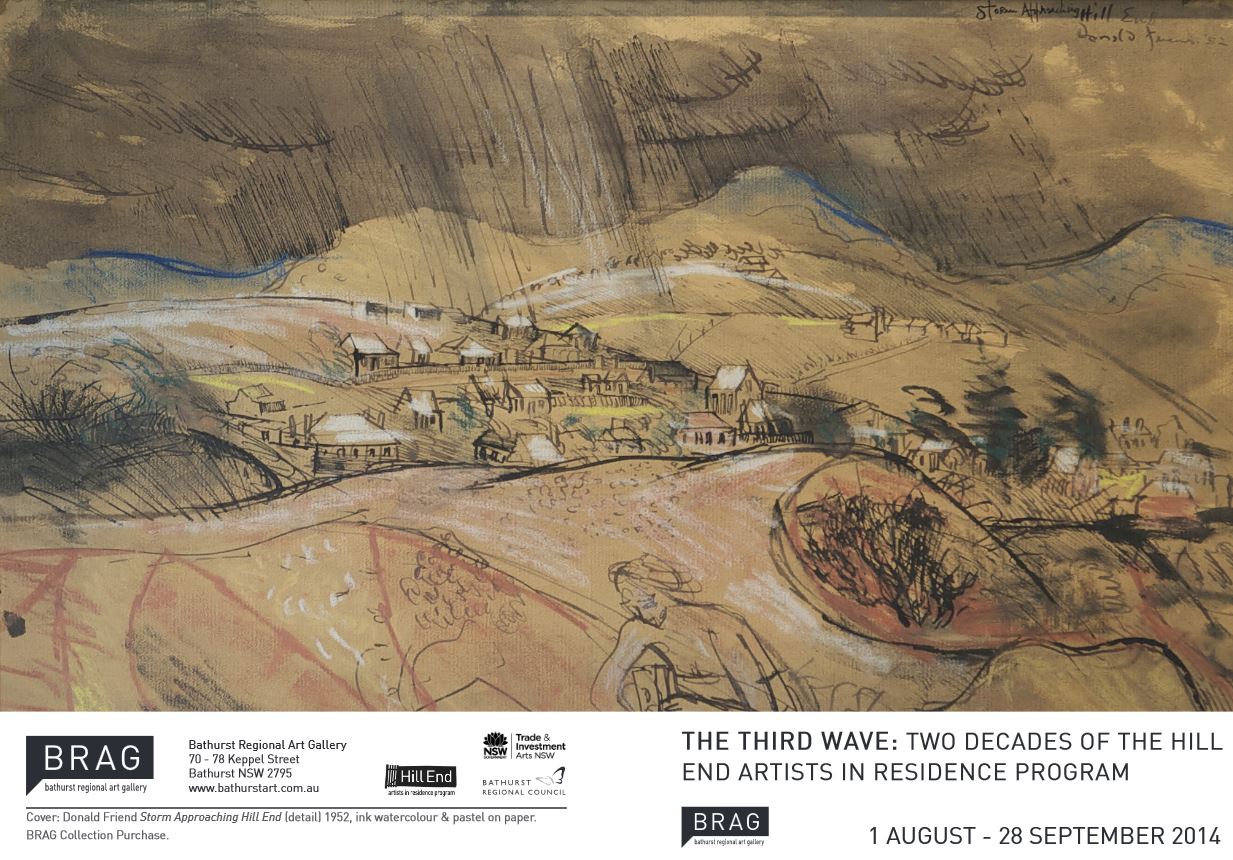
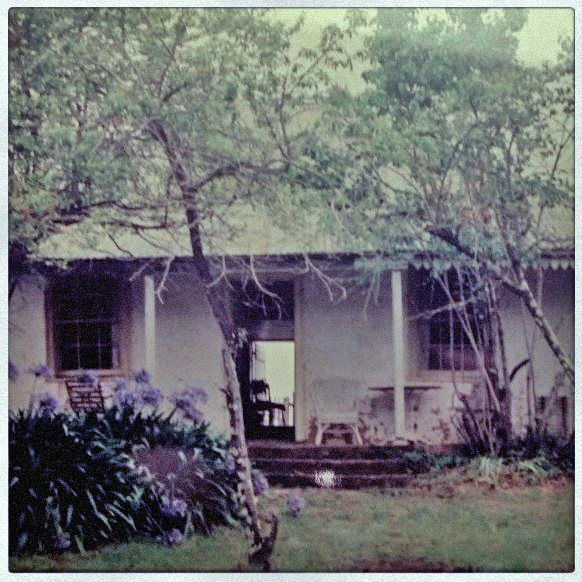
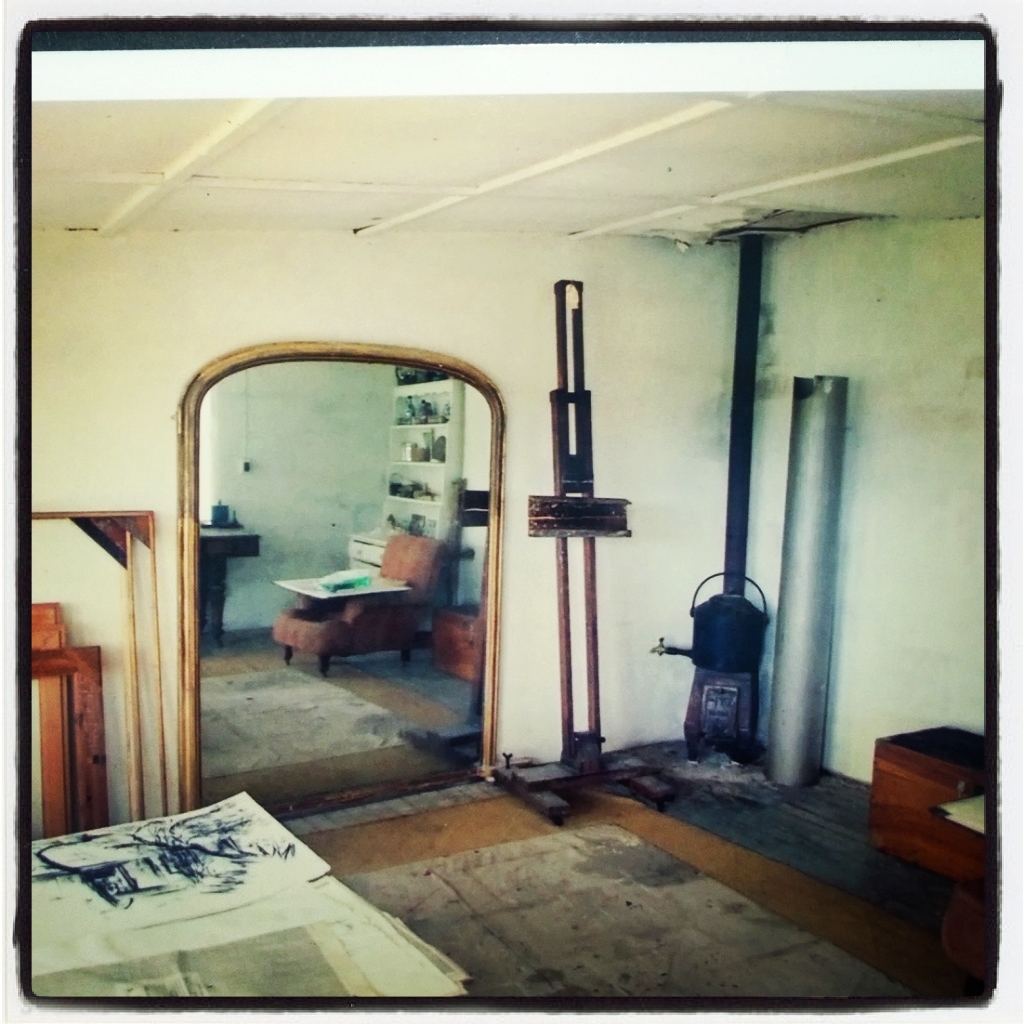
“…landscape architect and film-maker, Gavin Wilson, was researching the artistic heritage of Hill End and the region for his 1995 exhibition The Artists of Hill End: Art, Life and Landscape for the Art Gallery of NSW. Aware of Bellette’s bequest, and withthe support of Bathurst Regional Art Gallery, Evans Shire Council and the National Parks and Wildlife Service, Wilson invited a third wave of artists to respond to Hill End. Contemporary artists including Richard Goodwin, Anton James, Tom Spence, Wendy Sharpe, Peter Wright, Geoff Weary, Peter Kingston, Mandy Barrett, Emma Walker and James Rogers participated in a series of pilot residencies at Haefligers Cottage in 1994 and 1995. Works from these residencies were exhibited alongside historic works in The Artists of Hill End exhibition at the Art Gallery of NSW.
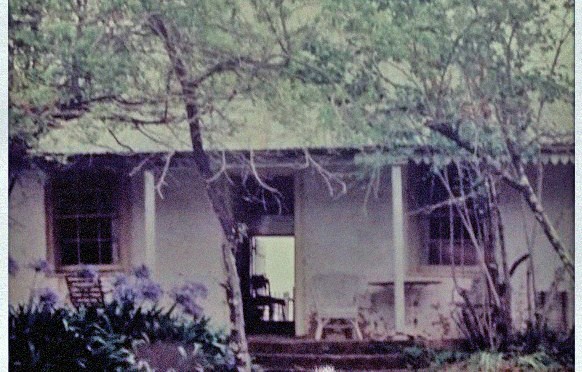
“The historic Haefliger Cottage at Hill End and the spectacular surrounding scenery are prividing an ideal location for artist in residency, Geoffrey Weary, who is finding it a welcome respite from Sydney. Mr Weary, who describes himself as a video artists also working with more ‘traditional’ mediums, is the latest participant….Hill End artist in resident, Geoffrey Weary and Tatiana Pentes who are, living and working with the spirit of Paul Haefliger and Jean Bellette in the famous Haefligger Cottage…The house has all their things still intact, the cottage is pretty much as they left it…” in Inspiration For Visiting Artist: Hill End Artist Residency: Geoffrey Weary: Bathurst Regional Art Gallery Advocate, 24 January 1995.
Photograph: Geoffrey Weary & Tatiana Pentes
The foundations of the Hill End Artists in Residence Program were laid. In 1999, under the auspices of Bathurst City Council and Bathurst Regional Art Gallery, the Program was officially launched. In 2002 Murrays Cottage was refurbished with the assistance of the NSW Ministry for the Arts and added as a new studio residence alongside Haefligers Cottage in 2003.Since 1994, a total of 283 residencies have been awarded to artists from a diverse range of disciplines including painting, drawing, sculpture, photography, ceramics, textiles, new media, writing, animation, film, sound and performance. Over 150 works by 70 of the artists participating in the Program have entered the collection through donation and purchase. The selection presented here represents just a small portion of the work produced in response to the landscape, history and heritage of Hill End.”
“Celebrating 20 years of the Hill End Artists in Residence Program,works in this exhibition are drawn entirely from BRAG’s permanent collection. Featured artists include Jean Bellette, Ray Crooke, Russell Drysdale, Donald Friend, Ben Quilty, David Strachan, Rosemary Valadon, Greg Weight and Nicole Welch. A Bathurst Regional Art Gallery exhibition.”
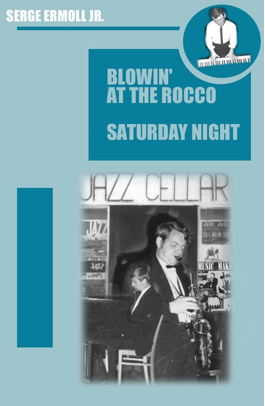
Blowin At The Rocco: Photography: Tatiana Pentes & Geoffrey Weary
An Australian Jazz Interactive Treatment for Broadband funded by Screen Australia (AFC/ Screen Australia)
New Media Writer/Director TATIANA PENTES
Photography/ Cinematography GEOFFREY WEARY
Original Jazz Music SERGEI ERMOLAEFF
Dramaturg Prof BRUCE JOHNSON
1. STORY OUTLINE
Expermimental Online Documentary
BLOWIN’ AT THE ROCCO: Saturday Night is an experimental interactive work that seeks to exploit and enhance the creative potentials of digitally produced music, sound, image and text relationships in an interactive online Broadband environment. In this context, the delivery of interactive work online provides an innovative approach to the conventional narrative & documentary forms. In BLOWIN’ AT THE ROCCO: Saturday Night, the participant/player will experience new possibilities produced through the slippage across a series of interactive screen surfaces, engaging the participant/player in a spatial relationship with the program. The participant/player discovers the origins of Sydney Jazz milieu through the eyes of Serge Ermoll Jr. (Jazz Pianist/ Private Investigator) during, smoky sophisticated bohemian, Sydney circa 1968. In addition the user is revealed eight tracks of original Australian jazz, recorded live at the El Rocco Jazz Cellar, 1968.
2.1 COPYRIGHT INFORMATION
Serge Ermoll Jr (Sergei Ermollaeff) owns the copyright on all original compositions and recordings of his music. The production Budget would incorporate research fees and broadcast fees for the use of all other archival image, sound, text materials.
3. THEMES OF THE PROJECT: Pathway Elements BLOWIN’ AT THE ROCCO: Saturday Night is composed of eight storylines, a series of interactive immersive screen environments, characterising the narrative structure of the program. The pathways are named by eight musical movements recorded by Serge Ermoll Jr (Sergei Ermollaeff). The recurrence of musical allusion and composition (a) in the form of musical iconography and (b) in the rendering of musical score in sonic fragments – will resolve in each storyline as the realisation of these eight jazz tracks. From the surface of the computer screen each story unfolds inside a series of frames, inspired by (Black American) Blue Note modern jazz album covers and early Russian constructivist assemblages. The jazz tracks name each storyline expressively, evoking the emotive state of the compositions and shaping the narrative structure of the pathways.
OVERVIEW Story (Musical) Tracks Opening Titles
Each story pathway is triggered by an visual icon in the music cellar. The Detective foregrounds each pathway with an image/text sound transition
Pathway (1) Movement # 1 – VALSE Kings Cross & Bohemian Sydney
Pathway icon: montage of Alamein fountain & a trumpet
Visual trigger: : movement across a cappuccino coffee cup
This story conjures the memories of the musicians, music entrepreneurs, and patrons. The pathway is inspired by written texts by Bruce Johnson, John Clare, Kenneth Slessor, statements by jazz musicians remembering the milieu, and news stories reporting on the phenomena of the jazz cellar.
Pathway (2) Movement # 2 – FREE KATA Crest of freedom
Pathway icon: montage of Free Kata group
Visual trigger: movement across a Karate figure
This story explores the FREE KATA jazz ensemble of the 1970s, evolving from the seeds of El Rocco jazz culture. This pathway is composed of photographic portraits of the musicians, album artwork, record labels, music publicity material, text from news article coverage of the ensemble, and locates the music in the context of images of urban Sydney in this period and references the larger jazz picture.
Pathway (3) Movement # 3 – JUNGLE JUICE International Influences on Australian Jazz 1968
Pathway icon: montage of Uluru & Wattle matches
Visual trigger: movement across a portrait of a soldier
This storyline contextualises Australian Jazz & the era in archival moments that iconicise the sixties and world events shaping the Australian spirit: (i) the anti-Vietnam war protests (ii) the assassination of Martin Luther King Jr, (iii) Robert Kennedy’s campaign against Lyndon Johnson and the Vietnam war. The imagery evokes the generational complexity & tension that produced the fresh and vital early Australian jazz. This pathway is composed of original photographs, digital reconstructions, news articles, archival photographs, digitized moving image and sound.
Pathway (4) Movement # 4 – CLOUDS Australia 1968 – Iconic cultural imagery
Pathway icon: montage of hands on a keyboard (piano)
Visual trigger: a framed portrait of a blonde tourist in the red centre
This story evokes Sydney circa 1968, and juxtaposes the Eastern seaboard city with imagery of the Australian red center, (white tourists) a family visit to Uluru in a light plane, in the context of political movements (the anti-Vietnam war protests – students) and populist imagery – Shrimpton wears the legendary mini-skirt. This pathway is composed of original photographs, digital reconstructions, news articles, archival photographs, digitized moving image and sound.
Pathway (5) Movement # 5 – PASSION DANCE Serge Jr. & Stamatia meet on the Patris Ship
Pathway icon: montage of young Serge & wife Matina)
Visual trigger – black & white portrait of an emigre couple on the deck of a Greek ship
This story is personal and exposes in a series of black & white photographs and interviews two immigrant Australians broadening their horizons and making the journey back to Europe.
Pathway (6) Movement # 6 – RASPUTIN Diasporic Music Memories
Pathway icon: black & white montage of parents
Visual trigger –movement across a portrait of Rasputin
This story charts the movement of Serge Ermoll’s forbearer’s diaspora from Russia in revolution through to Harbin, Manchuria and then international capital of the East – Shanghai, China where his father worked as a jazz bandleader. Serge and his Russian parents then immigrate to Australia with assistance from the International Refugee Organisation. Serge Jr reflects on the influence of his China born father on his contemporary jazz endeavors in Australia. This pathway is composed of dramatized interviews/statements & original photographs.
Pathway (7) Movement # 7 – FALLEN FLOWERS Private detective – Sydney underworld
Pathway icon: montage of a dancing girl over Kings Cross
Visual trigger –movement across a portrait of a dancing girl
This story envisions Kings Cross and Sydney, 1968. The participant/player enters into the space of clubs and strip joints, café culture at night. The participant/player is provoked to uncover a criminal situation, revealed through the character of the detective (Serge Ermoll Jr/ jazz pianist) in a series of reconstructed & simulated photographic & filmic sequences that expose Sydney’s underworld.
Pathway (8) Movement # 8 – SERGERY
Pathway icon: young Serge with band on piano
Visual trigger –movement across a keyboard
Blowin’ At the Rocco 1968 – Serge Ermoll Jr Quintet
Visual trigger; movement across the keys of the piano
This story is a temporal montage of Serge Ermoll Jr music career from his emergence as a musician to 1968. The pathway is composed of news material – newsprint articles, magazine reviews
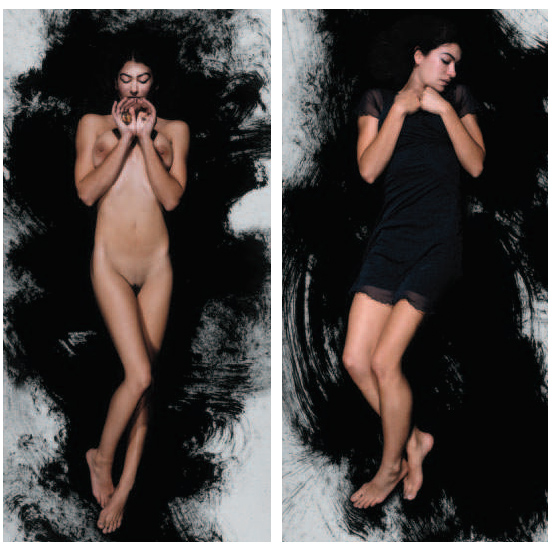
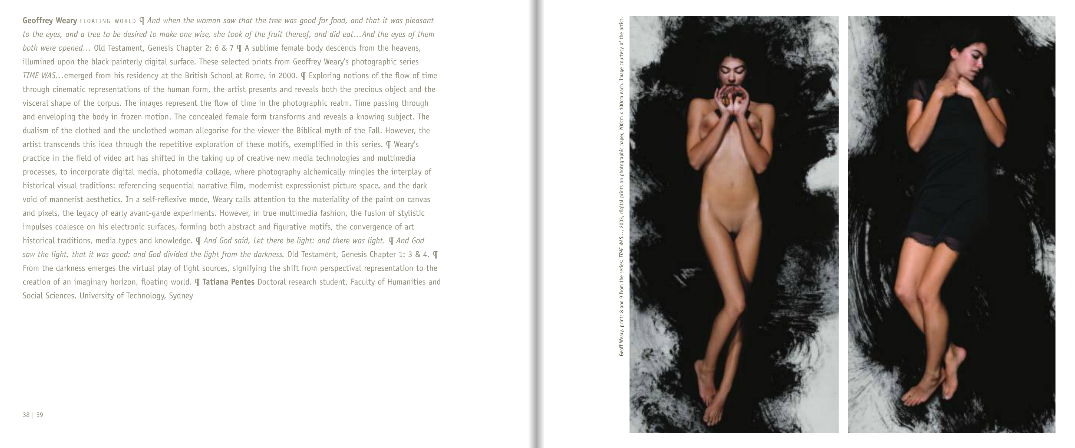
MONASH Catalogues: http://www.artdes.monash.edu.au/gallery/catalogues.php# Geoff Weary, prints 8 and 9 from the series: TIME WAS…, 2003, digital prints on photographic paper, 200cm x 100cm each. Image courtesy of the artist
And when the woman saw that the tree was good for food, and that it was pleasant to the eyes, and a tree to be desired to make one wise, she took of the fruit thereof, and did eat…And the eyes of them both were opened… Old Testament, Genesis Chapter 2: 6 & 7
A sublime female body descends from the heavens, illumined upon the black painterly digital surface. These selected prints from Geoffrey Weary’s photographic series
TIME WAS…emerged from his residency at the British School at Rome, in 2000.
Exploring notions of the flow of time through cinematic representations of the human form, the artist presents and reveals both the precious object and the visceral shape of the corpus. The images represent the flow of time in the photographic realm. Time passing through and enveloping the body in frozen motion. The concealed female form transforms and reveals a knowing subject. The dualism of the clothed and the unclothed woman allegorise for the viewer the Biblical myth of the Fall. However, the artist transcends this idea through the repetitive exploration of these motifs, exemplified in this series.
Weary’s practice in the field of video art has shifted in the taking up of creative new media technologies and multimedia processes, to incorporate digital media, photomedia collage, where photography alchemically mingles the interplay of historical visual traditions: referencing sequential narrative film, modernist expressionist picture space, and the dark void of mannerist aesthetics. In a self-reflexive mode, Weary calls attention to the materiality of the paint on canvas
and pixels, the legacy of early avant-garde experiments. However, in true multimedia fashion, the fusion of stylistic impulses coalesce on his electronic surfaces, forming both abstract and figurative motifs, the convergence of art historical traditions, media types and knowledge.
And God said, Let there be light: and there was light.
And God saw the light, that it was good: and God divided the light from the darkness. Old Testament, Genesis Chapter 1: 3 & 4.
From the darkness emerges the virtual play of light sources, signifying the shift from perspectival representation to the creation of an imaginary horizon, floating world.
Tatiana Pentes Doctor of Creative Arts (Digital Media) Communications, University of Technology, Sydney, 2006.
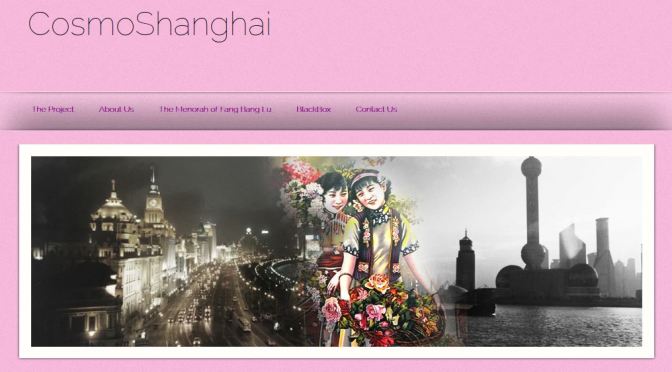
CosmoShanghai is a growing online portal that launches digital research projects exploring Shanghai’s re-emergence as the cosmopolitan metropolis from its glorified memorial status in the 1930s – part entrepot, part settlement, part escape- that finds expression in the multiple contradictions of the struggle over the preservation and development of Hongkou and other districts of the cosmopolis.
In one online documentary projects The Menorah of Fang Bang Lu – Dee Lay Jao Police district, becomes the focus for the local and international and diasporic forces seeking to define what the Jewish heritage of the city means in the current era. Set against an examination of a number of preservation and renewal zones, current Chinese modernity encompasses an historicised cosmopolitanism that accounts for the variegated social histories of the city and its global positioning as part of the New China on the one hand, and as a city state on the other. However to be effective this will require cross-cultural collaboration over the meanings of cities’ pasts and futures.
In another interactive BlackBox: Painting a Digital Picture of Documented Memory the artwork evolves from an imaginary electronic landscape that can be uniquely explored/ played. The artwork/ game is a search for the protagonists hybrid cultural identity. This is mirrored in the exploration of random, fragmentary and non-linear experiences, where the protagonist Nina’s discovery of musical forms reveal her cultural/ spiritual origins. As a musical composer arranges notes, melodies and harmonies, and sections of instruments, so too, the multimedia producer designs a ensemble of audio-visual fragments to be navigated. Dance also becomes a driving metaphor, analogous to the players movement in and through these passages of image/ sound/ text and as a movement between theories and ideas explored in the content of the program. The central concern is to playfully reverse, obscure, distort the look of the dominating/colonialist gaze, in the production of an interactive game and allow the girl to picture herself.
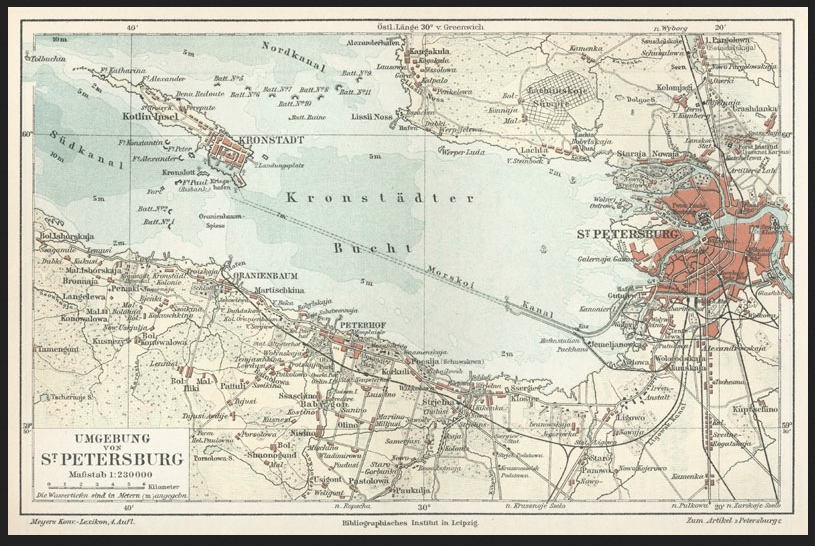
Lara O’Reilly’s ABSENCE PRESENCE installation on the Kotlin Island, St Petersburg
site specific installation 2007, International Body Navigation Festival, St Petersburg, Russia http://www.bodynavigation.ru
Text by Tatiana Pentes
“Anyone who wants can look at my films as into a mirror, in which he will see himself”
Andrei Tarkovsky
Lara O’Reilly’s ABSENCE: PRESENCE installation Kronstadt, Russia
Documentary photo Lara O’Reilly’s ABSENCE PRESENCE installation on the Kotlin Island (2007)
Lara O’Reilly’s ABSENCE PRESENCE installation on the Kotlin Island, an abandoned built and natural environment is a doorway into present and the past, and between the visible and the invisible. Upon encountering site-specific multimedia performance and moving image installation, a dialogue between the psychological states of abandonment (a remoteness) and seduction (an intimacy) is opened inside and outside the architectural spaces – mirroring our interaction as visitors/viewers with space and memory in a site-specific environment.
In the contemporary convergent global media environment of digital networked technology, and pastische, empty parody (mimicry), O’Reilly’s ABSENCE PRESENCE returns us to the traditional notion of “multi-media”, suggestive of the shadows reflected on the walls of Plato’s allegorical Cave. The spectacular installation of ABSENCE PRESENCE, is staged on three levels within the Chapel of the Naval Hospital Kronstadt, (built 1717), the earliest medical establishment in Russia.
Map of St Petersburg & Kotlin Island
The Russian staging follows an Australian site-specific manifestation of the performance on the abandoned industrial Cockatoo Island, Sydney Cove. O’Reilly creates for us a highly experiential and dramatic encounter, with her spatial, temporal and theatrical exploration of the rupture/suture paradox between marine and terrestrial, past and present, the outside and inside, the remote and the intimate, of seduction and abandonment, experience and the underworld. ABSENCE PRESENCE is infused with the resonance and mystery of what we feel but cannot see.
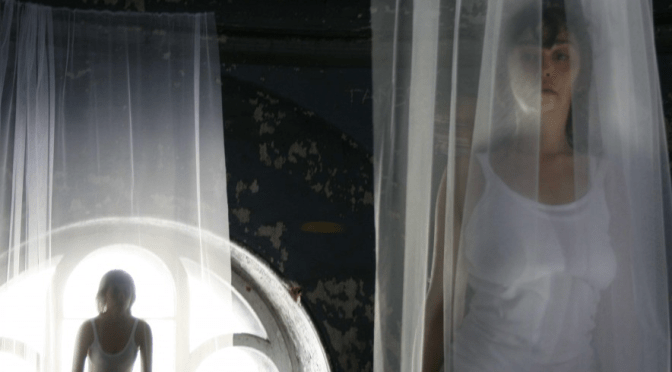
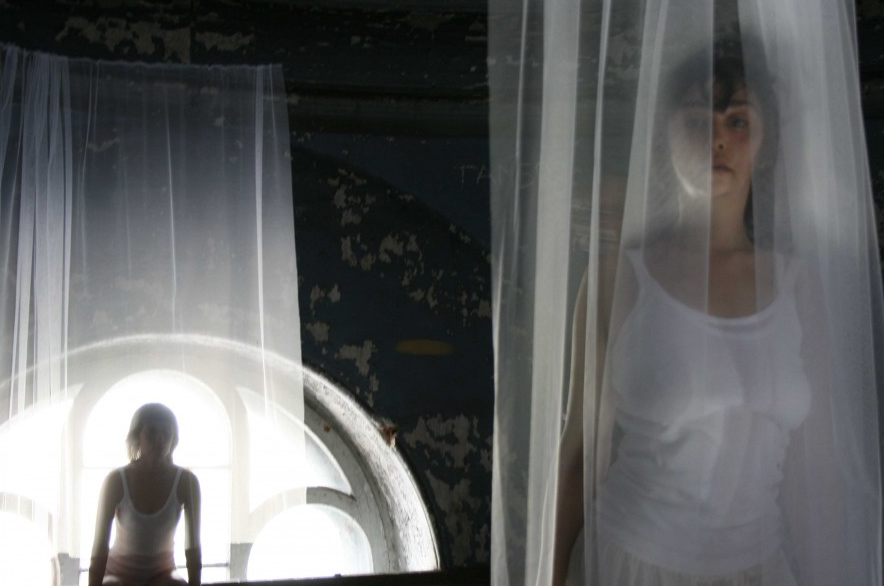
The Kronstadt work integrates real-time and the simulated (cinematic) representations of the performances/movement of the bodies of five young contemporary Russian female dancers, professionally trained in classical western ballet and Japanese Butoh dance. The filmic (technological) cinematic sequences of the woman are juxtaposed with the live performance of female forms (reminiscent of netted mermaids) suspended in cocoons from the rafters, and released to move, dance and wander. The chrysalised women are “veiled and lit in a sensuous light, conjuring emotions of sadness, loss, loneliness and reverie and yet a gentle sense of security of our own stilled existence within the incredible space where we find ourselves..on an island….”
The installation successfully plays with our notion of place, identity, communication, sexuality, the personal and the political, specifically with the cinematic and radio-phonic allusions. The haunting tones of a live music (a cello sound piece) conjure the ghosts of the past, the dispossessed, and those who have passed from this life to the next, in these spaces, the site of the tragic and violent Kronstadt Revolution of 1921, the sailors of Kronstadt staged an uprising and issued demands for free elections. The Red Army was sent in and crushed the rebellion: thousands of people were killed.
The filmic sequences are primarily performed by O’Reilly’s Russian model /dancer/muse Olya, in the locations of Konstantin Fort; the Kronstadt Cemetery; and Summer Gardens. These cinematic performances are overlaid with film sequences of the ascending movement through the interior space of the Chapel, conjuring the bodies (victims) of the revolutions that passed through.
O’Reilly transcends this confrontation with death through her cinematic mediation and documentation of the reality of this past. She does in the articulation of her feminine subjectivity through the representation of Russian performer Olya’s presence in these spaces. These dissonant montages of film footage evoke Dziga Vertov’s Kino-Eye cinema experiments “…as slow motion vision (reading thoughts in slow motion)…The Kino-Eye is conceived as “what the eye does not see”, as the microscope and the telescope of time, as telescopic camera lenses, as the X-ray eye, …cinematic images…processes capable of revealing and showing truth.” (Written 1944). In these ‘island’ experiences, the visitor/ participant must cross a psychological threshold upon entering the work, because like Eurydice’s mythic journey to the underworld, we must re-play the allegorical journey across the river styx from the mainland onto the island and into a simulated nether-world.
This cinematic imagery is projected in the first dark room of the installation, providing a threshold between the outside (real) world and the (imaginary) dance/performance work. Upon viewing the film projections, one enters through a doorway and looking into, an interior space where lived memory is a present state.
My first collision with a previous staging of the ABSENCE PRESENCE multi-media installation in a deteriorating industrial complex, located on the isolated Cockatoo Island in Sydney Cove, Australia (the indigenous Australian Aboriginal name for this island is Wa-rea-mah). I was touched by O’Reilly’s ability to deeply engage those visiting the location. The piece resonates with the dis-location of Indigenous people during the colonial period, when their island home was transformed into a convict prison for those transported across the seas from Britain. Later this place was a colonial & industrial shipping dock.
Therein lies the connective thread – through the ghosts of the displaced – between the Cockatoo Island (Australia) and Naval Hospital Kronstadt (Russia) re-enactments. My engagement with both O’Reilly’s work and the sites are complex and intertwined. As daughter of Vladimir, an Admiral in the Tsarist Russian Navy, my grandmother Xenia emigrated from St Petersburg with her mother Eugenia & two sisters during the Revolution, they never saw Vladimir again, but found refuge in Harbin, Manchuria, then Shanghai, China & later Sydney Australia. As a child I grew up with these memories and on the Balmain peninsula, my primary school opposite Cockatoo Island.
The dialectic relationship between these two island spaces (curt by sea), both scarred by waves of industrialisation (modernity), migration, military/colonial abandonment – they share a depth of history and speak to each other, as O’Reilly’s work speaks to me (the child of a Russian émigré).
In a world saturated by mass communications delivered via mobile device, cable, PDA, Internet, television, radio, and virtual experiences, ABSENCE PRESENCE grounds the visitor through the stillness of wandering through a physical space, where live performative theatrical, musical and filmic elements are apprehended in a real time spatial location. As media consumers, we can be likened to the shackled slaves mistaking the representations/shadows on the walls of Plato’s mythical Cave as reflections of a real world. The truth is always mimetic and portrays the outlines of puppets projected from the shadows of the fire – not of the Real as articulated in Plato’s philosophical Cave myth. Illuminated from their shackles those imprisoned in the Cave raise the truth of their situation and are liberated by the light of the Sun. The simile of the Cave is apt in the contemporary context, while it needs to be complicated. The Real and the Imagined have collapsed into the Virtual. One could argue that virtual engagement is a lived and real experience, whilst mediated by digital technology. Frederic Jameson’s argument that pastische, or empty parody (mimicry) is the order of the day. Thus representations, virtual reality, 3D animations, text chats, and Internet collusion’s – in traditional media terms would be considered fake, artificial, a lie…. in post-modern terms equal a real hybrid experience.
The opposition between the artificial and the natural have also collapsed in the same way. Jean Baudrillard espouses after Jameson in his texts Simulation, and Seduction, that the post-modern condition articulated in contemporary art, technology & communications have enabled new cultural forms/practises and have influenced the way in which we view our environments. In the famous words of Jacques Derrida
“…Disenchanted simulation: pornography – truer than true – the height of the simulacrum. Enchanted simulation: the trompe-l’oeil – falser than false – the secret of appearances. Neither fable story or composition, nor theatre, scene or action. The trompe-l’oeil forgets all this and bypasses it by the low-level representation of second-rate objects. The latter figure in the great composition of the time, but here they appear alone, as though the discourse on painting had been eliminated. Suddenly they no longer represent, they are no longer objects, no longer anything. They are blank, empty signs that bespeak social, religious or artistic anti-ceremony or ant representation…they describe a void, an absence, the absence of every representational hierarchy that organizes the elements of the tableau, or for that matter political order….”
The emptying out of representation of any original meaning creates the situation of the inability to comprehend the difference between the original and the copy. Which is the fake? O’Reilly’ s installation defines a lens through which perceive nature and suggests the way in which this understanding tames ‘nature’ for us. ABSENCE PRESENCE calls attention to the way in which we think, represent and conceive of ‘the natural’ as construction site. The artificial and the natural exist in a dialectical relationship to one another and the post-modern project is to create a third term outside this dialogue produces a meaning supplementary or in excess of this duality. ABSENCE PRESENCE simultaneously explores the gender/ sexual subjectivity relationship, which can be viewed through the psychoanalytic theories of Sigmund Freud (Vienna 1930s). Freud’s theory of the ‘unconscious’ and the psyche revolutionised conceptions of human behaviour and theories of human sexuality. His posthumous text “Three essays on the Theory of Sexuality” (trans. 1949) pinpoint the significance of sexual subjectivity and factors influencing the anxiety and neurosis in the individual and the cultural. The implication being that the individual repressed experiences that were intolerable and these formed an unconscious ‘well’ of experiences that come back to haunt as memories, their very repression necessitating their return, unannounced and triggered by certain signposts and expressed in slips of the tongue, psychosis, sexual subversions, creative articulations (poetry, painting, literature etc.) or escaping as dreams and un-realised wishes…but the return of that which had been repressed particularly in childhood. ABSENCE PRESENCE is like a return of that “well” of memories re-surfacing and haunting.
Lara O’Reilly’s ABSENCE PRESENCE installation on the Kotlin Island, an abandoned built and natural environment is a doorway into present and the past, and between the visible and the invisible. Upon encountering site-specific multimedia performance and moving image installation, a dialogue between the psychological states of abandonment (a remoteness) and seduction (an intimacy) is opened inside and outside the architectural spaces – mirroring our interaction as visitors/viewers with space and memory in a site-specific environment.
“The installation was intended to be a highly experiential encounter with the space and with oneself. For the viewer to experience their own sense of the space and find themselves in a world between worlds…blurred between interior and exterior realms of built and natural spaces and the interior and exterior states of mind that the performance and the sound-scape allude to….” Lara O’Reilly artist
Absence Presence:
Кронштадт, РOССИЯ
Лара О’Релли
Acknowledgement and special thanks to all who assisted me with the making of Absence Presence: Kronstadt. I am most grateful for all your support and assistance with the project
Special thanks to:
Podberjozkin Igor Vitaljevich / Подберёзкин Игорь Витальевич –
Chief of the Naval Hospital, Kronstadt
Stupar Michael Petrovich / Ступар Михаил Петрович –
Deputy Chief of the Naval Hospital, Kronstadt
Kuzhel Alexander Michailovich / Кужель Александр Михайлович – Deputy Chief of the Naval Hospital, Kronstadt and everyone from NCCA (National Centre for Contemporary Art) St Petersburg, Russia
Valeria Korotina and Rowan Ainsworth from Australia Embassy, Moscow. Lara O’Reilly’s exhibiting of ‘Absence Presence’ in Body Navigation III is supported by the Commonwealth through the Cultural Relations Discretionary Grant Program of the Department of Foreign Affairs and Trade.
Performer in film imagery:
Olga Amromy / Ольга Амромы
Editors:
Yuri Elik
Viola Vorobyova
Performers in installation:
Olga Amromy / Ольга Амромы
Tatjyana Luzai / Татьяна Лузай
Olga Ivanskaya / Ольга Иванская
Darjya Khlapova / Дарья Хлапова
Alexandra Aksjonova / Александра Аксёнова
Video memory of installation with assistance:
Viola Vorobyova and Anna Kolosova
Cellist:
Philip Gulidov
Prop Builder/ Install Team:
Ruslan Atrokhov / Руслан Атрохов
Alexander Stadnik / Александр Стандин
Ruslan Shohirev / Руслан Шохирев
Denis Dzubin / Денис Дзюбин
Catalogue text:
Tatiana Pentes
Assistance with Photographic documentation of installation:
Marina Goulyaeva with assistance Nikolay Vladimirsky
ChineseBOX
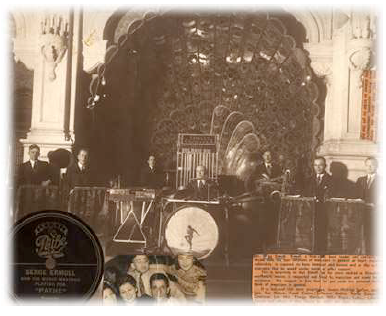
Serge Ermoll & His Music Masters, the Majestic Hotel
prior to its demolition Shanghai, CHINA, c. 1930 (image above)
This work is the transformation of a chapter my doctor of creative arts, UTS, BLACK BOX http:www.strangecities.net for peer review in a forthcoming eJournal interactive paper – the ensemble of image, sound, and textual research emerges from the ChineseBOX passage in BLACK BOX, exploring my hybrid cultural origins through discovery of the Russian jazz music culture from pre-revolutionary Shanghai and the Japanese occupation in China.
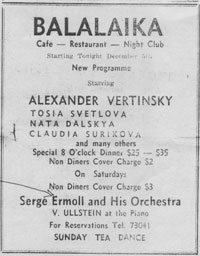
A re-examination of the documents left to me by my grandfather Sergei reveals a rich insight into the cultural milieu of the Russians in Shanghai, in particular the jazz world. Sergei wrote down every significant act that performed in the nightclubs, cabarets, and ballrooms of quasi-colonial Shanghai before his death.
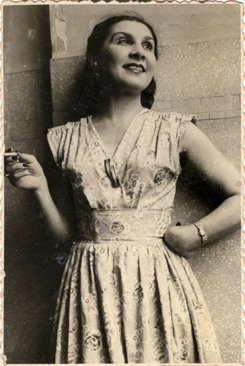
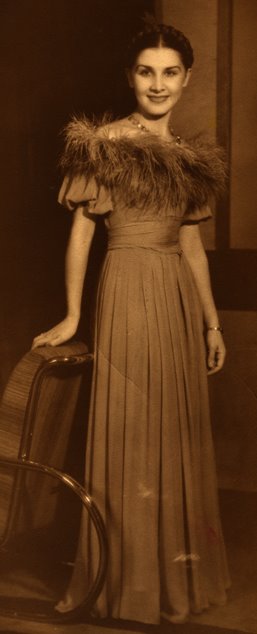
This is a portrait of my grandmother Xenia Vladimirovna Ermolaeff. Xenia was a Russian emigre in Shanghai (a singer and dancer). The portrait was taken by her husband my grandfather a Russian jazz orchestra leader Sergei (Serge) Ermolaeff circ. 1940. Serge Ermoll & His Music Masters were managed by Vaudeville Entertainments, Shanghai and enjoyed residencies at establishments in Shanghai such as The Cathay Hotel, The Paramount, Ladlows Casanova, Wagon Lits, Astor House, and the Red Rouge. He played with Whitey Smith.
In 1996-97 I had support to develop a digital media work, with funding from the Australian Film Commission (AFC), and travelled to Shanghai & Tokyo to conduct research and write a script. In search of Xenia’s Shanghai we walked the city, writing and shooting photographs/film with Geoffrey Weary. We stayed in the Cathay Hotel, Room 314, I was searching for traces of the old decadent jazz culture. We photographed the interior of the hotel, ceilings and architectural nuances. I walked on the sound stage, Level 7, where Serge had played, and many photographs were taken, the golden dragons & pheonix design haunting the interiors. Looking out of the exquisitely ornamented window panes onto the Bund and across to the Pudong district and the oriental Pearl Tower, I imagined James Ballard’s bloody descriptions of the Battle of Shanghai or Battle of Songhu the Japanese war ships in the harbour. A decade later these audiovisual fragments were shaped into a film SCENES FROM A SHANGHAI HOTEL (2007). The interactive work would ultimately be STRANGE CITIES, [Reviewed Asiaweek [http://www-cgi.cnn.com/ASIANOW/asiaweek/magazine/99/0910/shanghai.html] based on the tune composed by Alexander Vertinsky, Ira Bloch and my grandfather Serge Ermoll. Independent radio broadcaster Eurydice Aroney produced the work and Roi Huberman created the interactive sound design. This song and the lyrics, which spoke of the longing for motherland St Petersberg (Russia), encapsulated my search for origins. Later, another film score composed by the Vertinsky/Ermoll would be the signature tune in the Merchant Ivory Hollywood classic The White Countess (2005). The strange music Serge played, a mix of Russian cabaret, Chinese pop, and American jazz, I would later understand to be the treasured hybrid genre of trans-pacific contemporary music, the renaissance of which is making many a million! (1)
In my grandmother Xenia and the portraits she would show me, I saw a cosmopolitan Eastern woman of urban sophistication, paradoxically at odds with the Australian life we were surrounded by in the Sydney suburbs. Her black coiffured hair and gold jewellery provided endless fascination, she looked so different from the ladies at the local RSL. I wanted to be like her.
“The favoured past of shanghai is that of the ‘modern girl’ in a qipao, the feminine city of exquisite Russian refugees, decadent European expatriates, Chinese gangsters and marlene dietrich in Shanghai Express (dir. Joseph von Sternberg, 1932). These are clichéd character sketches of the city, but they resonate powerfully with the international imagination. Dietrich, in the person of Shanghai Lil, continues to produce affect in cinema-goers worldwide as a persona for shanghai…. if cinema has done nothing else for shanghai, it has convinced the world and the city itself that they are, simply and utterly, superior to any others. Shanghai woman is the epitome of modern China, and the image of 1930s is the enduring foundation of the magnetism of shanghai’s identity. ” (2)
Shanghai Nostalgia: Historical Memory, Community-Building, and Place-making in a late Socialist City
Pan, Tianshu. “Historical Memory, Community-Building and Place-Making in
Neighborhood Shanghai.” in Restructuring the Chinese City: Changing Society, Economy, and Space, ed. Laurence J. C. Ma and Fulong Wu, 122–37. London: Routledge 2005.
“For the first time in post-Mao Shanghai, the local people found their colonial past was no longer baggage to carry but a rich resource to be fully utilized. “Shanghai nostalgia” thus “became entangled with a (dys)utopian fervor to embrace global capital and its ideology, the appearances and normalcy of the Shanghai modern entered intellectual and commercial circulation at the standard version of historical memory” (Zhang 2000: 354). Shanghai quickly became a “re-colonized” site for various kinds of joint ventures in film production. Old buildings in the Municipal Concession and small villas in the west end were renovated in order to attract more Spielbergs and boost the tourist industry. Those sinified cafes and European restaurants that somehow managed to survive communism changed their names back to their original western names. The famous Red Mansion Coffee House, for example, was once again Chez Louis. So did the theaters, movie houses, department stores, and dance halls. The Old Man Jazz Band, who had a brief appearance in Spielberg’s movie, started to perform all year around in the Peace Hotel (Sasson House, previously owned by a famous Jewish billionaire). Colonial Shanghai rekindled collective memory and in the process of remembering, itself was re-invented. With its success in the colonial past in setting trends, finding opportunities, and witnessing miracles, Shanghai provided a somewhat “infectiously decadent, but alluring background and setting” (Dai 1997: 158) especially for those working in the film industry.”
Zhang, Xudong. 2000. “Shanghai Nostalgia: Postrevolutionary Allegories in Wang
Anyi’s Literary Production in the 1990s”, in Positions: East Asia Cultures Critique, pp. 348-387. Duke University Press.
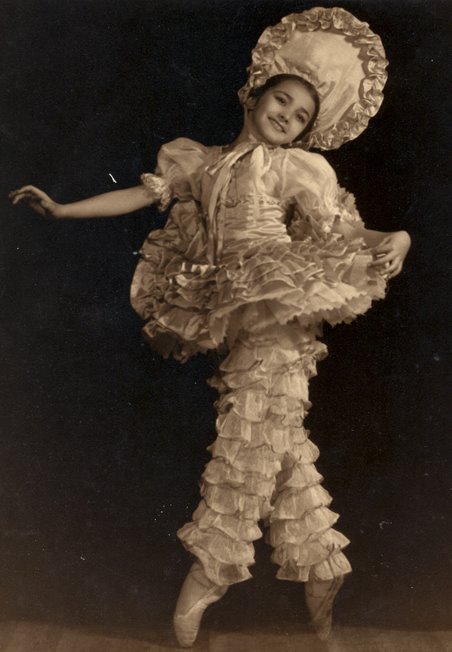
This is a portrait of Asja Mercoolova as a girl, my grandmother Xenia’s goddaughter. Xenia wanted me to be a dancer like Asja. She wanted me to be on the stage. She would ask me to sing and perform songs for her in the old fashioned lounge-room with the radio on in the background. They sent me to dance classes – modern, jazz, tap and later I studies Flamenco. I still wear Flamenco shoes every day to work (!) I grew up listening to my grandfather Sergei’s jazz. He would practise in his music room on the trumpet, at the piano and at his vibes. One day in the future I would be packing away his musical scores, piled high on top of his piano, and he would be gone and buried. River Lights club in Sans Souci is a vivid memory, staying up too late, and watching him play. He wore exquisite tailored suits and painted on his eye-brows, cabaret style. The music was a melange of Russian folk ballads, American jazz, and Chinese pop. The compositions were for a famous crooner he remembered, Alexander Vertinsky, writer of the legendary tune “Immortal Road”, that world sings today as “Those Were The Days My Friend!”.
Before my grandmother (Xenia Ermolaeff) died, she gave me a set of hand painted studio portraits she had produced while living in Shanghai (1923-1951). Wrapped in tissue, when she was feeling sentimental, she would produce these from the musty old wardrobe that was filled with beautiful dresses and shoes. When she went out to the club for lunch, I would try these on and pretend I was her, standing in front of the large oval mirror. In the noirish light through the blinds in her bedroom, wearing her oversized patent-leather shoes, I painted on her lipstick. These portraits conjure the decadent life of a a beautiful young Russian woman living in Shanghai at its zenith. The mystery in those eyes reveals suffering a life of extremes. In Sydney, in the Holden, we would sit waiting for Serge, as she sipped sherry from a silver hip flask, telling me about her feelings. As a young girl in Russia, she was the daughter of a wealthy Tsarist naval officer, but was reduced to stateless person seeking refuge in Harbin, Manchuria after the Bolshevik Revolution in Russia (1917). Later she married my grandfather Sergei, a wealthy Russian big band leader in Shanghai (husband No#2). The Shanghai sojourn was a wild ride, until she was made refugee once more with the Chinese Revolution. Her life ended in the Sydney suburbs with a three acre block and hills hoist – and a moonshine plum orchard. I was a great joy in her later life – the daughter she longed for. When she pointed to photographs of her god- daughter Asja the ballerina, she told me that she had married a Broadway musical director, and would I be a dancer like her?
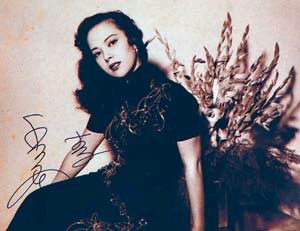
Film star & songstress Li Xianglan a hybrid matrix of Japanese and Chinese modern girl.
Born Yamaguchi Yoshiko to Japanese parents in Manchuria,
Remembered for 1940s film Shanghai Nights, the tune The Evening Primrose
Image source http://en.wikipedia.org/wiki/Li_Xianglan
MECCA cosmetics corporation
has recently launched its “Shanghai Lil” make-up range, a homage to the high fashion
(haute couture) & make-up used in Von Sternberg’s Shanghai Express (1932)
Image source http://www.meccacosmetica.com.au/
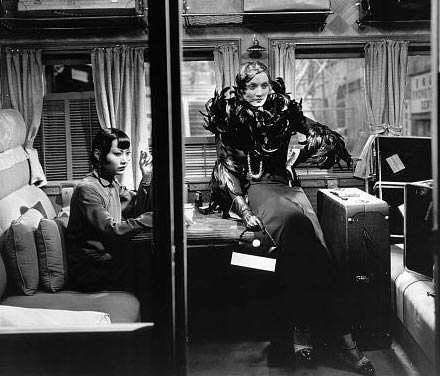
Hui Fei (Anna May Wong) and Marlene Dietrich (Shanghai Lily) in
Jospeh Von Sternberg’s SHANGHAI EXPRESS (1932)
Image source http://www.imdb.com/media/rm711432192/tt0023458
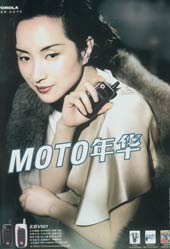
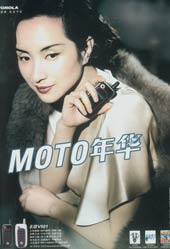
Image source MOTO Nostalgia campaign 2004 http://www.danwei.org/advertising_and_marketing/motorola_shanghai_nostalgia.php
The Parisian wave (coiffure) and the fur coat over the shoulder evoke the Shanghai gesture, a powerful imaging (and re-imagining) of the Shanghai advertising lady, her urban face charmed the packaging of a plethora of mass products from face powders to cigarettes. She is the face of Motorola’s 2004 mobile phone campaign. Reminiscent of a 1930s Shanghai calendar girl, an evocation of the legendary film star Ruan Lingyu (阮玲玉), or perhaps Hollywood’s The Lady From Shanghai (dir. Orson Welles), or Anna May Wong in Josef Von Sternberg’s Shanghai Express (1932) http://www.theauteurs.com/films/432, or Street Angel (馬路天使) (1937) http://www.archive.org/details/street_angel starring Shanghai songstress Zhou Xuan (the “golden voice”) and pre-revolutionary film star. Perhaps Motorola’s Shanghai lady resembles the famous Li Xianglan (李香蘭) a hybrid matrix of Japanese and Chinese modern (modeng) girl (!) She was born Yamaguchi Yoshiko (山口 淑子) to Japanese parents in Manchuria, and became a famous Chinese and Japanese film star. She is remembered for 1940s film Shanghai Nights (上海の夜), made by Manchuria Film Productions and singer of the immortal tune The Evening Primrose(夜來香). Nostalgia for decadent old Shanghai and its hybrid brand of quasi-colonial East meets West is articulated in the the plethora of contemporary Hollywood , Hong Kong and Chinese films devoted to the Shanghai Gesture. Academy Award winning director Ang Lee’s latest offering Lust Caution (2007), a case in point, Merchant Ivory’s The White Countess (2005) http://www.sonypictures.com/classics/whitecountess/, to touch the tip of the iceberg. On this note, the multi-national MECCA cosmetics corporation http://www.meccacosmetica.com.au/ has recently launched its “Shanghai Lil” make-up range, a homage to the high fashion (haute couture) and make-up used in Von Sternberg’s Shanghai Express.
“This is a new Motorola advertisement appearing on billboards and in glossy magazines. The copy means ‘MOTO nostalgia’ or ‘MOTO era’, highlighting the Shanghai 1930s feel of the image.” [Posted by Contributor, July 2, 2004 1:09 PM]
The evocation of the Shanghai lady in this MOTO campaign contains echoes of a contemporary Ballardian neo-landscape, the Bladerunner megalopolis that is Shanghai. This kitsch, pastiched, noirish sophistication is a parody without the humour and articulates Jameson’s postmodern and consummerist project of futuristic nostalgia (Jameson, 1985, p116).
Frederic Jameson, “Postmodernism and Consumerist Society”, in (Ed) Hal Foster, Postmodern Culture, Pluto Press, Great Britain, 1985.
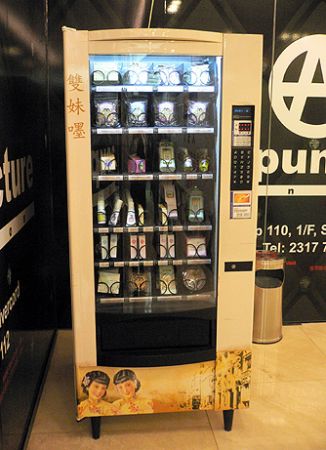
I recently stumbled upon this article in a blog – a confirmation of the currency and commodification of the old Shanghai lady as an aesthetic still capable of marketing a dream about a city that has entered into the postmodern vernacular in “Selling Cosmetics by vending machine ?”, Hong Kong Hustle: Hong Kong nightlife, streetculture, and cool http://www.hongkonghustle.com/shopping/389/cosmetics-vending-machine/#more-389 Selling cosmetics by vending machine?
April 19th, 2008
“In Japan you can find all sorts of things for sale in vending machines. Since I’ve lived in Hong Kong however, I’ve never seen an explosion of this sort of retailing in the city. So it came as a surprise to encounter a lonely looking vending machine while walking through Silvercord shopping center last week.
“The vending machine had a traditional 1920’s era graphic of two girls covering the outside.
“The image looked like a cigarette ad from old Shanghai, the type that tourists purchase on “antique” posters featuring beauties from the time period. On closer inspection, the image actually represented the logo of a brand of cosmetics, Two Girls.
“This sort of vintage look doesn’t really match a vending machine. Vending machines typically denote a sort of modern, mechanized and impersonal shopping experience. You don’t normally associate this type of experience with female shoppers. Further, a product like cosmetics would usually require the purchaser to read the labels and check the ingredients, which isn’t possible from inside a machine. Typical products that are sold in this way are ultra well known products. Perhaps the cosmetics are well known, however if I were a shopper unfamiliar with the brand, not being able to read the label and study the product would be a major impediment to sale.
“The location of the machine was also somewhat off. It was buried near the side of an escalator in an alternative entrance to the shopping center.
“Yet another factor to consider, does the product match the target consumer of the youth-oriented Silvercord mall?
“So in essence, the product, the brand image, the target consumer, the location of the machine and the technology all need to be considered when selling a product by vending machine. In this case, the factors appear to be a bad match.” http://www.hongkonghustle.com/shopping/389/cosmetics-vending-machine/#more-389
Description
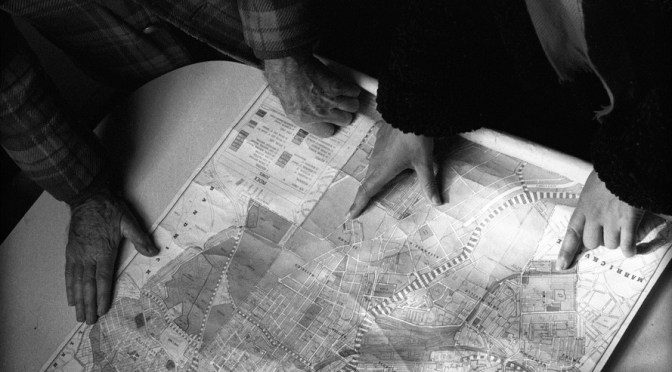
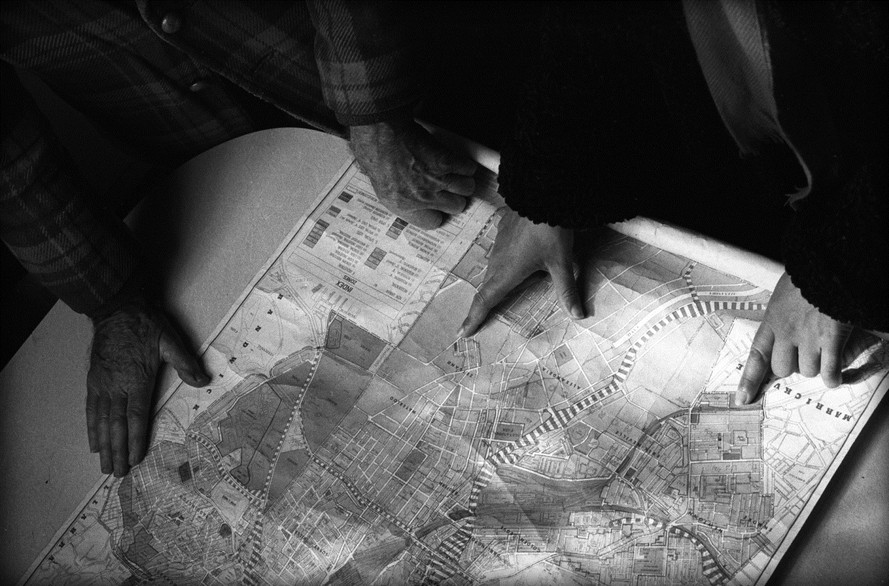
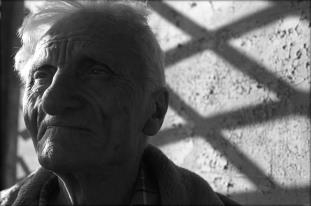
Explore the world of HOME through the eyes of Frank, Jason and FAE. Frank’s memories overwhelm him as the shop he has lived and worked in for the past 50 years crumbles around him. Jason lives with his grandfather, He photographs Frank, and what is left of the shop. Meanwhile he dreams of escape. To where he isn’t sure. Fae often comes to visit her uncle Frank. They share an obsession with the city, street maps and the places that Fae loves to wander through.Frank remembers June, Vera and Fae’s mother Clare.
CAST
Frank:: Jim Palmer
Jason:: Eric Warburton
Fae:: Patricia Werleman
Japanese Performer:: Kazuo
PRODUCTION
Photography, Cinematography & Timeline Montage:: Geoffrey Weary
Interface Design and Development:: icemedia
Sound Design & Music:: Michael Bates with thanks to Mark Gardiner
Online and Social Media:: Tatiana Pentes
Still from HOME iPad artwork by Geoffrey Weary c.2013
INTERACTION
HOME is navigated across the Frank, Jason and Fae timelines with a touch to screen movement from right to left. Backward movement is optional at any time.
A double touch on any frame will bring the timeline selected to full screen. Touch again will return to three timeline screen display.
When navigating HOME we recommend the use of iPad headphones.
HOME was produced as part of a University of Sydney ICT initiative Faculty-specific Research & Education Program (2012). The program helped sponsor this proof of concept. Extensive consulting & procurement services were provided by the team as a part of this initiative.






 Strange Black Box