
Tatiana Pentes
May 2026
Download article
Abstract
This article reconstructs the life and career of Sergei Lukyanovich Ermolaeff (1908–after 1951), known professionally as Serge Ermoll, a Russian émigré jazz orchestra leader, percussionist, arranger and orchestral musician active in Shanghai during the interwar and wartime periods. Drawing upon family archives, refugee migration records, municipal certificates, nightclub ephemera, and the digital humanities archive Strange Black Box / Strange Cities, the article situates Ermoll within a transnational cultural network linking Imperial Russia, Harbin, Shanghai and postwar Australia.
The study argues that Russian émigré musicians were foundational architects of Shanghai’s cosmopolitan jazz culture and functioned as mediators between European orchestral traditions, Russian cabaret aesthetics and American jazz modernity. Through case studies involving the Paramount Ballroom, the Cathay Hotel, the Arcadia nightclub, and collaborations with Alexander Vertinsky, this article examines how exile, statelessness and migration generated new forms of diasporic cultural identity in twentieth-century East Asia.
Abstract
This article reconstructs the life and career of Sergei Lukyanovich Ermolaeff (1908–after 1951), known professionally as Serge Ermoll, a Russian émigré jazz orchestra leader, percussionist, arranger and orchestral musician active in Shanghai during the interwar and wartime periods. Drawing upon family archives, refugee migration records, municipal certificates, nightclub ephemera, and the digital humanities archive Strange Black Box / Strange Cities, the article situates Ermoll within a transnational cultural network linking Imperial Russia, Harbin, Shanghai and postwar Australia.
The study argues that Russian émigré musicians were foundational architects of Shanghai’s cosmopolitan jazz culture and functioned as mediators between European orchestral traditions, Russian cabaret aesthetics and American jazz modernity. Through case studies involving the Paramount Ballroom, the Cathay Hotel, the Arcadia nightclub, and collaborations with Alexander Vertinsky, this article examines how exile, statelessness and migration generated new forms of diasporic cultural identity in twentieth-century East Asia.
Introduction
“Shanghai was a city built on the edge of catastrophe and glamour.” — Stella Dong.[1]
By the 1930s, Shanghai had emerged as one of the most cosmopolitan entertainment capitals in the world. Cabarets, dance halls, cinemas, cafés and orchestras transformed the city into what Leo Ou-Fan Lee describes as a “modern urban spectacle,” where colonial modernity, consumer culture and nightlife converged within the International Settlement and French Concession.[2]
Within this urban environment, Russian émigré musicians played a decisive role in constructing Shanghai’s musical identity. Following the collapse of Imperial Russia and the Russian Civil War, thousands of White Russian refugees migrated through Manchuria into Shanghai, bringing with them conservatory training, orchestral discipline and cabaret traditions rooted in European modernism.
Among the most significant yet historically overlooked of these musicians was Serge Ermoll, born Sergei Lukyanovich Ermolaeff in Harbin in 1908. Ermoll’s career traversed the major geopolitical ruptures of the twentieth century:
• Imperial Russia
• the Russian Revolution
• Harbin’s Russian diaspora
• Republican Shanghai
• Japanese occupation
• Communist revolution
• refugee migration to Australia
His biography reveals the extent to which jazz in Shanghai emerged not simply through American cultural diffusion but through diasporic networks shaped by exile, migration and colonial modernity.
As Andrew F. Jones argues in Yellow Music, Shanghai modernity was fundamentally acoustic:
“The modern city announced itself through sound.”[3]
For Russian émigrés such as Ermoll, jazz became both survival strategy and cultural language – a means through which stateless communities transformed displacement into cosmopolitan identity.
Harbin: Russian Exile and Musical Formation
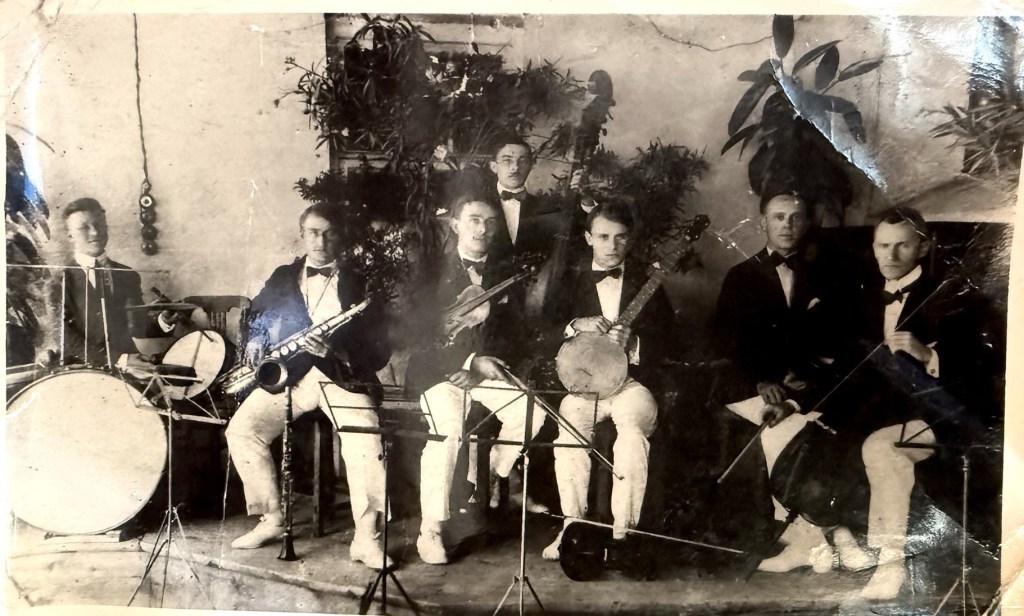
Manchuriam cabaret/dance orchestra:
Instruments and musicians
Violin – Volodya G. Kruchinin and Banjo
Piano – Stepan Bodnar
Cello – M. Smirnov
Bass – Kovach
Drums – Serge Ermoll
Misha Sakel ‘Tlo’
Sergei Lukyanovich Ermolaeff was born on 2 June 1908 in Harbin, Manchuria, a city established through the expansion of the Chinese Eastern Railway under Imperial Russia. Harbin rapidly evolved into what historians have described as an “extraterritorial Russia,”
The city functioned as a transplanted Russian cultural enclave in Asia. Orthodox cathedrals, ballet schools, conservatories, cafés and orchestras preserved imperial cultural traditions outside Soviet control.
Photographs preserved through Strange Black Box reveal Ermolaeff’s immersion within this cosmopolitan milieu. Portraits from the 1920s depict him wearing straw boating hats, summer suits and two-tone brogues associated with modern treaty-port masculinity. These images suggest that émigré identity was consciously performed through fashion, music and urban sophistication.
Harbin’s entertainment venues played a formative role in the emergence of Russian jazz culture in East Asia. Military bands and salon orchestras increasingly incorporated American syncopation, foxtrots and jazz arrangements into their repertoires. Whitey Smith later recalled that jazz entered China through migrant performance circuits operating between Manila, Harbin, Tianjin and Shanghai.[4]
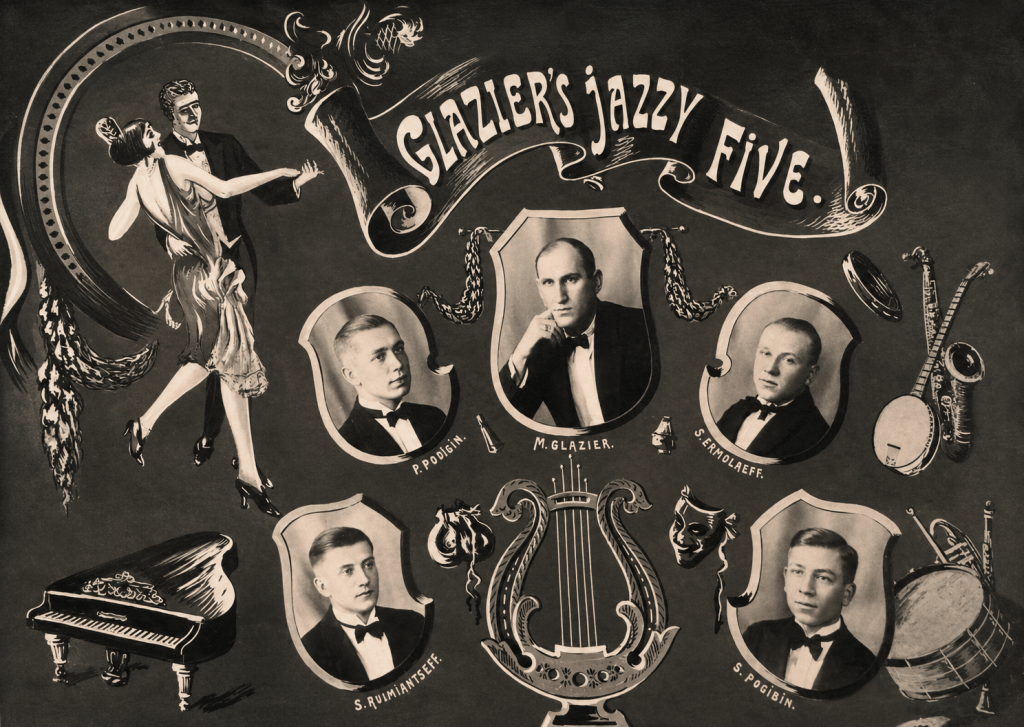
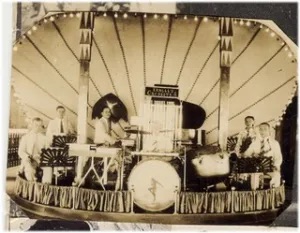
Image 5: One surviving ensemble image identifies “Glazier’s Jazzy Five,” featuring Ermolaeff among tuxedoed musicians framed by Art Deco imagery and jazz iconography.
Another annotated photograph identifies him performing on drums within a Russian-led jazz ensemble in Manchuria during the early 1920s. These images demonstrate the continuity between Harbin’s émigré culture and Shanghai’s expanding dance-hall economy.
Shanghai Modernity and the Jazz Metropolis
“Shanghai was not merely modern; it was hyper-modern.” — Leo Ou-Fan Lee.[5] By the late 1920s, Ermolaeff relocated to Shanghai, then one of the most electrified and internationally connected cities in Asia. Neon signage, cinema palaces, luxury hotels and jazz orchestras transformed the city into a site of accelerated modernity.

Mu Shiying’s modernist fiction vividly captured this nightlife culture. His stories transported readers into “dance clubs and cabarets of Shanghai’s Foreign Concessions,” where jazz rhythms, cocktails and electric light symbolised urban modernity.[6]
Shanghai jazz emerged through multiple intersecting networks:
• American swing culture
• Filipino orchestral labour migration
• Russian émigré musicians
• European ballroom traditions
• Chinese cabaret modernity
Within this environment, Sergei Ermolaeff adopted the stage identity “Serge Ermoll,” a more internationally legible professional name suited to cosmopolitan nightlife culture.
![Image 7: Сергей Ермолаев Serge Ermoll – Russian jazz orchestra leader on the Back Cover – blue roses and red lettering 舞影 Wǔ yǐng “Dance and Cinema” [6a]. Hostesses at Lido Ballroom and the famous Liang Sisters – Liang Saizhen, a famous actress and cabaret dancer, Liang Saizhu, and Liang Saishan. Shanghai research by Katya Knyazeva at 318 Fuzhou Rd, Huangpu, Shanghai, China at The Paramount 上海百樂門](https://strangeblackbox.net/wp-content/uploads/2026/05/img_9424-1.jpg?w=363)
Andrew F. Jones argues that Shanghai modernity depended heavily upon mediated sound:
“Jazz was less an imported form than a sonic technology of modern urban identity.”[18]
Russian musicians occupied structurally important positions within this entertainment economy because many possessed formal conservatory training. They frequently served as arrangers, conductors and orchestra leaders for elite hotels and dance halls.
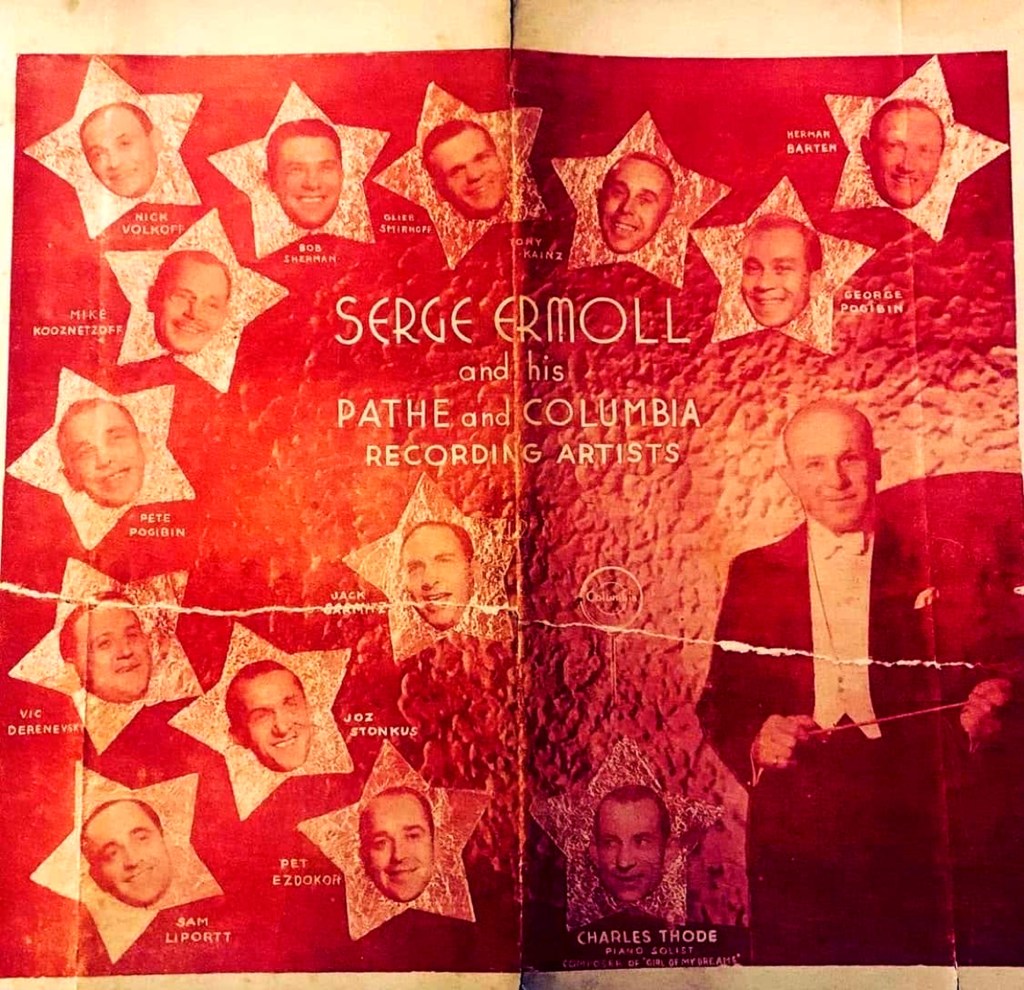
This includes:
• The Cathay Hotel
• Paramount Ballroom
• Park Hotel
• French Club
• Forum Ballroom
• Galle Face Hotel Colombo
• Continental Palace Hotel Saigon [7]
This publication demonstrates the remarkable transnational scope of Shanghai entertainment circuits during the 1930s.
The Paramount Ballroom and Cabaret Shanghai
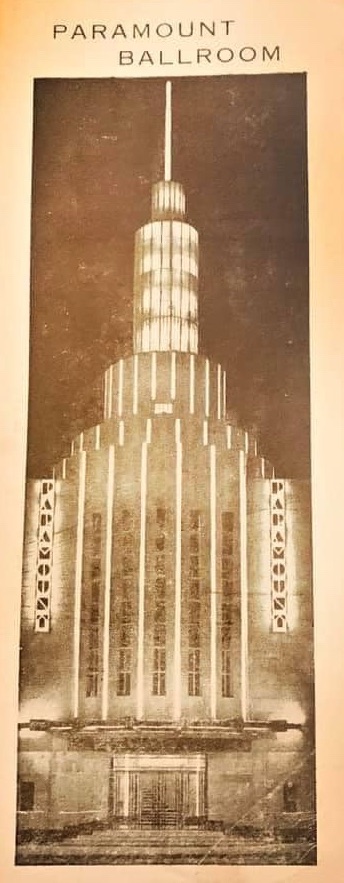
The Paramount Ballroom (百樂門) became one of the most iconic symbols of Shanghai nightlife. Andrew Field describes it as a “dreamworld of elite ballroom modernity,” where architecture, jazz and dance culture merged into theatrical spectacle.[8]
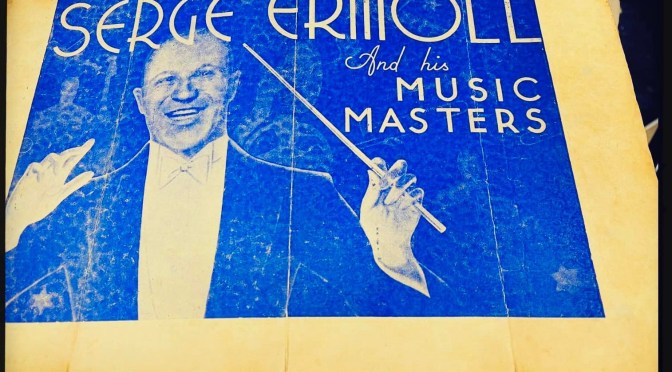
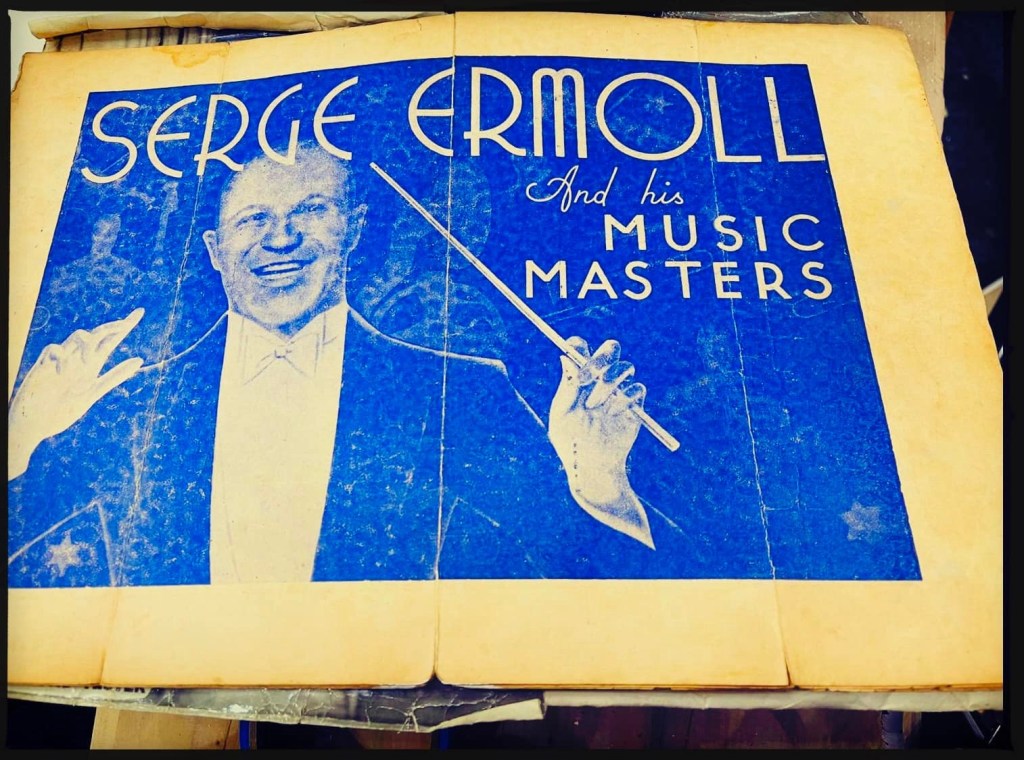
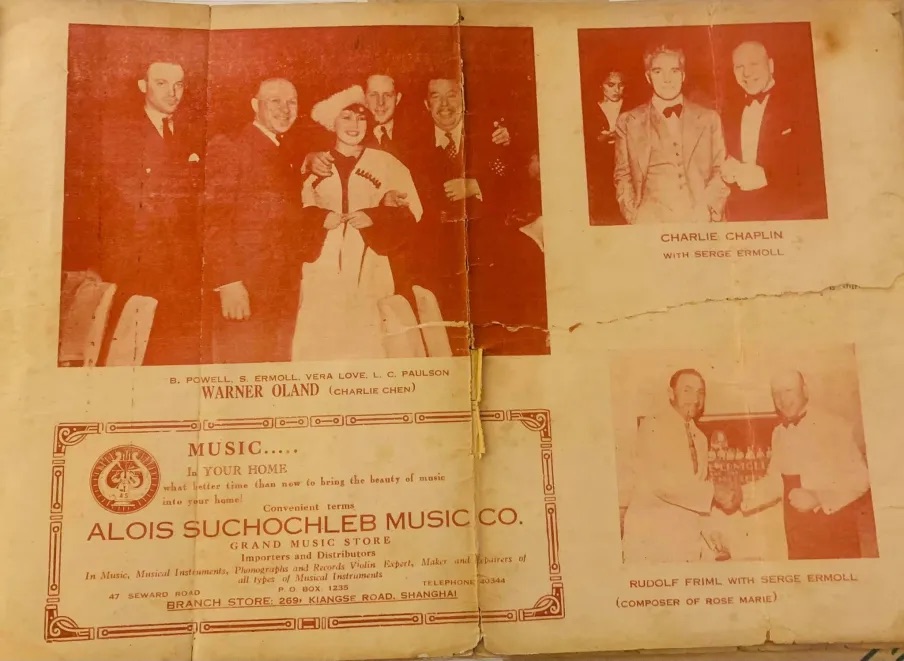
Publicity material preserved through Strange Black Box places Serge Ermoll directly within this environment. Promotional brochures identify him alongside performers including Vera Love, Warner Orland (“Charlie Chan”) and B. Powell in performances associated with the Paramount and Cathay Hotel entertainment circuit.[9]
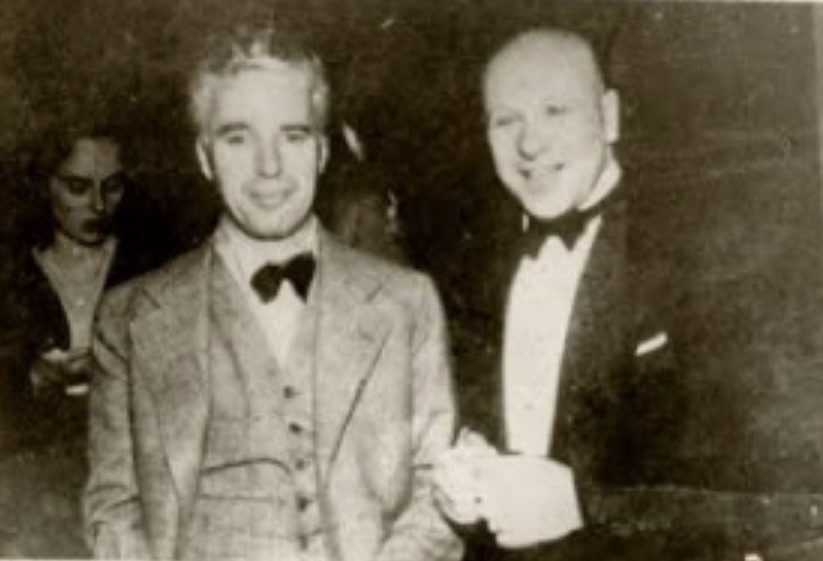
A show was held “CHARLIE CHAPLIN. A VISION” A major retrospective exhibition of the King of Comedy, Yuz Museum, West Bund Shanghai, 2018, that details his sojourn. During Sergei’s Paramount residency, he writes of Warner Oland approaching him after a performance to book his orchestra for Samuel Kaylin’s soundtrack to the black and white Charlie Chan in Paris film, with 20th Century Fox Film Companybeing shotin 1935, poetic license?
Shanghai dance halls functioned simultaneously as:
• performance venues
• social theatres
• colonial contact zones
• commercial entertainment industries
Mu Shiying’s Black Peony captured the hypnotic atmosphere of these spaces:
“The dance hall spun like a dream of neon and smoke.”[10] Russian émigré orchestras became essential to this urban choreography. Their music mediated between European elegance and American modernity.
The surviving visual record further demonstrates the sophistication of Shanghai’s entertainment culture. Posters, ballroom programs and Art Deco advertisements reveal an aesthetic language deeply influenced by international modernism yet distinctly rooted within Shanghai’s treaty-port culture.
Arcadia, Vertinsky and the Poetics of Exile
One of the most culturally significant dimensions of Ermoll’scareer was his collaboration with the Russian cabaret singer and poet Alexander Vertinsky.
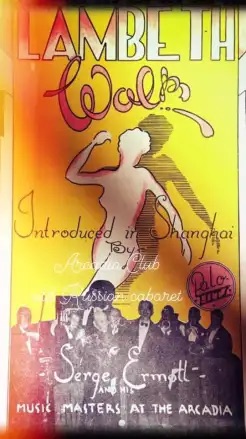
Katya Knyazeva documents Vertinsky and Sir Victor Sassoon together at the Arcadia nightclub, 291 Route Amiral Courbet, in the French Concession during 1940.[11] Arcadia functioned as a crucial site of cosmopolitan nightlife where Russian cabaret, jazz orchestration and elite colonial society intersected.
Vertinsky’s songs articulated the emotional condition of exile. Works such as:
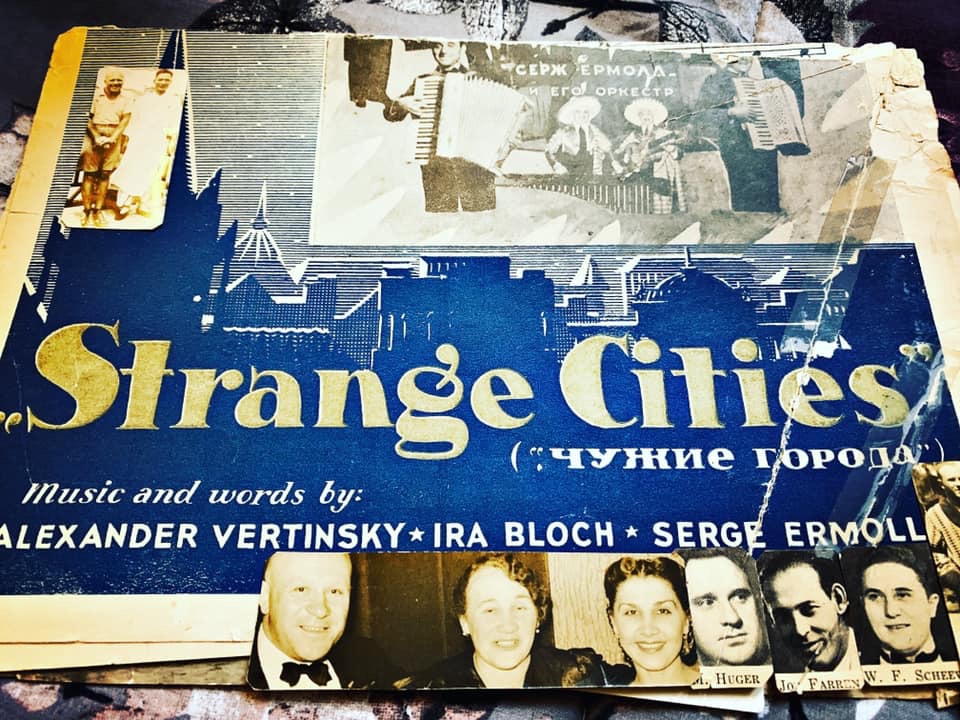
• Чужие города (“Strange Cities”)
• Над розовым морем (“Over the Rosy Sea”)
evoked nostalgia, displacement and cosmopolitan longing.
The title Strange Cities resonates profoundly with Ermoll’s own trajectory through Harbin, Shanghai and Sydney. These cities were linked not by nationality but by migration and impermanence.
As Paul French observes in his study of Shanghai entertainment communities:
“Nightlife became a refuge for stateless people living between worlds.”[12] Russian cabaret culture transformed exile into performance. Music became emotional memory work – a means through which displaced communities could preserve continuity amid political rupture.
Russian Women, Ballet and Shanghai Performance Culture
The Strange Black Box archive substantially expands understanding of women’s participation within Shanghai’s entertainment world. Serge Ermoll’s wife, Xenia Ermolaeff (née Vladimirovna), emerges as a significant cultural figure within Russian émigré performance culture.
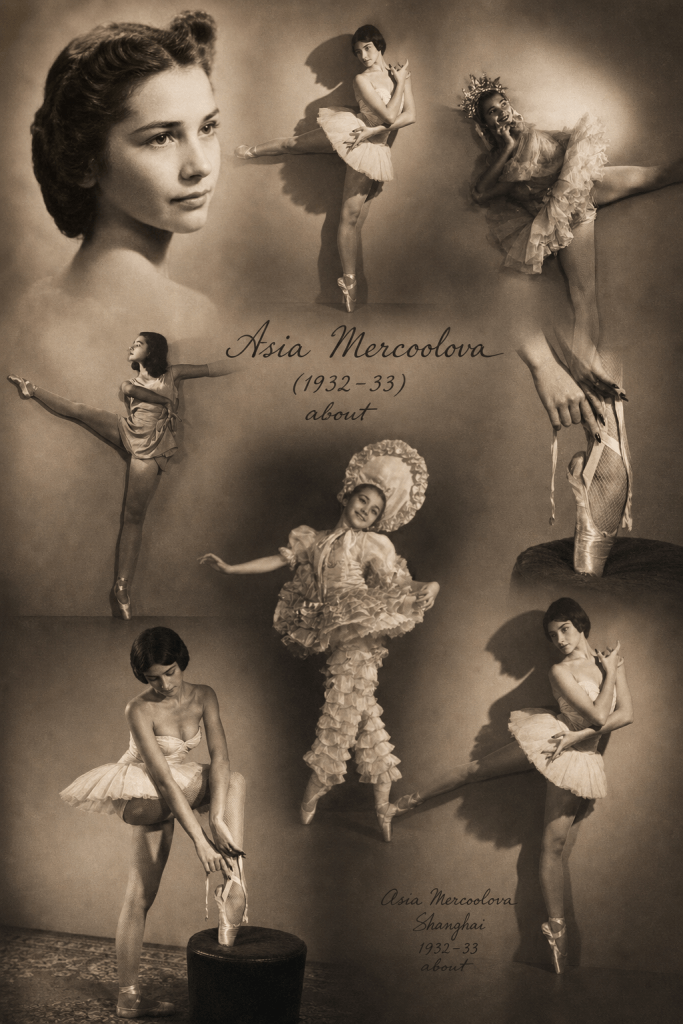
Image 16. Studio portraits from approximately 1932–1933 depict Asja Mercoolova and her aunt Xenia Vladimirovna some posed en pointe in classical ballet costume, photographed in styles associated with Russian theatrical modernism.
Other images situate her within fashionable Shanghai settings, including the Palace Hotel precinct on the Bund.
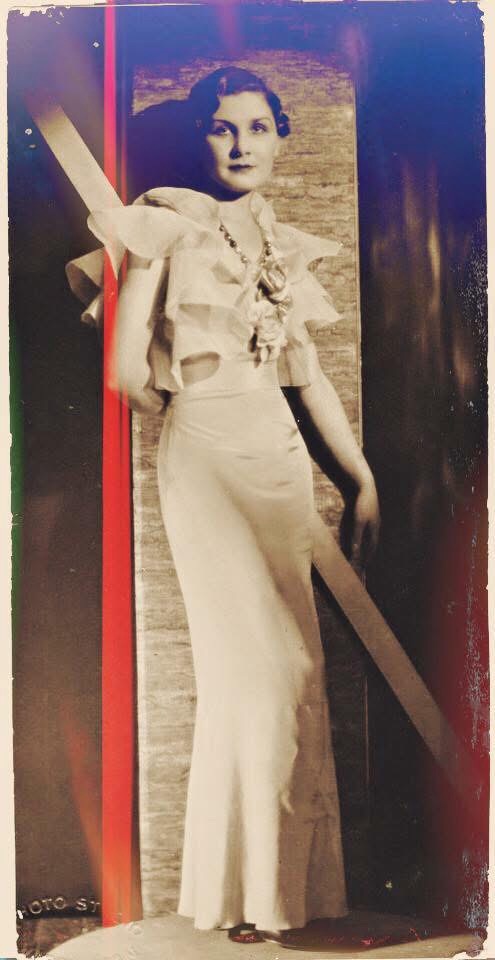
These photographs illuminate the intersection of migration, femininity and cosmopolitan identity. Xenia simultaneously embodied:
• Russian aristocratic femininity
• ballet modernism
• cabaret performance culture
• Shanghai cosmopolitanism
• migrant identity
Her portraits echo the glamour associated with Shanghai cinema culture during the 1930s. Films such as The Goddess (1934) and Street Angel (1937) similarly constructed modern femininity through fashion, nightlife and urban spectacle.[13][14]
Leo Ou-Fan Lee argues that Shanghai modernity was fundamentally visual:
“Modern consciousness was mediated through image, fashion and spectacle.”[15]
The surviving photographs of Xenia Ermolaeff vividly demonstrate this dynamic.
Wartime Shanghai and Cultural Survival
The Japanese occupation of Shanghai after 1937 transformed the city politically but did not entirely destroy its entertainment economy. Cabarets, orchestras and dance halls continued operating throughout wartime, although under increasingly unstable conditions.
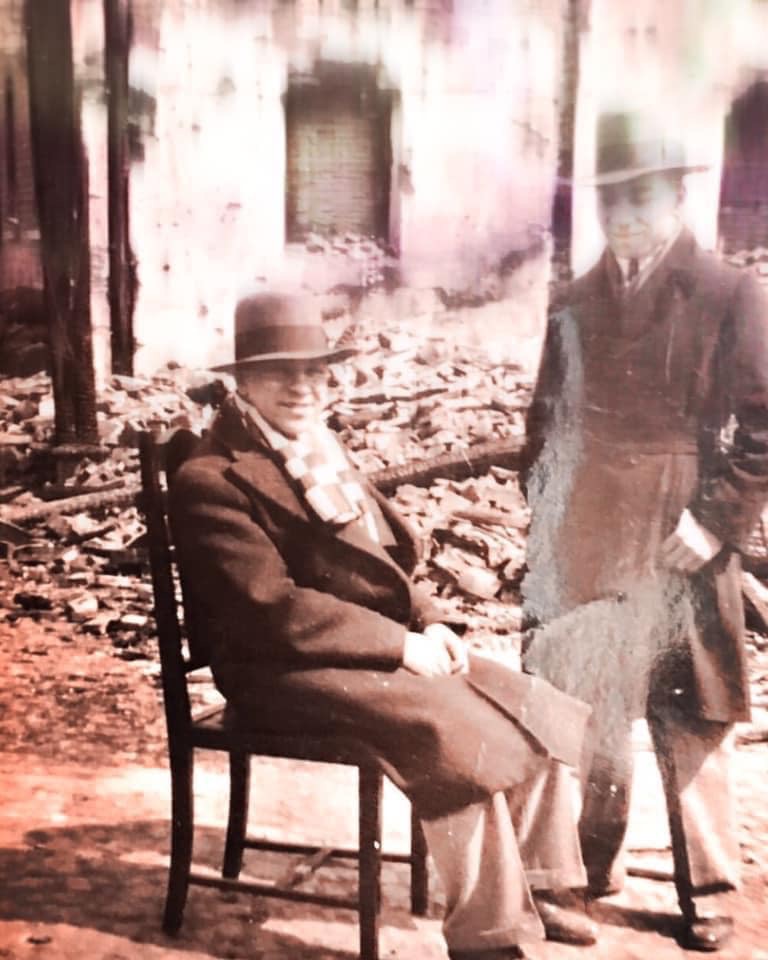
Russian émigrés occupied an ambiguous social position. Many were stateless refugees without diplomatic protection, yet they remained indispensable to Shanghai’s entertainment infrastructure.
Paul French notes that even marginal entertainment communities – including Roma musicians and itinerant performers – became integrated into Shanghai’s wartime nightlife economy.[16]
Ermoll’s continued activity during this period demonstrates the resilience of musical labour under occupation. Entertainment functioned simultaneously as:
• escapism
• economic survival
• ritualised cosmopolitanism
• emotional refuge
Jazz became a means through which modernity could temporarily survive political catastrophe.
Municipal Symphony and Socialist Transition
One of the most historically important documents within the Ermoll archive is a Shanghai Municipal Government Symphony Orchestra certificate certifying that Sergei Ermolaeff served continuously as a French horn musician from December 1946 until October 1950.
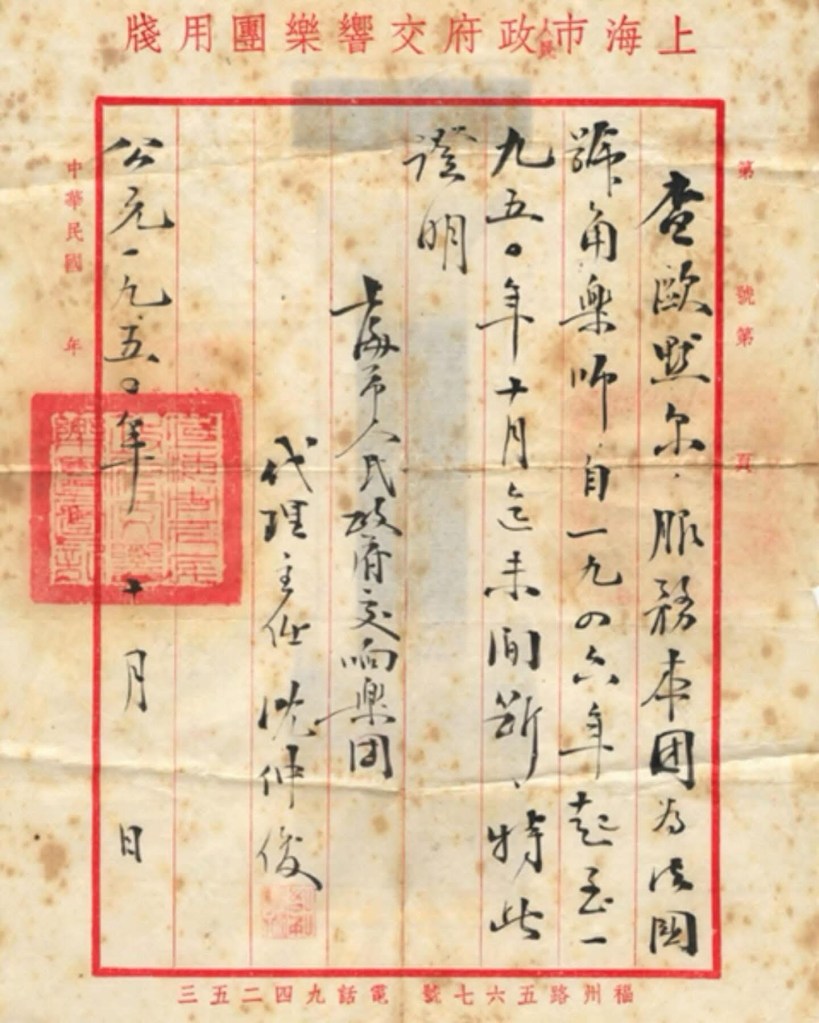
This document radically expands understanding of Ermoll’s professional identity.
Rather than existing solely within nightclub culture, Ermolle merges as a formally trained orchestral musician integrated into official municipal cultural institutions.
The certificate bridges two radically different Shanghais:
• the cosmopolitan treaty-port metropolis of cabaret modernity
• the socialist municipal order emerging after 1949
Its bureaucratic language contrasts sharply with the glamour of the Paramount Ballroom or Arcadia nightclub. Yet this contrast itself reveals the adaptability of émigré musicians navigating profound political transformation.
The chronology reconstructed through archival evidence becomes strikingly coherent:
Australia and the Afterlife of Shanghai Jazz
Following the Communist victory in China in 1949, Shanghai’s foreign communities rapidly fragmented. Russian émigrés who had already experienced exile after the Russian Revolution faced displacement once again.
In 1951, Ermoll and his family migrated to Australia through International Refugee Organization resettlement programs.
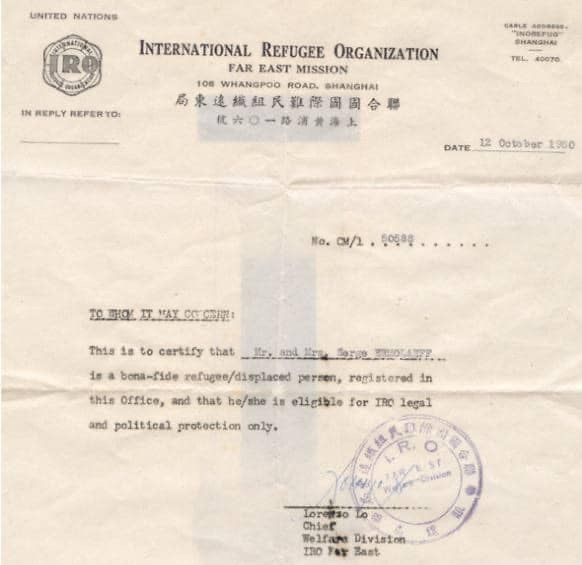
This migration marked the dissolution of Shanghai’s cosmopolitan entertainment world. Yet the cultural legacy of Shanghai jazz survived through diasporic transmission.
Their son, Serge Ermoll Jr., later became a significant jazz pianist in Australia, preserving aspects of Shanghai’s Russian jazz tradition within a new national context.
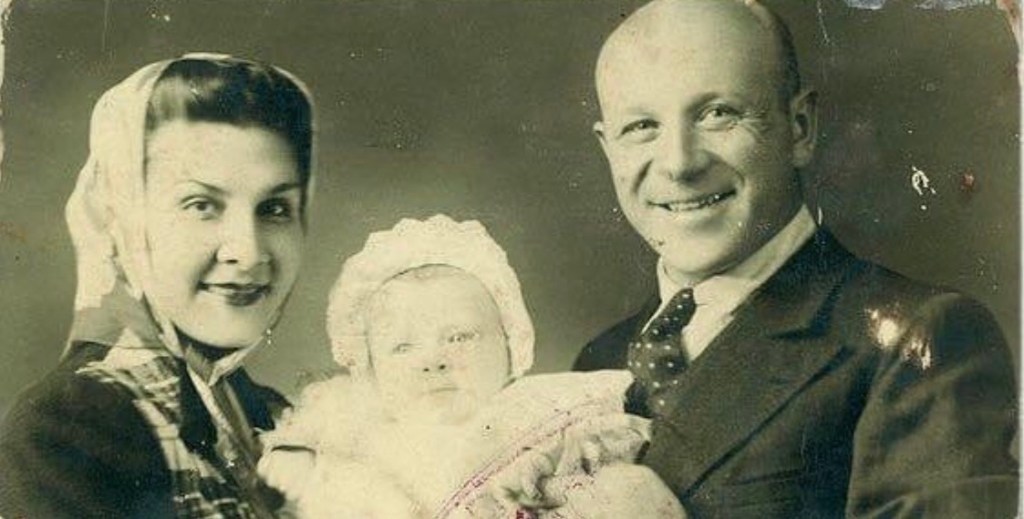
The Ermoll archive therefore documents not merely an individual biography but the global afterlife of Shanghai modernity itself.
Conclusion
Serge Ermoll’s life reveals the deep entanglement between migration, music and modernity in twentieth-century Asia. His career traversed imperial collapse, refugee displacement, colonial urbanism, wartime occupation and postwar migration.
Russian émigré musicians were not peripheral entertainers within Shanghai nightlife. They were among its principal architects.
As Stella Dong observed:
“Shanghai glittered because so many displaced people poured their dreams into it.”[17]
The archival materials preserved through Strange Black Box restore emotional and material texture to histories often flattened into abstraction. Family photographs, orchestra certificates, nightclub ephemera and handwritten correspondence reveal exile not merely as geopolitical displacement but as lived experience embodied through music, fashion, intimacy and performance.
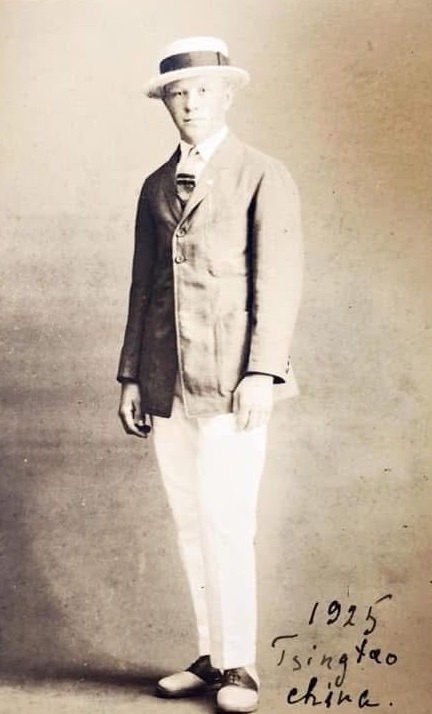
Image 24. Sergei Ermolaeff, Tsingtao 1925 in jazz attire – two tone bogues with spats and boater hat
In the dance halls of Shanghai, jazz became a language through which statelessness could be transformed into modern identity. Serge Ermoll’s life demonstrates how exile was not only endured – it was orchestrated, performed and remembered.
Notes
1. Stella Dong, Shanghai: The Rise and Fall of a Decadent City, Harper Collins, 2001.
2. Leo Ou-Fan Lee, Shanghai Modern, Harvard University Press, 1999.
3. Andrew F. Jones, Yellow Music: Media Culture and Colonial Modernity in the Chinese Jazz Age, Duke University Press, 2001.
4. Whitey Smith, I Didn’t Make a Million: How Jazz Came to China, Earnshaw Books, 2017.
5. Leo Ou-Fan Lee, op. cit.
6. “Black Peony,” in Mu Shiying: China’s Lost Modernist.
6a. Katya Knyazeva, research on 舞影 Wǔ yǐng (“Dance and Cinema”), Paramount Ballroom archive.
7. Andrew F. Jones, op. cit.
8. Andrew Field, “Building Shanghai’s Dreamworld,” Kunshan Duke University, 2019.
9. R.T. Mills, Hamilton Mills Vaudeville Enterprises Promotional Publication, 1935.
10. “Black Peony,” in Mu Shiying: China’s Lost Modernist.
11. Katya Knyazeva, “Victor Sassoon and Alexander Vertinsky in the Same Picture!”, 2017.
12. Paul French, “Gypsies of Shanghai,” Journal of the Royal Asiatic Society China, Vol.75, No.1.
13. The Goddess (1934), Lianhua Film Company.
14. Street Angel (1937), dir. Yuan Muzhi.
15. Leo Ou-Fan Lee, Shanghai Modern, Harvard University Press, 1999.
16. Paul French, “Gypsies of Shanghai,” Journal of the Royal Asiatic Society China, Vol.75, No.1.
17. Stella Dong, Shanghai: The Rise and Fall of a Decadent City, Harper Collins, 2001.
References
Stella Dong, Shanghai: The Rise and Fall of a Decadent City, Harper Collins, 2001.
Serge Ermoll and His Music Masters, Lido Ballroom Shanghai, 1935.
Andrew David Field and Hong Yu (eds.), Mu Shiying: China’s Lost Modernist, Hong Kong University Press, 2014.
Paul French, “Gypsies of Shanghai,” Journal of the Royal Asiatic Society China, Vol.75, No.1.
Taras Grescoe, “The Man Who Changed the Face of Shanghai,” The New York Times, 2014.
Andrew Jakubowicz and Tatiana Pentes, “The Menorah of Fang Bang Lu,” VECTORS Journal of Culture & Technology in a Dynamic Vernacular, 2005.
Katya Knyazeva, “Miss Shanghai: The Years of Infamy,” Journal of the Royal Asiatic Society China, Vol.79, No.1, 2019.
Katya Knyazeva, “Victor Sassoon and Alexander Vertinsky in the Same Picture!”, 2017.
Courtney Lichterman, “The Hidden History of Shanghai’s Jewish Quarter,” Atlas Obscura, 2018.
R.T. Mills, The Paramount Recording Artist Shanghai, 1935.
Leo Ou-Fan Lee, Shanghai Modern, Harvard University Press, 1999.
Whitey Smith, I Didn’t Make a Million: How Jazz Came to China, Earnshaw Books, 2017
Katherine Anne Yachinich, The Culture and Music of American Cabaret, Trinity University, 2014.
V.D. Zhiganov, Russians in Shanghai (1936), quoted in Cosmopolitan Shanghai. Russian Ball at the Majestic Hotel, c.1929, quoted in Lynn Pan, Shanghai: A Century of Change in Photographs.
Images
Image 1: A publication by managing director R.T Hamilton (of Hamilton Mills) Vaudeville Enterprises showcases Serge Ermoll and his Music Master, exclusive agents for The Cathay Hotels Ltd., Paramount, Park Hotel, Amasdor Little Club, China Broadcast Ltd., The French Club, The Country club, Tientsin Country club, Forum Ball Room, Galle Face Hotel Colombo, Continental Palace Hotel, Saigon, the largest booking agent of the Orient 1935.
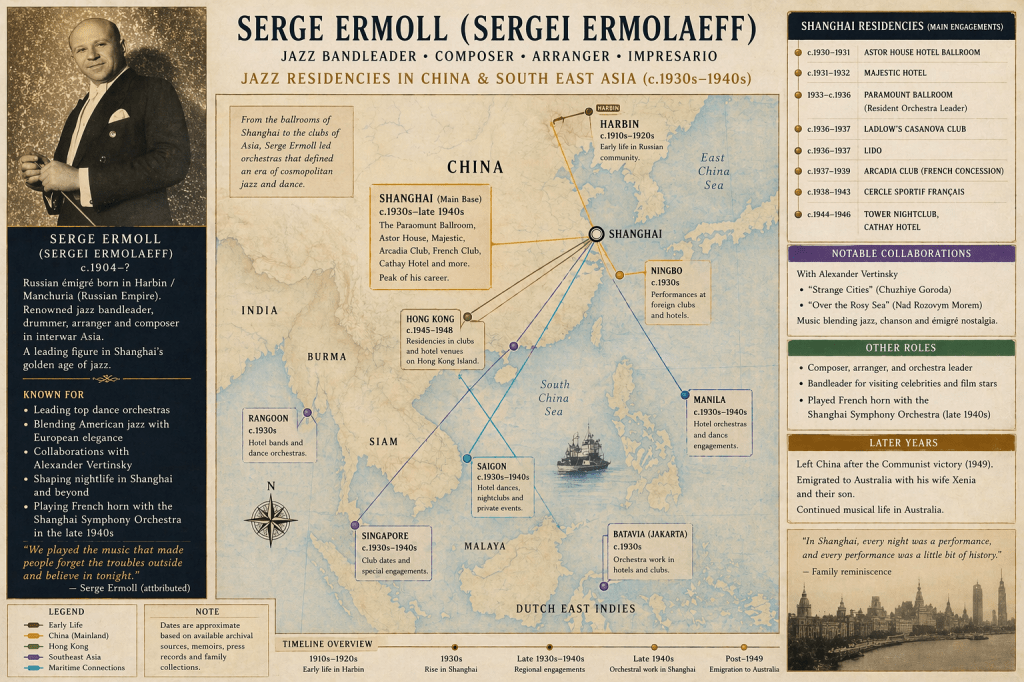
Image 2: A career Map of Sergei Ermolaeff (Serge Ermoll) from Harbin to Kamay (Botany Bay) Sydney
Image 3: “Summer 1922, Harbin, Krymskaya Crimea, Orchestra: DECADANCE
Manchuriam cabaret/dance orchestra:
Instruments and musicians
Violin – Volodya G. Kruchinin and Banjo
Piano – Stepan Bodnar
Cello – M. Smirnov
Bass – Kovach
Drums – Serge Ermoll
Misha Sakel ‘Tlo’
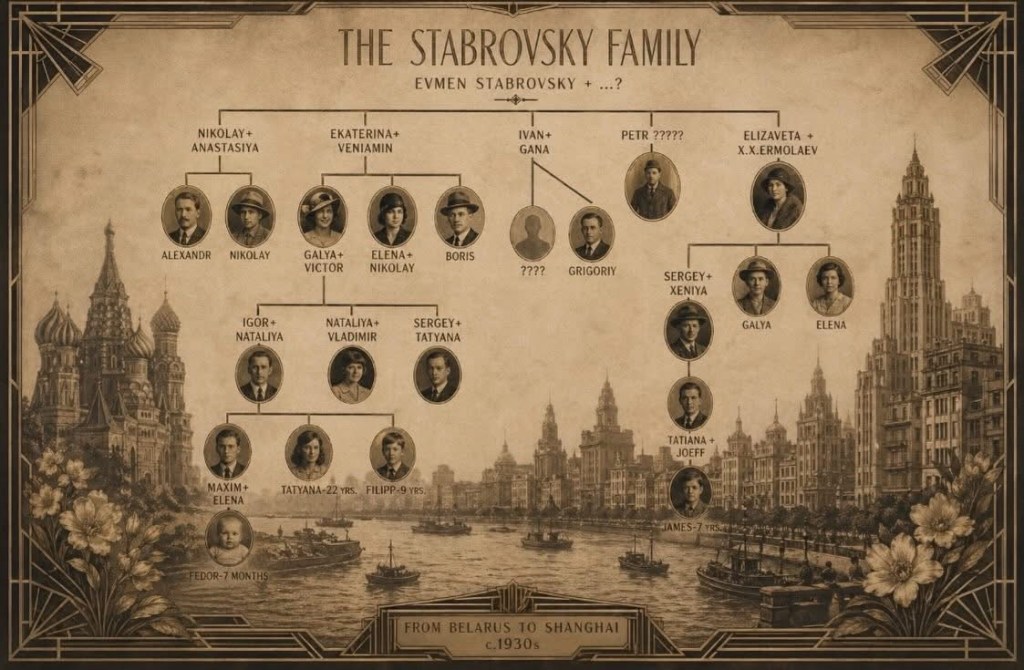
Image 4: The maternal line of Sergei Ermolaeff’s family from Minsk, Belarus to Harbin, Shanghai, Hong Kong and Sydney 1951.
Image 5: One surviving ensemble image identifies “Glazier’s Jazzy Five,” featuring Ermolaeff among tuxedoed musicians framed by Art Deco imagery and jazz iconography.
Image 6: Xenia Vladimirovna a singer/ dancer married Serge Ermoll in Shanghai 1933.
Image 7: Сергей Ермолаев Serge Ermoll – Russian jazz orchestra leader on the Back Cover – blue roses and red lettering 舞影 Wǔ yǐng “Dance and Cinema”. Hostesses at Lido Ballroom and the famous Liang Sisters – Liang Saizhen, a famous actress and cabaret dancer, Liang Saizhu, and Liang Saishan. Shanghai research by Katya Knyazeva at 318 Fuzhou Rd, Huangpu, Shanghai, China at The Paramount 上海百樂門.
Image 8: A publication issued by R.T. Mills of Hamilton Mills Vaudeville Enterprises Serge Ermoll and His Music Masters as exclusive agents for major entertainment venues across Asia.
Image 9: Paramount Ballroom 上海百樂門 became one of the most iconic symbols of Shanghai nightlife.
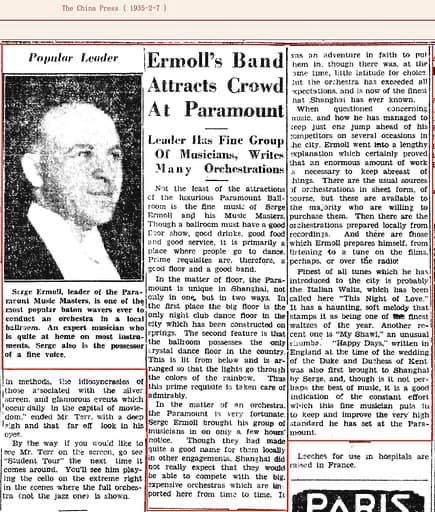
Image 10. Serge Ermoll’s Band Attracts Crowd At Paramount, The China Press, 2 July 1935.
Image 11: B.Powell, Serge Ermoll, Vera Love, L.C. Paulson & Warner Orland (Charlie Chan) @Pathe 上海百樂門 The Paramount Recording Artist Shànghǎi 上海 1935 in a publication by managing director R.T Hamilton (of Hamilton Mills) Vaudeville Enterprises.
Image 12: Charles Chaplin & Sergei Ermollaeff Paramount 上海百樂門 Ballroom, Shanghai, China with Paulette Godard and her mother behind 1936.
Image 13. Serge Ermoll’s Orchestra Shanghai 1930s.
Image 14. The Lameth Walk musical score arranged by Serge Ermoll’s Orchestra for Arcadia Club old Russian cabaret, Shanghai 1937, Palo Hits.
Image 15. Чужие города Strange Cities (Chuzie Goroda) an avant-garde music experiment – music and words by Alexander Vertinsky, Serge Ermoll and Ira Bloch.
Image 16. Studio portraits from approximately 1932–1933 depict Asja Mercoolova and her aunt Xenia Vladimirovna some posed en pointe in classical ballet costume, photographed in styles associated with Russian theatrical modernism.
Image 17. Xenia Ermolaeff nee Vladimirovna portrait by Josepho, Shanghai 1930s.
Image 18. Serge Ermoll a Special Agent with the Shanghai Municipal Police by day and orchestra leader by night 1937, Japanese occupation of Shanghai.
Image 19. Serge Ermoll identity papers plays the French Horn, Shanghai Symphony Orchestra 1946-1950.
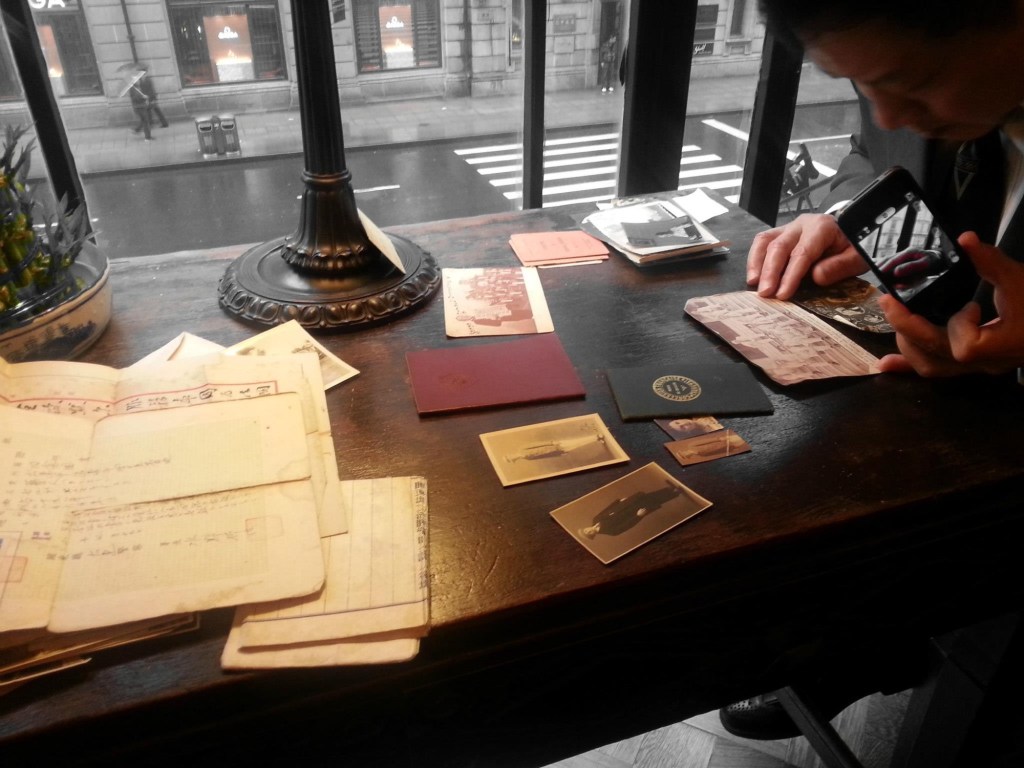
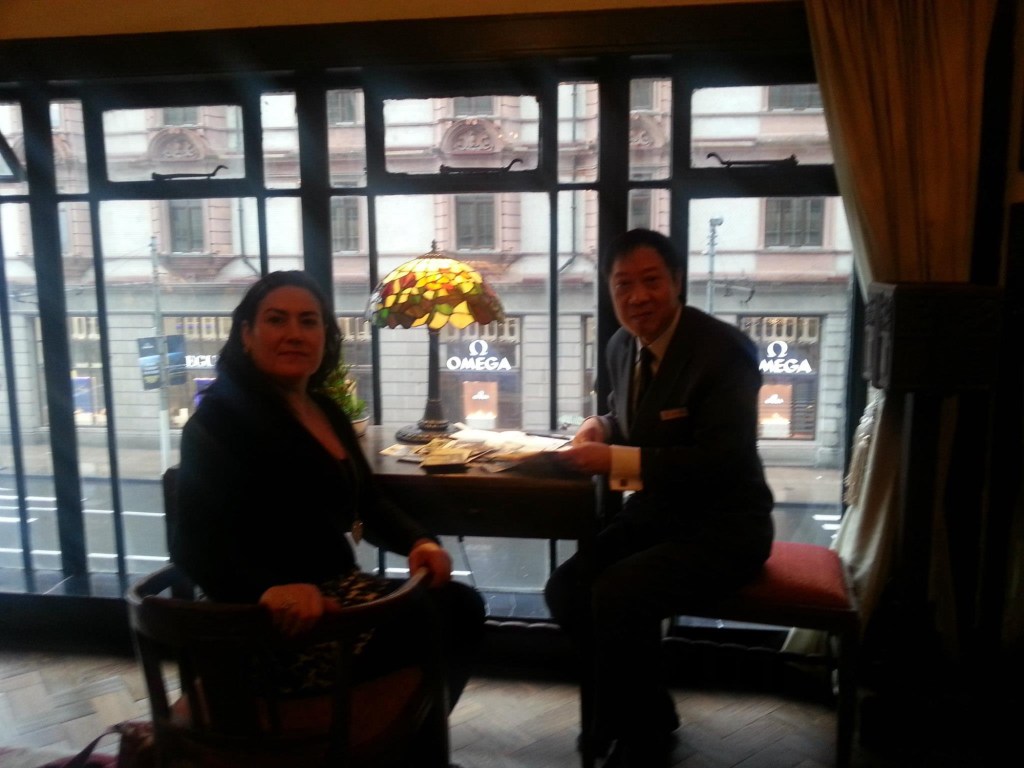
Image 20. Tatiana Pentes works with curator of Peace Fairmont Hotel museum to curate Serge Ermoll’s photographs, documents and memorabilia into the permanent collection 2013.
Image 21. Tatiana Pentes works with curator of Peace Fairmont Hotel museum to curate Serge Ermoll’s photographs, documents and memorabilia into the permanent collection 2013.
Image 22. Mr. And Mrs. Ermolaeff IRO legal and political protection, International Refugee Organization, Far East Mission, Shanghai, 1950.
Image 23. Xenia & Sergei Ermolaeff, Shanghai 1943 with little Serge Jr (centre).
Image 24. Sergei Ermolaeff, Tsingtao 1925 in jazz attire – two tone bogues with spats and boater hat.
 Strange Black Box