By Tatiana Pentes
Shanghai in the 1930s was not merely a city. It was a fever dream with street maps.
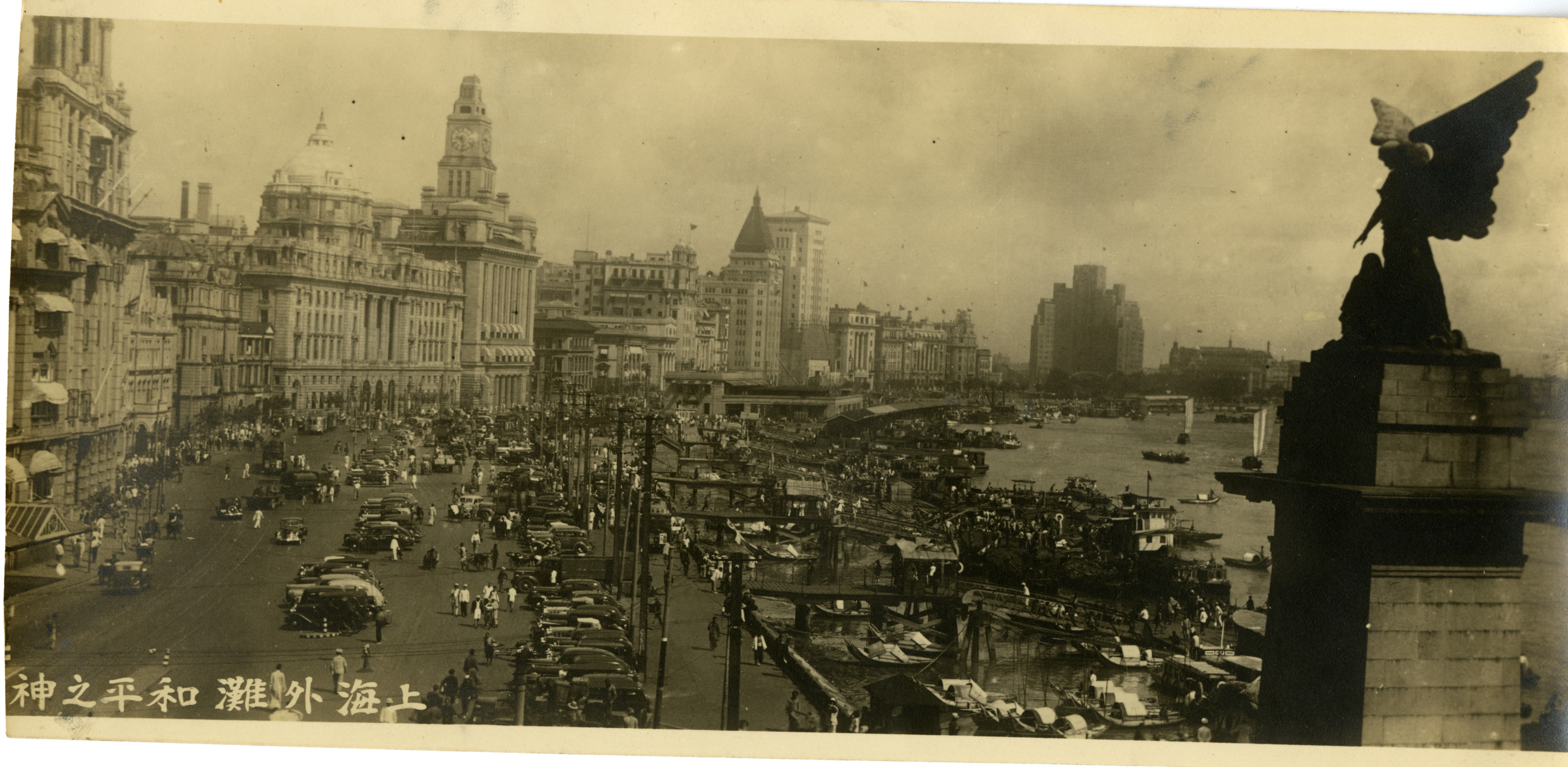
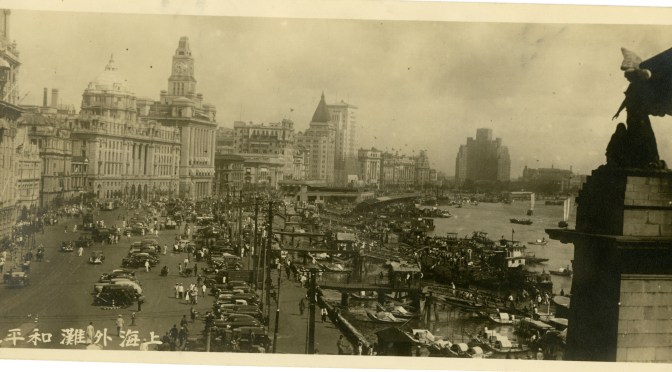
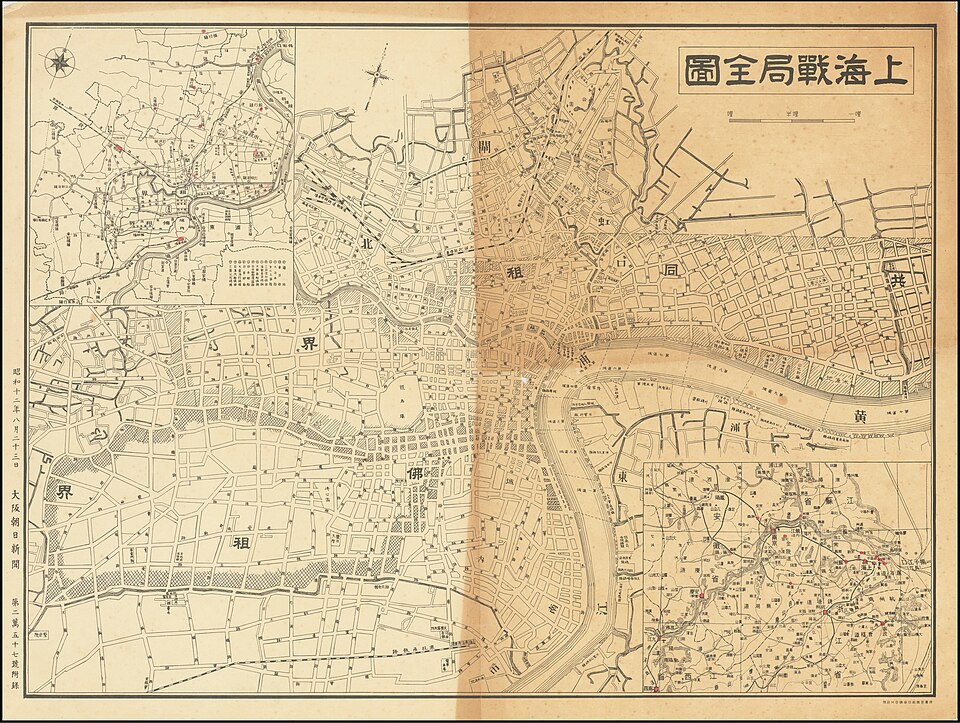
A cartographic anomaly at the mouth of the Yangtze River, where the Huangpu curved past granite banks and imperial ambitions, Shanghai was divided into foreign concessions – British and American in the International Settlement to the north of Suzhou Creek, French to the southwest – while the old Chinese city pulsed behind its ancient walls near Yu Yuan Gardens. Neon rose above Nanjing Road. Jazz leaked from ballrooms along Avenue Joffre (today Huaihai Road). Russian émigrés sold perfume, played violins, designed gowns, and mourned a homeland lost to revolution.
This was the Shanghai my grandmother inhabited.
The Flight East: Russia to Harbin to Shanghai
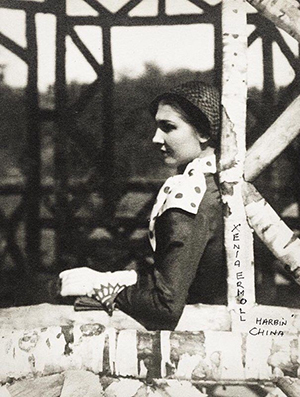
Xenia Vladimirovna (Ermolaeff), born in Russia in 1908, came of age during collapse. After the Bolshevik Revolution of 1917 and the ensuing Civil War, thousands of White Russians fled east along the Trans-Siberian Railway. By 1923, Xenia, her mother Evgenia, and sisters Galya, Helena and Marya were among the displaced – disembarking in Vladivostok, then Harbin.
Harbin, in China’s northeast, had become a Russian city in exile. Built along the Chinese Eastern Railway, it had onion-domed churches, Orthodox schools, and Russian-language newspapers. Stateless, often without passports, these refugees carried memory instead of citizenship.
By the early 1930s, many drifted south to Shanghai – a treaty port where extraterritoriality provided a fragile kind of freedom. No visa was required. You could arrive with nothing and reinvent yourself between the Bund and the racecourse.
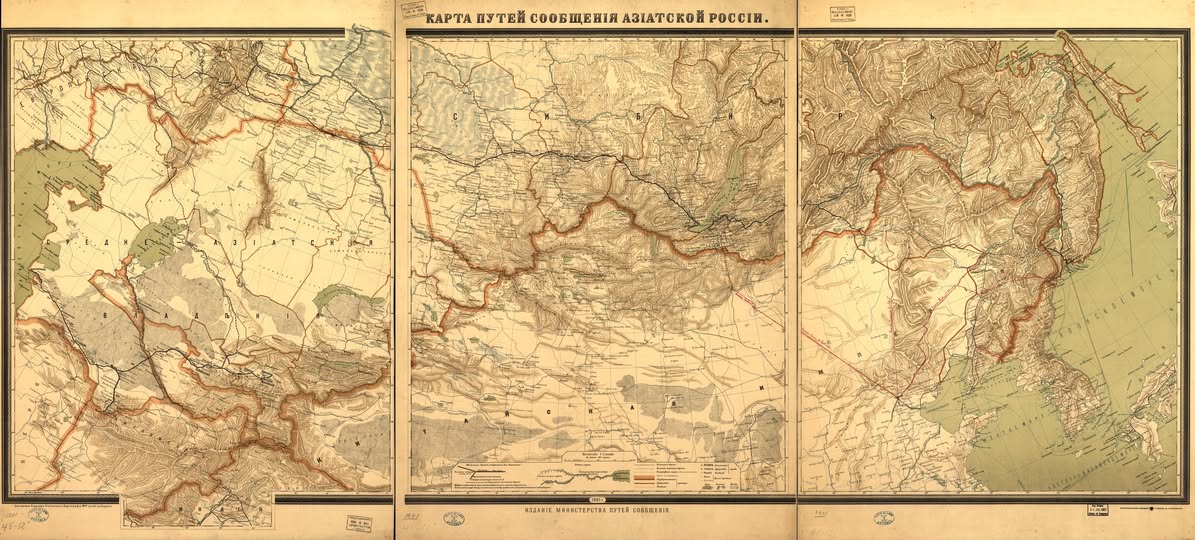
Map of transport routes in Asian Russia, 1901
It is not just geography. It is survival.
Shanghai Society and the Russian Diaspora
By 1935, Shanghai’s Russian population numbered roughly 20,000. Many were aristocrats without assets. Women worked as milliners, dressmakers, cabaret singers. Men played in orchestras, drove taxis, or guarded nightclubs.
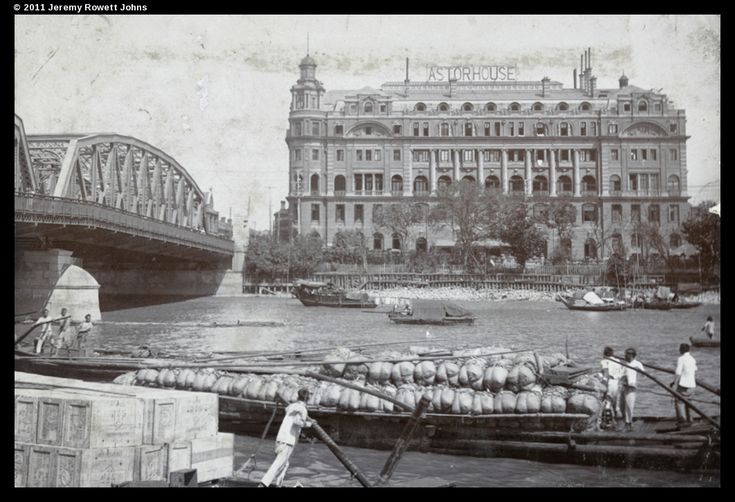
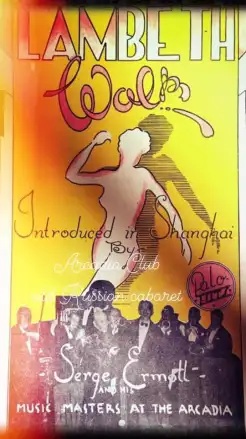
My grandfather, Sergei Ermolaeff (known professionally as Serge Ermoll), was one of them – a Russian jazz orchestra leader who performed in the city’s grand ballrooms and underground clubs. The Majestic Ballroom (demolished), the Astor House Hotel on the northern Bund, the French Club in the Concession, the Cathay Hotel (today the Peace Hotel), the Park Hotel overlooking the old racecourse – these were not merely venues. They were theatres of reinvention.
The Paramount Ballroom (上海百樂門), opened in 1933 on Yuyuan Road, was Shanghai’s Art Deco cathedral of swing. Mirrored ceilings, revolving dance floors, American foxtrots played by Russian musicians for Chinese socialites in qipao gowns slit high at the thigh.
Shanghai was hybrid before the word existed.
Sergei collaborated with Alexander Vertinsky, the exiled Russian cabaret icon whose melancholic chansons – Strange Cities (Чужие города) and Over the Rosy Sea (Над розовым морем) – became anthems of diaspora and longing. Recorded in Shanghai studios for Pathé, they travelled back across borders that their creators could not.
Music crossed where passports failed.
The Women: Style as Survival
The Russian émigré women of Shanghai were renowned for elegance. Style was not vanity; it was currency.
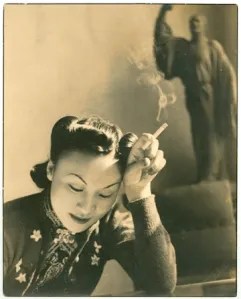
Natalie Zee Drieu’s restored photographs of her grandmother Amy Wang – a Shanghai society girl and designer in the late 1930s – capture this aesthetic: sculpted eyebrows, cigarette poised as prop, bias-cut gowns, velvet, satin, fur cuffs. Even when poverty shadowed them, the émigré women refused drabness.
My grandmother Xenia’s designer clothes. Matching ensembles for her sisters. Black velvet jackets edged in fur. Real silk stockings into her sixties. Gloves in satin and leather. A vanity of French powders and lipsticks in suburban Australia decades later – relics of Avenue Joffre elegance transplanted to Sydney, Australia.
The Shanghai look blended Paris couture with Chinese tailoring and Russian romanticism. Think map coordinates again:
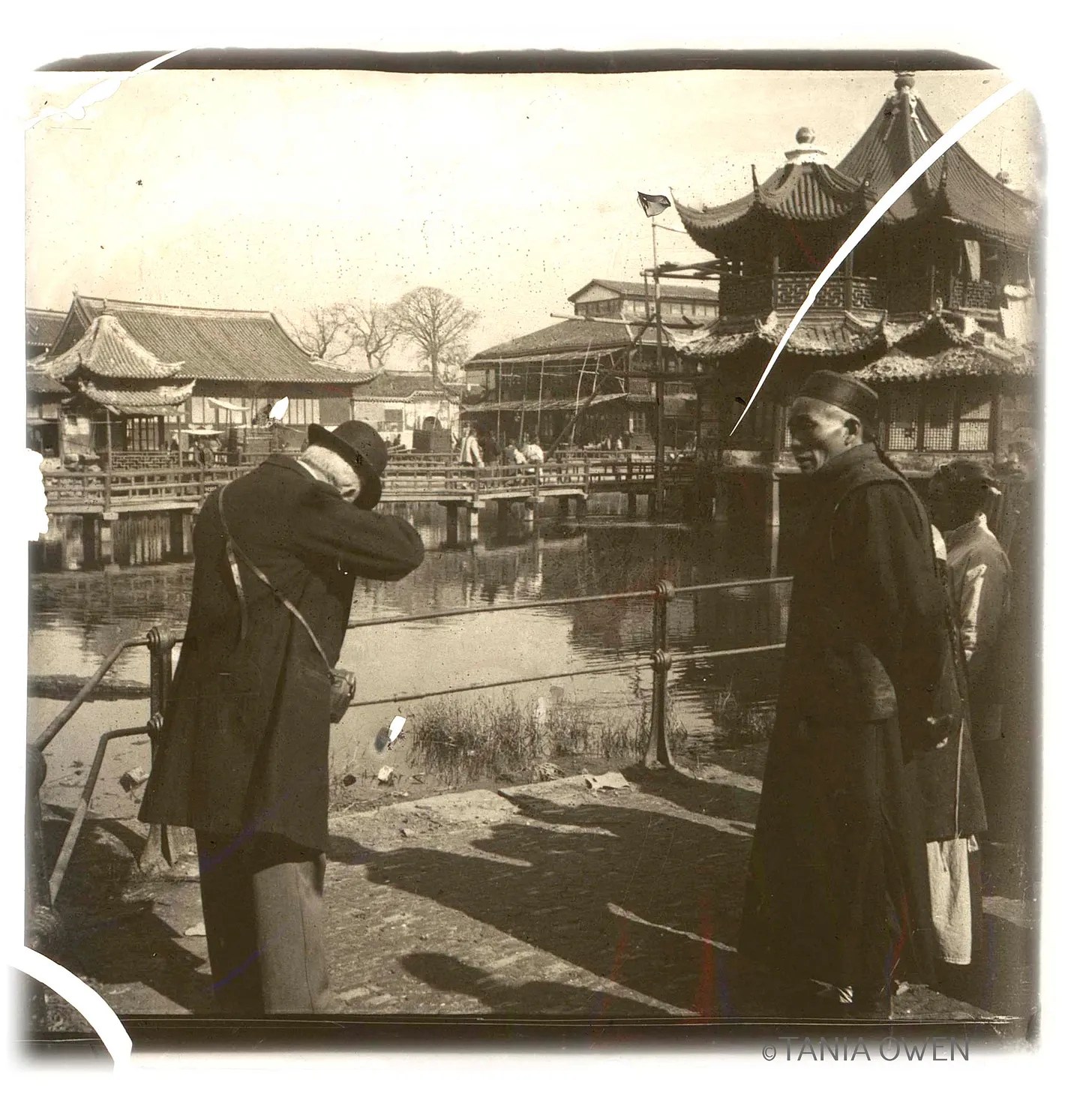
Shanghai was where these lines intersected.
Astor House, Park Hotel, and the Racecourse
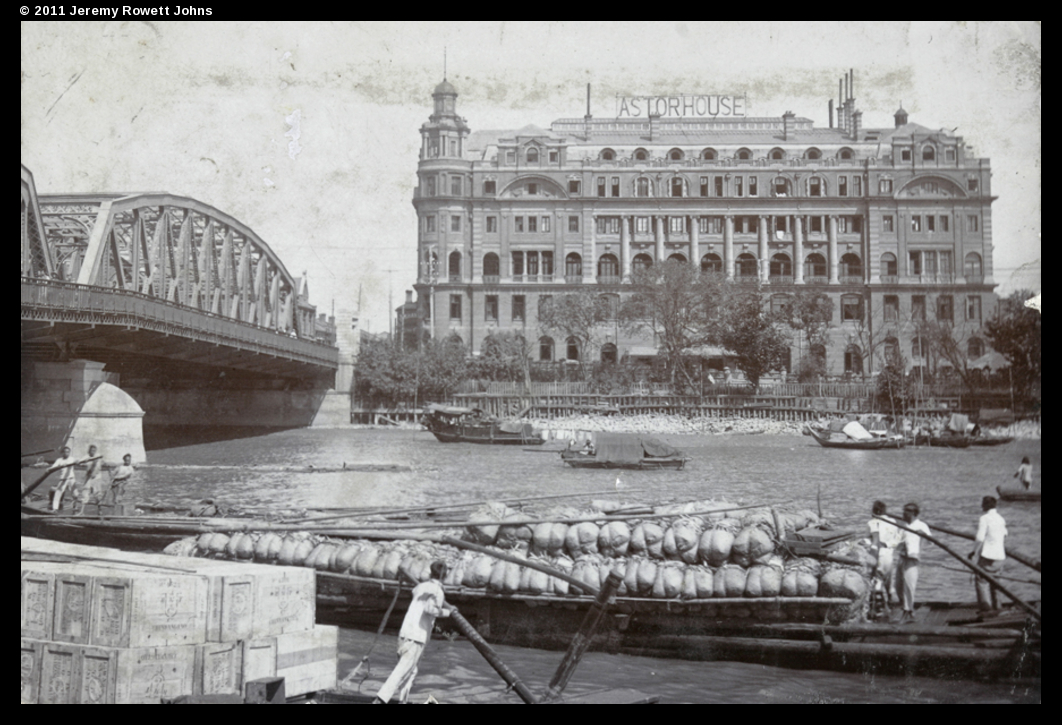
The Astor House Hotel (founded 1846) was one of the oldest Western hotels in China, situated north of Suzhou Creek near the Bund. Room 25 — family lore places them there during Sergei’s residency.
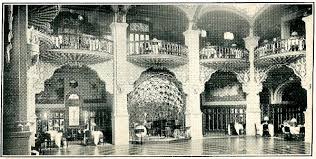
The Park Hotel (1934), designed by Hungarian-Slovak architect László Hudec, towered 22 storeys over the former Shanghai Racecourse — then the tallest building in Asia. Its Art Deco façade symbolised modernity. Inside, plumbing worked. That mattered.
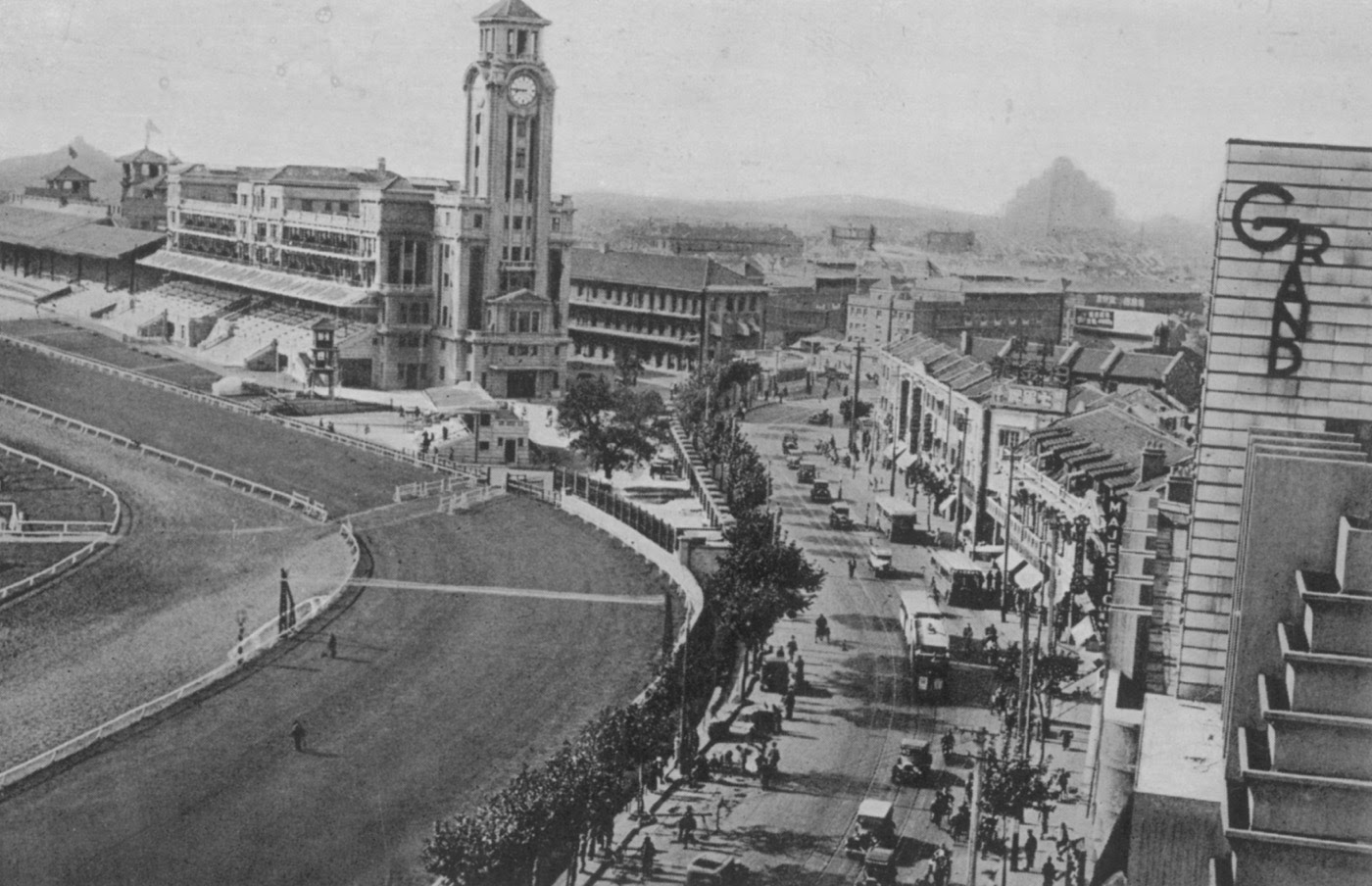
The racecourse, where expatriates wagered under tropical sun, later became People’s Square. History in Shanghai is layered vertically.
Marriage, Status, and Exile
Before Shanghai, Xenia married a significantly older widowed veterinary surgeon with five sons. According to an old Slavonic letter I still hold, the marriage may have secured Tsarist lineage for his children – a desperate transaction in unstable times.
She was 23.
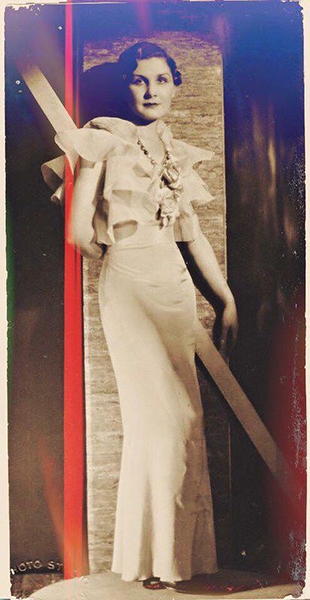
In exile communities, marriage could be protection. It could also be theatre.
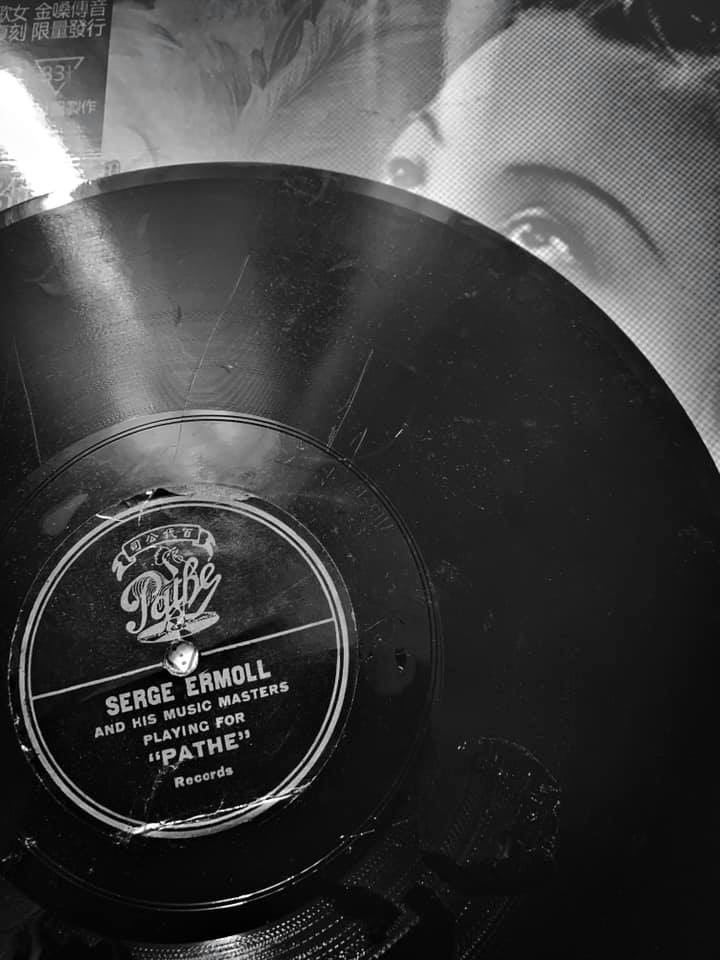
She later married Sergei, and jazz replaced obligation.
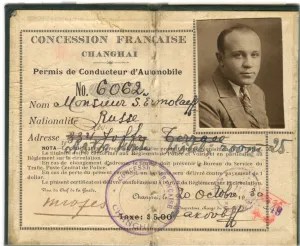
Concession Française Changhai
Photographs as Evidence
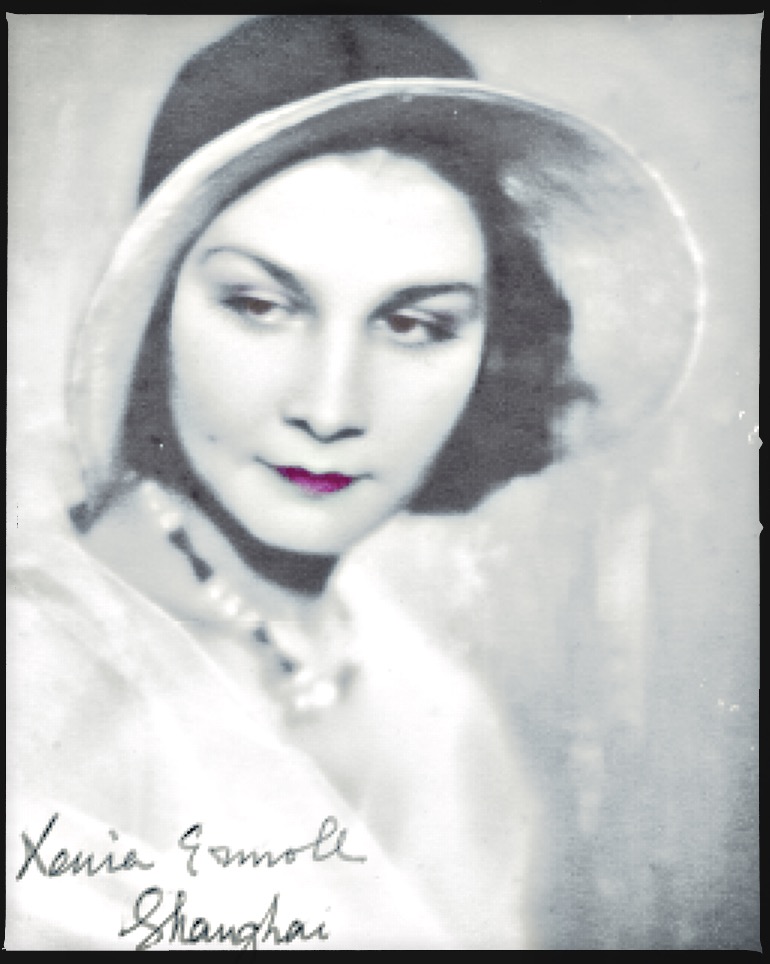
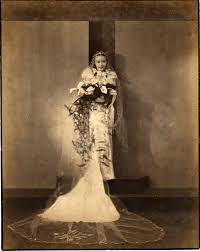
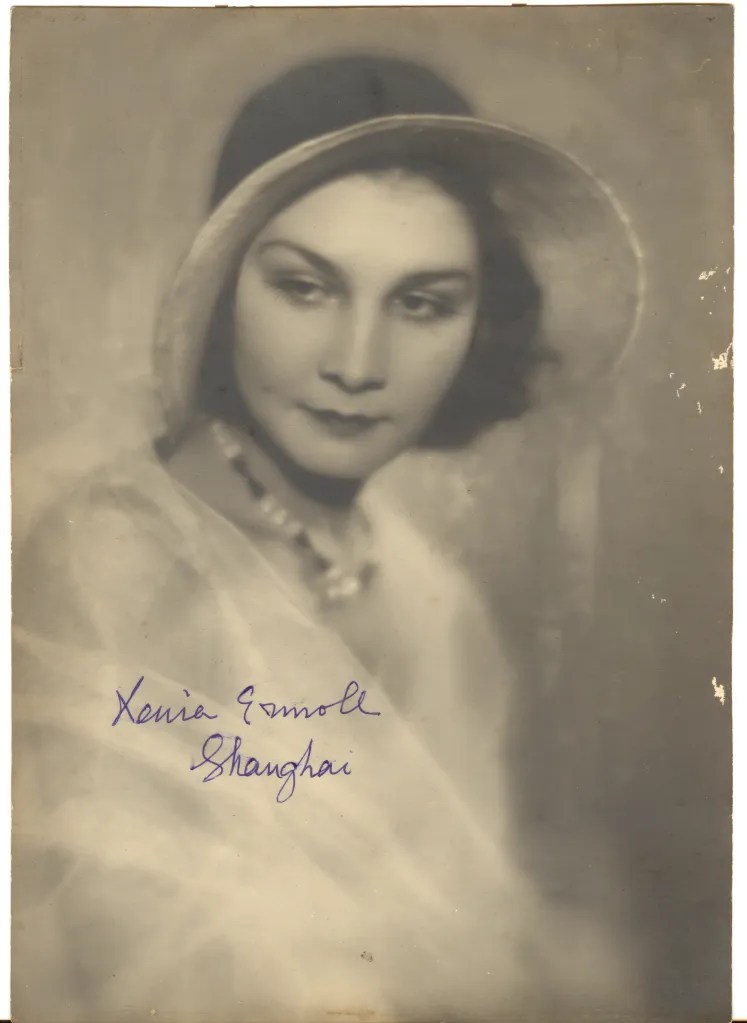
The studio portraits by Josepho Schick — soft focus, tinted lips, oval framing — are not merely images. They are proof that glamour survived statelessness.
In one, Xenia wears a Fabergé egg necklace — brightly coloured enamel eggs linked delicately. She later gave it to me one Orthodox Easter at St Peter & Paul Cathedral in Strathfield. I, a child, mistook history for candy and passed it on to a school friend. The absurdity of diaspora inheritance.
Objects migrate. Meaning fractures.
Return: Shanghai 1996–1997
When I walked Nanjing Dong Lu in the winter of 1996–97 toward the Bund, I recognised the city before I understood it.
Neon reflected on the Huangpu.
Art Deco façades survived behind scaffolding.
The Cathay (Peace Hotel) still cast its green pyramid roof against the skyline.
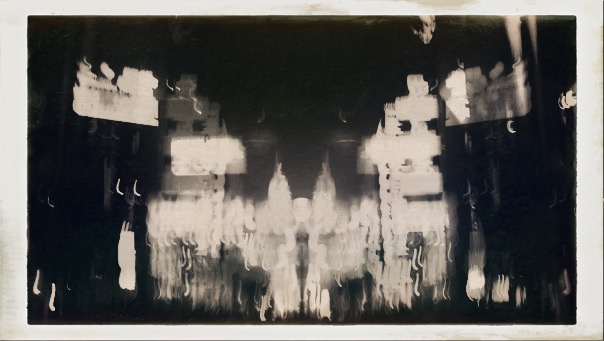
Shanghai then was awakening from Maoist austerity into market delirium. The old ballrooms were ghosts of themselves. Yet if you stood quietly enough, you could almost hear Russian brass under the ceiling fans.
I photographed the spaces where my grandfather had played.
I walked the perimeter of the former racecourse.
I stood on rooftops and watched the city pulse electric again.
It felt less like travel, more like retrieval.
Tuberculosis and Memory
Natalie’s grandmother Amy died of tuberculosis at 33 — a disease that stalked cosmopolitan ports before antibiotics were widely available. Shanghai’s glamour existed alongside epidemics, warlord skirmishes, Japanese invasion (1937), and looming global conflict.
Behind the silk gloves: precarity.
Shanghai as Genre
Shanghai in the 1930s was its own genre – part noir, part cabaret, part colonial tension. A place where Russian aristocrats without countries played American jazz for Chinese industrialists in French-administered streets under British policing.
Life ignored them.
Shanghai was never only a place
Shanghai was never only a place.
From Xenia I inherited an insistence on elegance – not vanity, but discipline. A belief that one’s posture, one’s gloves, one’s lipstick, one’s silence even, could restore order to a chaotic room. She carried herself as though the world were a stage still worthy of rehearsal, even when the curtains had long since burned. From her I absorbed a nostalgia for vanished worlds – ballrooms dissolved by revolution, verandas surrendered to humidity and time, cities renamed and borders redrawn. I learned to long for places I had never seen. I learned that memory could be curated like a dressing table: crystal, powder, scent, photograph.
She gave me a fascination with cities built on fault lines – Shanghai, Harbin, Hong Kong, Sydney – places where empires brushed shoulders and languages collided in tramcars. Cities suspended between East and West, wealth and exile, illusion and survival. From her stories I understood that instability creates style; that reinvention is sometimes the only inheritance left.
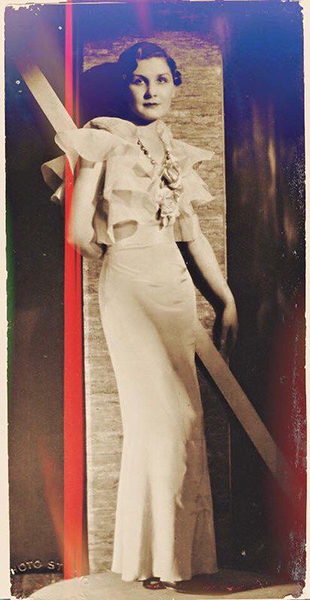
Most of all, from Xenia I learned that glamour can be armour. That chiffon and discipline can shield the heart. That beauty, when the world fractures, is not frivolous – it is defiance.
From Shanghai itself I inherited a taste for hybrid culture – Russian lullabies over Chinese tea, French perfume in tropical heat, Art Deco facades rising beside temple roofs. A comfort with contradiction. A refusal to belong to only one narrative. I came to understand that identity is not fixed; it can be reconstructed, restitched, re-accented. One can cross oceans and remain whole or become someone new entirely.
And I inherited a reverence for photographs – those fragile anchors against erasure. Sepia proof that we were once luminous. That a moment existed. That a woman stood in silk beside a river that no longer looks the same. Photographs became evidence against forgetting.
Then there was that final goodbye to her, years later in Australia – a chance encounter, a hospice room, frail arms closing around me, memory flickering but unmistakable. In that embrace, history softened. The past loosened its grip.
From that moment, I inherited something unexpected:
Lightness.
It was an atmosphere – electric, precarious, perfumed with tobacco and ambition.
And somewhere between Harbin and the Bund, between velvet gloves and jazz chords, between exile and reinvention, the grandmothers became mythic.
But this time, not projected.
Documented.
“Shanghai was the freest city in the world.”
— J. G. Ballard, Empire of the Sun
Night Music on Avenue Joffre
If Shanghai by day was commerce, Shanghai by night was choreography.
Avenue Joffre (霞飛路) now Huaihai Road (淮海中路) was the spine of the French Concession (法租界). Plane trees arched overhead like cathedral vaults, their branches filtering the humid night air into something almost European. Electric signs flickered above cafés and dance halls. Rickshaws (人力車) rattled past Packards. Russian, Shanghainese, French, English, and Yiddish braided together in the street like improvised jazz. Somewhere along that avenue Sergei lifted his baton.
The orchestra might begin with a foxtrot imported from New York, then drift into a melancholy Russian waltz, then back again to swing. Music in Shanghai (上海) was promiscuous with borders. Melody travelled where people could not. The ballrooms were laboratories of reinvention.
Chinese industrialists arrived with wives in silk qipao gowns (旗袍) slit to the thigh. White Russian aristocrats who had once owned estates now tuned violins backstage. American businessmen loosened their collars beneath whirring ceiling fans. Champagne appeared from ice buckets like magic tricks performed hourly. The women watched everything.
My grandmother was not merely a dancer in these rooms. She was an observer – a strategist of elegance. She understood that posture could speak before language. That a woman entering a ballroom might declare an entire narrative through the tilt of a hat. Exile had sharpened her awareness. Every glance was a negotiation: nationality, wealth, safety, possibility.
Some nights Sergei’s orchestra played until the small hours, until the city outside softened into fog drifting up from the Huangpu River (黃浦江). When the last couples left the floor, the musicians would pack their instruments while waiters extinguished lamps one by one. Shanghai after midnight was quieter but no less theatrical.
Taxi horns echoed down the concessions. Riverboats groaned along the Bund (外灘). Neon signs hummed like insects. Somewhere, in a dressing mirror clouded with powder, my grandmother would remove her gloves and become once more a woman without a country. I remember J.G Ballard wrote that strange freedom of the city before war:
“The streets were crowded with refugees and dreamers.”
Shanghai allowed both.
War Arrives Quietly
“The war had made Jim older than his parents.”
— J. G. Ballard, Empire of the Sun
Cities rarely announce catastrophe. They absorb it first as rumour.
In the summer of 1937, the rumours thickened like monsoon clouds. Newspapers spoke of clashes between Chinese and Japanese forces near the city’s edges. Refugees began appearing along the roads from the countryside. Their bundles were wrapped in cloth, their expressions stunned by distance. Then the artillery began.
The Battle of Shanghai (淞滬會戰) unfolded in stages – gunfire across the Huangpu River (黃浦江), smoke drifting above the warehouses along the Bund (外灘), columns of displaced families moving toward the relative safety of the foreign concessions. War did not respect the geometry of treaty ports, but it hesitated briefly at their borders. The concessions became strange sanctuaries.
Inside them, ballrooms remained open for a time. The orchestras still played. Waiters still poured champagne. Outside their doors, entire districts burned. Shanghai specialised in these contradictions.
My grandparents lived inside that suspended reality. Sergei continued performing where contracts demanded. Music was both livelihood and distraction. The dance floors were full of people determined, if only for three minutes at a time, to ignore artillery. But the city had shifted.
Searchlights replaced lantern glow along the river. Patrols appeared on corners. Military trucks replaced taxis along sections of the Bund (外灘). Refugees slept beneath arcades once reserved for shoppers along Nanjing Road (南京路).
The Angel of Victory monument (勝利天使紀念碑) near the waterfront still stood then – a bronze figure raising one arm toward the sky. Beneath it the city moved uneasily, aware that victory had become an uncertain word. For the Russian émigrés the war carried an extra layer of dread. Stateless already, they understood how quickly protection could evaporate. They had fled one collapsing empire only to witness another conflict approaching. Exile teaches a certain instinct. Suitcases remained partly packed.
Yet even during those anxious months my grandmother maintained her rituals: gloves, silk stockings, a carefully applied lipstick in a mirrored compact. Style was not denial of danger. It was discipline against panic. Years later she would say almost nothing about the war itself. But in photographs from that time there is a new intensity in her gaze – a composure sharpened by knowledge that cities, like lives, can fracture overnight. Shanghai (上海) did not fall in a single moment. It exhaled glamour slowly while history rearranged the streets. J.G Ballard wrote of the strange psychological transformation the war imposed on the city’s children:
“The war turned the city into a vast experiment in survival.”
And still, somewhere beneath the searchlights, a Russian orchestra played one last foxtrot for a room full of people pretending the world had not changed.
Pierrot in the Electric Garden
Arcadia Nights – Vertinsky and Ermoll on the Shanghai Stage
Shanghai (上海) in 1936 was already a theatre before the curtain rose. Outside, neon characters trembled in the humid night air of the French Concession (法租界). The rickshaws creaked along Route Amiral Courbet (霞飞路, now 淮海中路). Inside the Arcadia Club, however, the city became something stranger, a stage for exile.
It was here that Alexander Vertinsky met Serge Ermoll, and where two musical worlds fused into a delicate nocturne that would become Над розовым морем – Over the Rosy Sea.
Vertinsky arrived in Shanghai already legendary, a wandering cabaret poet whose alter ego, the Russian Pierrot, drifted through Europe like a pale ghost of modernism. His powdered face, tilted head and trembling voice carried the aesthetic of the tragic clown from Commedia dell’arte, but transformed through the melancholia of exile.
Ermoll’s orchestra, by contrast, belonged to the restless machinery of the modern metropolis. Brass, banjo, saxophone, and accordion. The instruments of jazz, dance halls, and wireless radio.
When Vertinsky stepped onto the Arcadia stage, the orchestra did not dominate him. It listened.
The Composition of Nostalgia
Over the Rosy Sea was not written like a conventional ballroom number. It unfolded like a memory. The structure followed Vertinsky’s signature form: a miniature dramatic aria – half song, half spoken monologue. The melody hovered between minor-key waltz and café chanson, its harmonic movement slow and hesitant. Ermoll orchestrated the arrangement with restraint. A piano introduced the theme.
Then a violin line rose softly, almost questioning the melody. Behind it, the Hawaiian steel guitar -fashionable in Shanghai dance halls of the time added a distant, oceanic shimmer. The rhythm was barely perceptible. A waltz tempo but slowed into something dreamlike. The music did not invite dancing so much as remembrance. Stagecraft Vertinsky understood the cabaret stage as theatre.
He stood almost motionless beneath the light, dressed in black silk, face pale with powder. His gestures were minimal: a raised hand, a half-turn of the head, the closing of the eyes. He sang not to the audience but into the space above them. The opening line drifted through the room:
Над розовым морем вставала луна
The moon rose above the rosy sea.
In the ballroom silence thickened. Couples who moments earlier had danced foxtrots now stood still. Cigarette smoke curled slowly toward the ceiling fans. Vertinsky’s voice was fragile but deliberate — a spoken melody balanced between despair and irony. When he reached the line:
“Нет, вы ошибаетесь, друг дорогой…”
No, you are mistaken, my dear friend…
Ermoll’s orchestra entered again, almost imperceptibly. A muted trumpet echoed the vocal phrase. The violin sustained a single trembling note. The accordion expanded the harmony like breath. This was not jazz in the American sense. It was exile music.
The Sound of a Stateless City
Shanghai (上海) was uniquely suited to this collaboration. Few cities in the world contained such a concentration of displaced voices. Russian aristocrats, Jewish refugees, Chinese modernists, Filipino bands, American jazzmen, all sharing the same cabarets, radio stations, and gramophone studios. Ermoll’s orchestra had absorbed these influences instinctively.
A Russian lament might drift into a tango rhythm. A balalaika phrase might be answered by a jazz saxophone. The Hawaiian guitar, a novelty imported through Pacific dance bands shimmered above it all. The result was neither Russian nor Chinese nor Western. It was Shanghai modern.
The Pierrot and the Bandleader
Vertinsky composed through emotion. Ermoll composed through architecture. Vertinsky’s lyrics were fragments of memory, lovers, wine bottles on ice, moonlit seas that may never have existed. His songs moved through melancholy landscapes of longing and lost youth. Ermoll provided the scaffolding.
He translated the fragile poetry into arrangements that could survive the noise of the nightclub. Each instrumental voice entered like a character in a play, trumpet as narrator, violin as shadow, accordion as heartbeat. Together they created a sonic illusion. A small cabaret room transformed into a vast emotional geography.
Performance as Time Machine
When the final refrain arrived, Vertinsky allowed the melody to dissolve almost completely. The orchestra withdrew. Only the piano remained.
“Мы жили тогда на планете другой…”
We lived then on another planet.
For a moment the Arcadia club seemed suspended between continents and decades. The audience, Russian émigrés, European businessmen, Chinese socialites, wandering artists, recognised themselves inside the lyric. They too had lived once on another planet. Before revolution. Before exile. Before Shanghai.
After the Applause
The applause at the Arcadia was never thunderous. Cabaret audiences understood intimacy. Glasses clinked. Chairs scraped softly against the floor. Someone requested a foxtrot from Ermoll’s orchestra. Within minutes the dance floor was alive again.
Yet something remained in the air, a fragile afterimage of the performance. Over the Rosy Sea had done what Vertinsky’s songs always did: transform the cabaret stage into a place where nostalgia could briefly become real. In Shanghai’s electric night, memory had found its orchestra.
And somewhere above the neon lights of 上海, the moon rose again over a sea that existed only in music.
Read more Coquette: Shànghǎi 上海 : Grandmother – : fashion and style
https://strangeblackbox.wordpress.com/coquette-shanghai-grandmother/
 Strange Black Box