BLACK BOX (Татьяна) Tatiana Pentes Doctor of Creative Arts (UTS) BLACK BOX digital media creator Tweets@Tatiana_Pentes Blog https://strangeblackbox.net http://www.strangecities.net
An interactive digital work/ Musical CD-Rom by Tatiana Pentes (Writer/Director) & Geoffrey Weary (Co-Development/ Cinematography & Photography), Eurydice Aroney (Producer), Roi Huberman (Sound Design), Glenn Remington (Interface Design). Produced in association with Screen Australia (AFC). Online exhibition Australia-Japan New Media Gallery, Australian Embassy, JAPAN http://newmedia.australia.or.jp/artist/info.php?name=tatiana
AWARDS
Strange Cities CD-ROM has been exhibited inter/nationally & winner of Best Arts/Cultural Title/Site, AIMIA Awards, 2000, and Most Innovative/Creative Multimedia Title, ATOM Awards, 2000, Australia. Acquired by the Australian Centre for the Moving Image (ACMI) Multimedia Collection, Australian Film & Television School Library, University of Hawaii, University of Sydney, UTS, the National Library Australia and many inter/national archives.
Strange Cities was selected for Dart 99 dLux Media Arts in partnership with Sydney Film Festival, the 1999 Experimenta Media national travelling Exhibition, The Red Room, & promoted New Talent Pavilion, MILIA Games, Cannes, France in February 1999
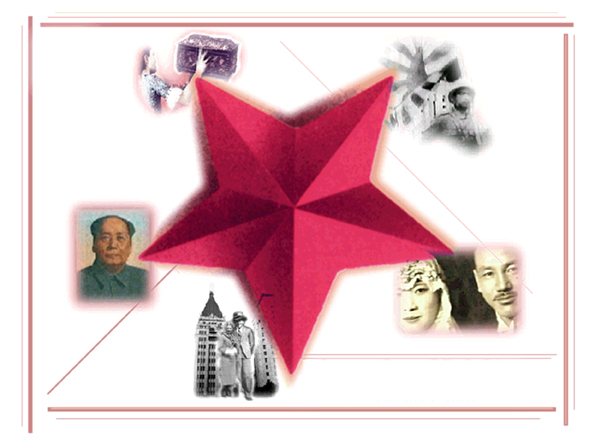
Interface still Strange Cities: A musical CD-Rom (2000)
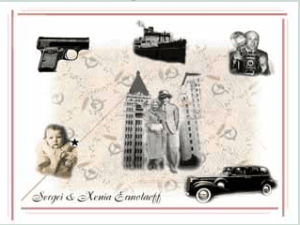
Strange Cities is an experimental interactive multimedia work authored for CD-Rom release and exhibition. Through the disclosure of evidence, Sasha dreams, discovers and remembers the exotic identity of her grandparents Xenia and Sergei Ermolaeff (a composer and orchestra leader) in fragments and traces of their music and struggle to survive the Russian and Chinese Communist Revolutions. The dulcet tones of the legendary voice of ABC Radio – Tony Baldwin as Newsreader deepen the nostalgia of this interactive drama/history.
The inspiration for the work is a tune of the same name – a musical illustration, an imaginary vision of old Shanghai, Chinese metropolis and international settlement which conjures mythic, filmic, musical and personal images of the city port.
Interface still Strange Cities: A musical CD-Rom (2000)
Coined capital of the international underworld, the city of Shanghai became a seductively strange locale symbolized in the Western imagination. In reality however the city was most often the final port of call for political refugees. The visual imagery for the project was shot in St Petersberg, Shanghai, Tokyo, and Sydney and involves found photographs, film footage, simulated radio archives, and original musical compositions.
Interface still Strange Cities: A musical CD-Rom (2000)
Strange Cities experiments with performance, sound, image and text and their dramatic representation in the interactive environment. Providing a challenging approach to traditional modes of story-telling and music in the interface design, the user is provoked to discover the Strange Cities tune in the graphic portrayal of its musical script, sonic perception of its vocal lyric, and orchestration through user interactivity.
In the exploration of Strange Cities the user will experience a questioning of the relationship between fictional, biographical, historical and musical narrative possibilities produced through the slippage between and across a series of interactive screens. Participation with the interface provides for the user an experience which challenges traditional modes of narrative in audiovisual presentation, the perception of musical structure, storytelling and in historical, biographical and fictional texts in the multimedia environment.
Interface still Strange Cities: A musical CD-Rom (2000)
Strange Cities was selected for the 1999 Experimenta Media Art CD-Rom Exhibition and has been promoted at the New Talent Pavilion, MILIA Games, Cannes, France in February 1999.
NEW MEDIA AWARDS FESTIVALS
Best Arts/Cultural Title/ Site, Australian Interactive Multimedia Industry Association (AIMIA) Awards November 2000, AUSTRALIA
Most Innovative/Creative Multimedia Production, Australian Teachers of Media, (ATOM) Awards May 2000, AUSTRALIA
This project has been produced in association with Screen Australia (Australian Film Commission)
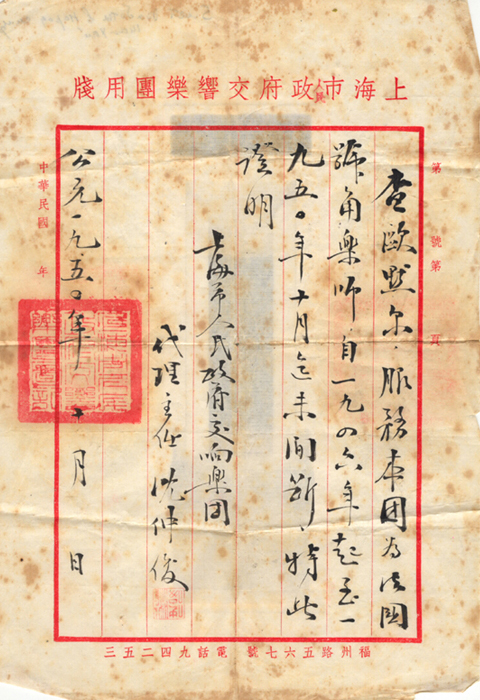
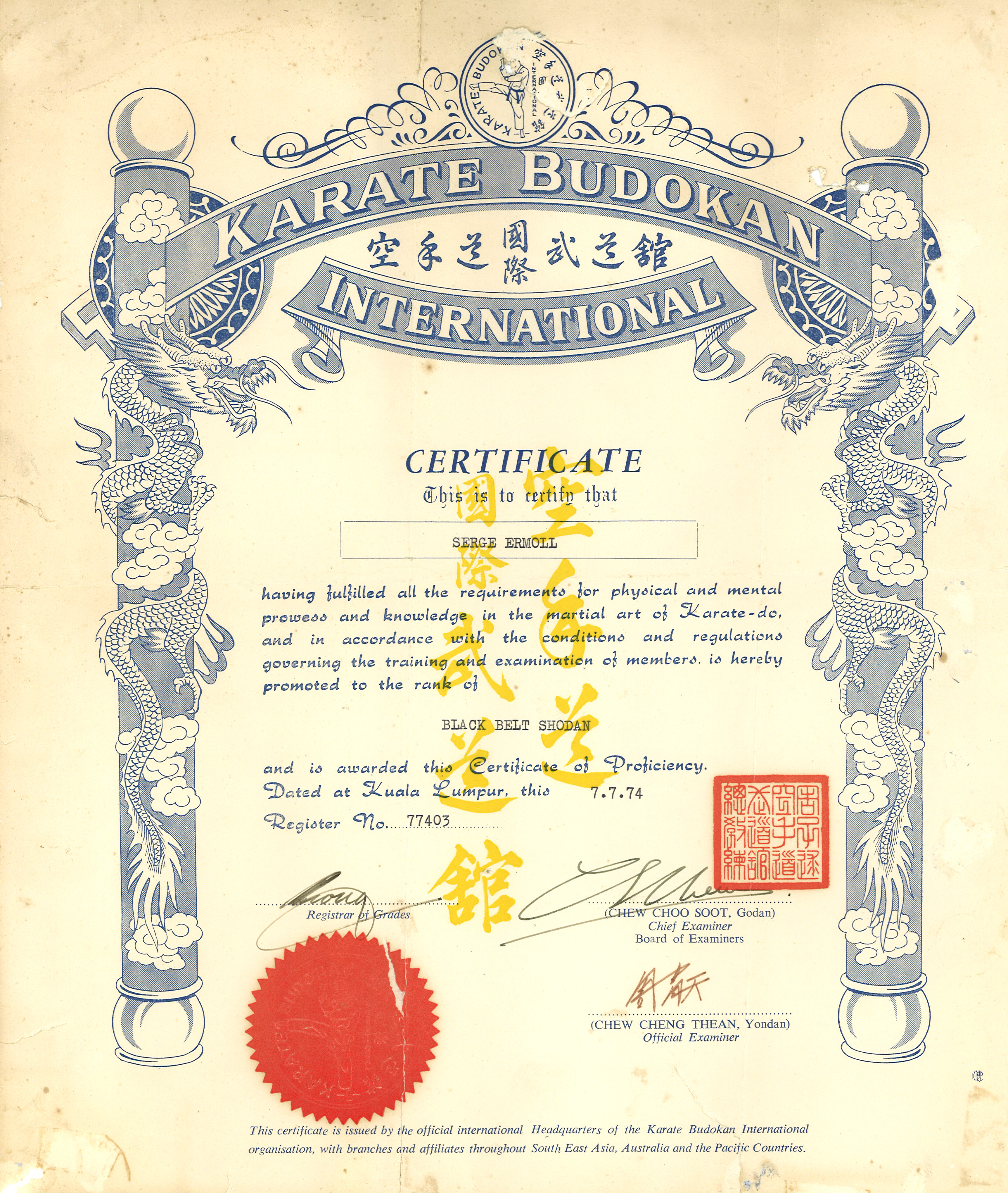
Serge Ermoll Snr: Shanghai Symphony: Japanese identity papers
Shanghai Nostalgia” as a Cultural Industry by Pan Tianshu
Shanghai Nostalgia: Historical Memory, Community-Building, and Place-making in a late Socialist City
Pan, Tianshu. “Historical Memory, Community-Building and Place-Making in
Neighborhood Shanghai.” in Restructuring the Chinese City: Changing Society, Economy, and Space, ed. Laurence J. C. Ma and Fulong Wu, 122–37. London: Routledge 2005.
“For the first time in post-Mao Shanghai, the local people found their colonial past was no longer baggage to carry but a rich resource to be fully utilized. “Shanghai nostalgia” thus “became entangled with a (dys)utopian fervor to embrace global capital and its ideology, the appearances and normalcy of the Shanghai modern entered intellectual and commercial circulation at the standard version of historical memory” (Zhang 2000: 354). Shanghai quickly became a “re-colonized” site for various kinds of joint ventures in film production. Old buildings in the Municipal Concession and small villas in the west end were renovated in order to attract more Spielbergs and boost the tourist industry. Those sinified cafes and European restaurants that somehow managed to survive communism changed their names back to their original western names. The famous Red Mansion Coffee House, for example, was once again Chez Louis. So did the theaters, movie houses, department stores, and dance halls. The Old Man Jazz Band, who had a brief appearance in Spielberg’s movie, started to perform all year around in the Peace Hotel (Sasson House, previously owned by a famous Jewish billionaire). Colonial Shanghai rekindled collective memory and in the process of remembering, itself was re-invented. With its success in the colonial past in setting trends, finding opportunities, and witnessing miracles, Shanghai provided a somewhat “infectiously decadent, but alluring background and setting” (Dai 1997: 158) especially for those working in the film industry.”
Zhang, Xudong. 2000. “Shanghai Nostalgia: Postrevolutionary Allegories in Wang Anyi’s Literary Production in the 1990s”, in Positions: East Asia Cultures Critique, pp. 348-387. Duke University Press.
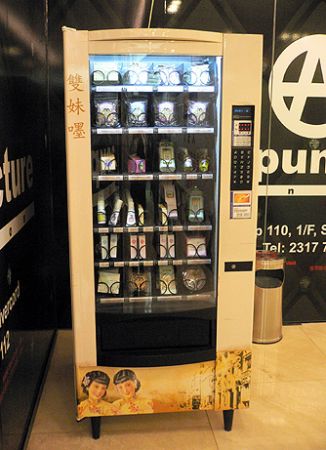
“Selling cosmetics by vending machine?”
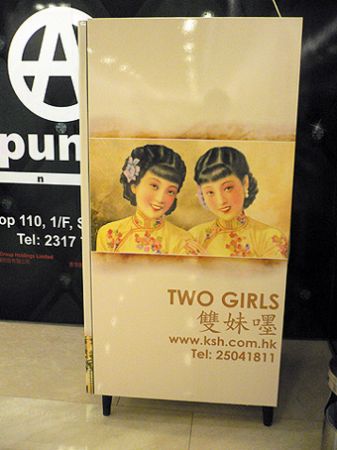
April 19th, 2008 “In Japan you can find all sorts of things for sale in vending machines. Since I’ve lived in Hong Kong however, I’ve never seen an explosion of this sort of retailing in the city. So it came as a surprise to encounter a lonely looking vending machine while walking through Silvercord shopping center last week. The vending machine had a traditional 1920’s era graphic of two girls covering the outside.
“The image looked like a cigarette ad from old Shanghai, the type that tourists purchase on “antique” posters featuring beauties from the time period. On closer inspection, the image actually represented the logo of a brand of cosmetics, Two Girls.
“This sort of vintage look doesn’t really match a vending machine. Vending machines typically denote a sort of modern, mechanized and impersonal shopping experience. You don’t normally associate this type of experience with female shoppers. Further, a product like cosmetics would usually require the purchaser to read the labels and check the ingredients, which isn’t possible from inside a machine. Typical products that are sold in this way are ultra well known products. Perhaps the cosmetics are well known, however if I were a shopper unfamiliar with the brand, not being able to read the label and study the product would be a major impediment to sale.
“The location of the machine was also somewhat off. It was buried near the side of an escalator in an alternative entrance to the shopping center…”
“Yet another factor to consider, does the product match the target consumer of the youth-oriented Silvercord mall?
“So in essence, the product, the brand image, the target consumer, the location of the machine and the technology all need to be considered when selling a product by vending machine. In this case, the factors appear to be a bad match.”
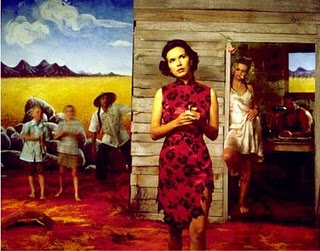
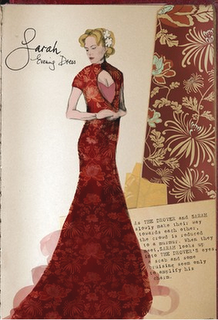
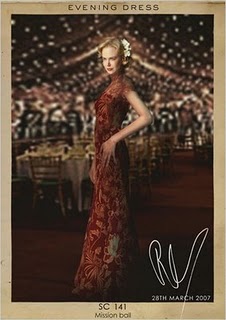
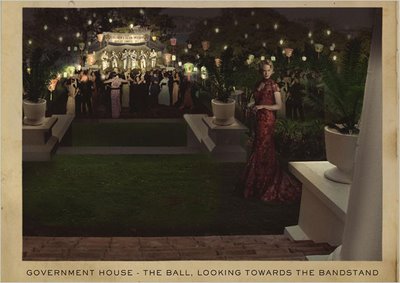
“Darcy took me out to see Australia last night – and boy, what an epic! Sweeping scenery, soaring soundtrack, cattle drives, the Stolen Generations, World War II, and a reprehensible villain to top it off…But what really caught my eye were the costumes, created by Baz Luhrmann’s wife Catherine Martin. When Nicole Kidman’s character had to dress more elegantly, her costumes often had a distinct “1930s Shanghai” aesthetic to them that is discussed in this slideshow.
“The basic lines and structure of the cheongsam, also called a qipao, have remained essentially unchanged for decades, and for good reason. There is just something about a high collar, princess seams, and curve-skimming tailoring that oozes class, taste and glamour regardless of the decade. But there are some tricks to making sure you do end up looking glamourous in a dress like this:
“*Perfect fit is crucial. It should be body-skimming, but not so tight that you bust your seams when you sit down. If there is too much loose fabric around the waist, the curvy silhouette will be ruined. Conversely, if the dress is too tight across the bust, it will flatten you out and again – ruin the silhouette. Bottom line: if the dress does not fit perfectly off the peg, have it tailored.
“*Make sure the collar is neither too tight nor too loose. If you find yourself perpetually tugging at the collar to loosen it, of have to wear it unfastened, it is too tight.
“*Side slits can be tricky – sometimes there is only one, sometimes there are two, and sometimes there are none at all. Make sure that when you sit, you smooth your dress down over your hips to make sure you don’t reveal too much thigh. Go barelegged if possible to avoid showing off the tops of your stockings below the slits. If you are uncomfortable with the height of the slits, again – take your dress to a tailor and have them stitched together an inch or two to boost your confidence.
“*If your dress is made from a bold, eye-catching color or fabric, limit your jewelry to just simple stud earrings. Long earrings do not pair well with a high-collared dress. If your dress is a solid color, you can add a sparkly brooch for some visual interest, but keep the earrings minimal to highlight the collar area of the dress. Avoid necklaces – they distract from the dress, and can get tangled on the closures.
“*Don’t theme your entire outfit as “Chinese.” This is not the time to bust out your charm bracelet, handbag and hairclip that all have Chinese characters on them. A little bit of Shanghai style goes a long way, and your dress has just the right amount. Any more would be too much.
“*Keep your hair sleek but soft. If you have long hair, twist it gently back into a low bun or chignon but make sure the front frames your face. If you have short hair, style it simply in a way that suits your profile. The idea is not to distract from your dress, but to treat your hair as a key accessory.
“*Makeup should be simple and clean, but without sacrificing glamour. Classic bold matte lips, the tiniest brush of rouge, and minimal eye makeup is ideal – the same Hollywood classic look
“*The key words to remember when trying to create 1930s Shanghai glamour with a cheongsam or qipao are fit and simplicity. If your dress does not fit properly or if your makeup or hair are too distracting, then the entire effect will be ruined. Take the time and plan well in advance to ensure your dress has the perfect fit. Don’t fuss too much over your hair and makeup. Less is truly more! that is now in fashion. Avoid heavy eyeliner and blush, and overly glossy or frosty lips.”
“Shanghai Surprise”
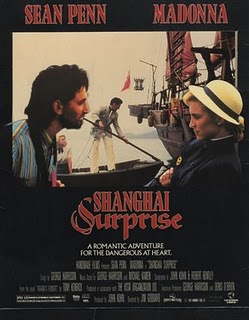
One could not go without mentioning that cinematic blunder Shanghai Surprise (1986) panned by critics. The film had a solid producer in ex-beatle George Harrision and his Handmade Films company and acclaimed director Jim Goddard. It was based on an adaptation of Tony Kendrick’s literary novel Faraday’s Flowers (1978). However the ill-fated stars (newly weds) Madonna Ciccone and Sean Penn ensured a box-office failure. The film popularised the Shanghai 1930’s opium, coolies, and spies narrative once more. Shot in Hong Kong the film was set in Shangha, China 1938 – Maddona played Gloria Tatlock a US Missionary to Penn’s Occidental tourist adventurer. According to Paul Katz (posted 6 April 2007) “…Some bad films become kitschy-cool with age, but Shanghai Surprise continues to rot. Penn teams up with then wife Madonna as a ’30s rapscallion charged with helping the Material Girl’s missionary/nurse…we lost you at ”missionary/nurse,” didn’t we? While the tabloids claimed that the duo had chemistry in real life, those sparks never showed up on the screen. EXTRAS D-list celebs like Melissa Rivers riff on fave scenes; and in a doc, supporting players dish about paparazzi and Madonna’s prima donna antics.” http://www.ew.com/ew/article/0,,20033920,00.html [Accessed 10 February 2009]
The legacy Shanghai gesture in theatre, cinema, literature, photography and music is an elegant motif and contested space – a dialectic between East & West (Chinglish, Chinoiserie, Europeanoiserie et al) and not only a reminder of Shanghai between the Wars, but so too a powerful evocation of the Japanese occupation.
ABSENCE PRESENCE : The Body Navigation, Dance/Video/Performance/Music, 14-18 of July, 2007, St. Petersburg, RUSSIA by Lara O’Reilly (website)
Text by Tatiana Pentes
http://www.russia.embassy.gov.au/mscw/LaraReilly.html
Lara O’Reilly, an Australian installation artist, residing at National Centre of Contemporary Art in June, 2007 and her works installed at Body Navigation III International Festival of Contemporary Arts on 14 – 18 July, 2007.
Lara O’Reilly
A film & performance installation in the Chapel of the Naval Hospital, Kronstadt, forming part of III International festival of contemporary arts, The BODY NAVIGATION, DANCE/VIDEO/PERFORMANCE/MUSIC, 14-18 of July, 2007, St. Petersburg, RUSSIA
“Anyone who wants can look at my films as into a mirror, in which he will see himself.” Andrei Tarkovsky, Sculpting in Time, p. 184.
“The installation was intended to be a highly experiential encounter with the space and with oneself. For the viewer to experience their own sense of the space and find themselves in a world between worlds…blurred between interior and exterior realms of built and natural spaces and the interior and exterior states of mind that the performance and the soundscape allude to….” Lara O’Reilly artist
In the contemporary convergent global media environment of digital networked technology, and pastische, empty parody (mimicry), O’Reilly’s ABSENCE PRESENCE returns us to the traditional notion of “multi-media”, suggestive of the shadows reflected on the walls of Plato’s allegorical Cave. The spectacular installation of ABSENCE PRESENCE, is staged on three levels and Chapel of the Naval Hospital, Kronstadt, Kotlin Island, Russia, 48km east of St Petersberg. The naval hospital was built 1717, and is the site of the earliest medical establishment in Russia. The Russian staging follows an Australian site-specific manifestation of the performance on the abandoned industrial Cockatoo Island, Sydney Cove.
O’Reilly creates for us a highly experiential and dramatic encounter, with her spatial, temporal and theatrical exploration of the rupture/suture paradox between marine and terrestrial, past and present, the outside and inside, the remote and the intimate, of seduction and abandonment, experience and the underworld. ABSENCE PRESENCE is infused with the resonance and mystery of what we feel but cannot see. In Lara’s words:
….[I felt] Kronstadt should have a very slowed choreographed movement piece. There was something about the spaces of the Chapel, the ascending movement through the spaces –I imagined that while the viewer ascended through the space, that they passed through these empty spaces as a slowed dance, a rhymic and sensual play between their own existence in the space and the lived memory of the place, a Chapel that functioned as a final farewell for the recently departed…”
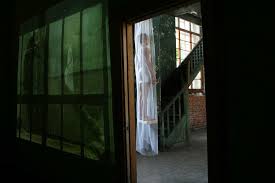
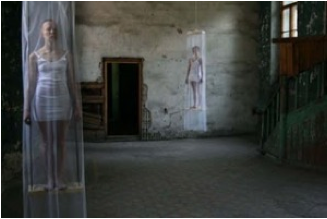
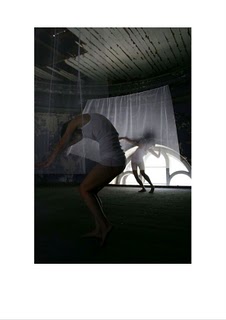
The Kronstadt work integrates realtime and the simulated (cinematic) representations of the performances/movement of the bodies of five young contemporary Russian female dancers, professionally trained in classical western ballet and Japanese Butoh dance. The filmic (technological) cinematic sequences of the woman are juxtaposed with the live performance of female forms (reminiscent of netted mermaids) suspended in cocoons from the rafters, and released to move, dance and wander. The chrysalised women are “veiled and lit in a sensuous light, conjuring emotions of sadness, loss, loneliness and reverie and yet a gentle sense of security of our own stilled existence within the incredible space where we find ourselves..on an island….” The installation successfully plays with our notion of place, identity, communication, sexuality, the personal and the political, specifically with the cinematic and radiophonic allusions. The haunting tones of a live music (a cello sound piece) conjure the ghosts of the past, the dispossessed, and those who have passed from this life to the next, in these spaces, the site of the Kronstadt Revolution in the Finnish Gulf. Ironically, the waters off Kotlin Island are also the location of a modern tragic ship collision and indeed the invention of radio-location after Alexander Popov, the lauded Russian scientist (reported to have invented radio).
The filmic sequences are primarily performed by O’Reilly’s Russian model /dancer/muse Olya, in the locations of Konstantin Fort; the 300 year old Kronstadt Cemetery; and Summer Gardens. These cinematic performances are overlayed with film sequences of the ascending movement through the interior space of the Chapel and military hospital (closed in 2005), conjuring the bodies (victims) of the revolutions that passed through.
ABSENCE PRESENCE installation Kronstadt Island RUSSIA
My first collision with a previous staging of the ABSENCE PRESENCE multi-media installation in a deteriorating industrial complex, located on the isolated Cockatoo Island in Sydney Cove, Australia (the indigenous Australian Aboriginal name for this island is Wa-rea-mah). I was touched by her ability to deeply engage those visiting the location. The piece resonates with the dis-location of Indigenous people during the colonial period, when their island home was transformed into a convict prison for those transported across the seas from Britain. Later this place was a colonial & industrial shipping dock.
Therein lyes the connective thread – through the ghosts of the displaced – between the Cockatoo Island (Australia) and Naval Hospital Kronstadt (Russia) re-enactments. My engagement with both O’Reilly’s work and the sites are complex and intertwined. As daughter of Vladimir, a Admiral in the Tsarist Russian Navy, my grandmother Xenia emigrated from St Petersberg with her mother Eugenia & two sisters during the Revolution, they never saw Vladimir again, but found refuge in Harbin, Manchuria, then Shanghai, China & later Sydney Australia. As a child I grew up with these memories and on the Balmain peninsula, my primary school opposite Cockatoo Island.
The dialectic relationship between these two island spaces (curt by sea), both scarred by waves of industrialisation (modernity), migration, military/colonial abandonment – they share a depth of history and speak to each other, as O’Reilly’s work speaks to me (the child of a Russian émigré).
Thursday, April 26, 2007
ABSENCE PRESENCE installation cockatoo island
When encountering Lara O’Reilly’s multi-media installation I was touched by the work’s ability to deeply engage those visiting the location – a deteriorating industrial complex located on an isolated island in Sydney Cove. The indigenous Australian Aboriginal name for this place is Wa-rea-mah, and these people were dis-located during the colonial period, when their home was transformed into a convict prison for those transported across the seas from Britain. Later this place was a colonial & industrial shipping dock. The work resonates with ghosts of the displaced. As visitors/participants in O’Reilly’s work we must replicate the journey [across the river styx] from the mainland and step over a psychological threshold to apprehend the installation. Dissonant digital film/video imagery of a woman walking through spaces of ‘nature’ and water are projected on multiple screens within the massive space, juxtaposed with female forms (reminiscent of mermaids) suspended in silken cocoons from the rafters. The haunting tones of a live cello sound piece, conjure the ghosts of the past, the dispossessed, those incarcerated, and mingling with the feathers from a million birds and industrial detritus.
absence presence installation cockatoo island
A site-specific performance and moving image installation infused with the resonance and mystery of what we feel but cannot see. It is a meditation on space and memory and the ways in which the two constantly interact at specific sites. Composing filmic worlds moving between the abandoned architecture of Cockatoo Island and the remote Australian bush and how this collision of built and natural worlds can mediate between the present and the past – between the visible and the invisible. Rooms with suspended female bodies, veiled and lit in a sensuous light, conjuring emotions of sadness, loss, loneliness and reverie and yet a gentle sense of security and of our own stilled existence within the incredible space where we find ourselves.. on an uninhabited abandoned island that is richly embedded with the history of our colonial and distant past.
“The installation was intended to be a highly experiential encounter with the space and with oneself. For the viewer to experience their own sense of the space and find themselves in a world between worlds…blurred between interior and exterior realms of built and natural spaces and the interior and exterior states of mind that the performance and the soundscape allude to…. Above all it was to be enjoyed and to be taken on a journey to a faraway place…” Lara O’Reilly artist
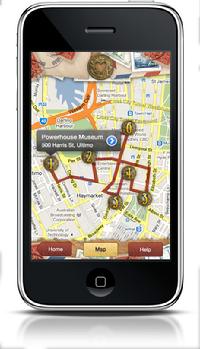
China Heart: graphics interface design concepts: Tatiana Pentes
China Heart iPhone App
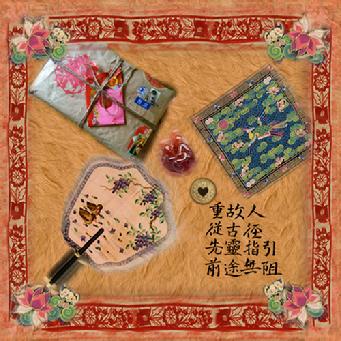
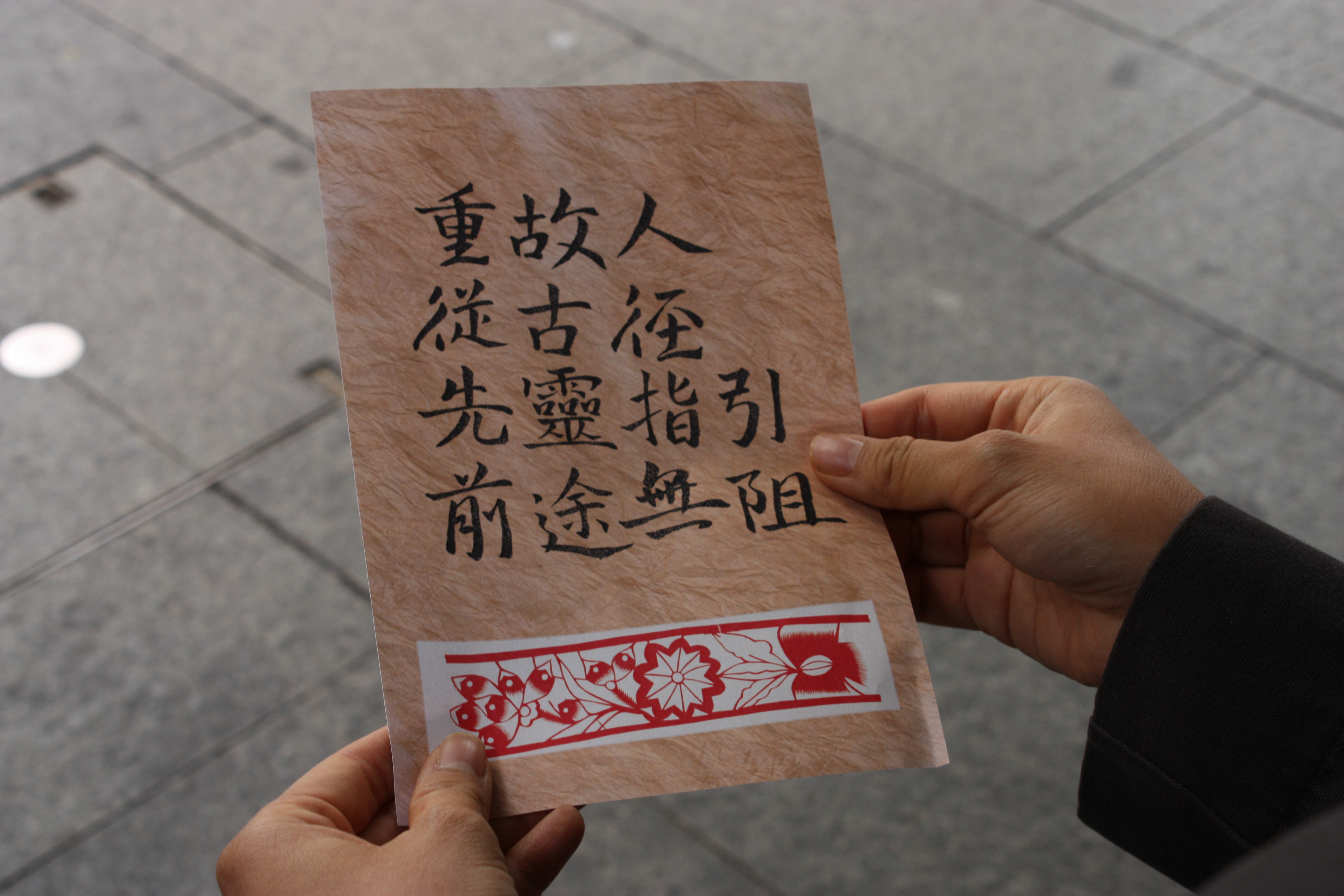
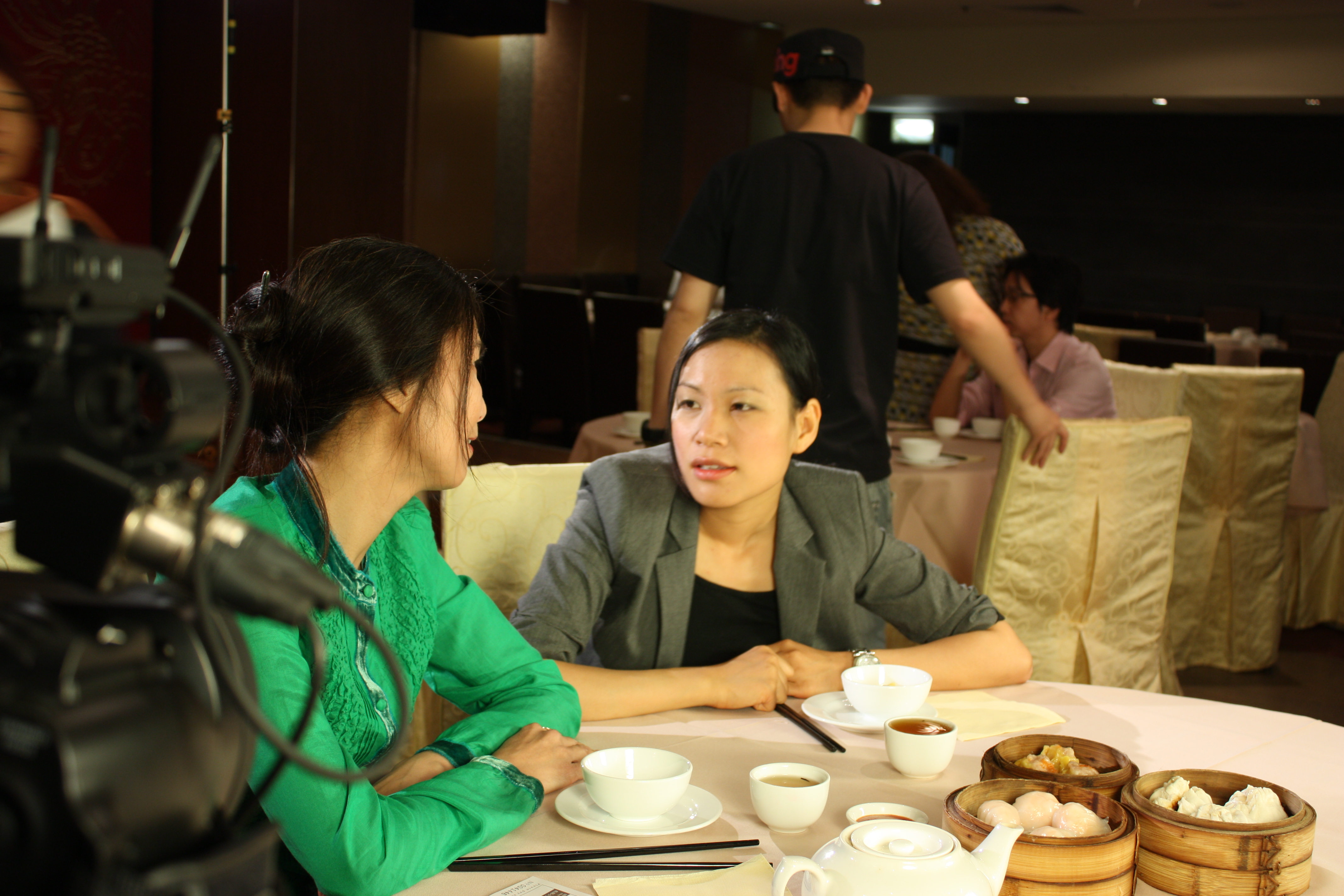
China Heart is a partnership with dLux Media Arts , the Powerhouse Museum, Gallery 4A, The Project Factory written/directed by Annette Shun Wah & sound design Kingston Sound – exploring the effectiveness of engaging new audiences with existing archives using fictional entry point- in the creation of a innovative iPhone application, interactive website & mobile web interface to explore a social & cultural history of Chinatown, Sydney. Tatiana Pentes’ participation includes brand logo design, graphic interface design, look & feel of iPhone app, visual research, and editing & digital effects for the moving image & sound sequences.
A love story, a puzzle and a challenge
Lian is a young woman whose plans to marry are stalled when she receives a mysterious engagement present with a strange message. Will she ever be able to marry her beloved David?
Players help Lian solve the puzzle of her family’s past and her cultural history guided by dramatic clues, oral histories and historic re-enactments downloaded on their own mobile phones so her wedding can take place as planned
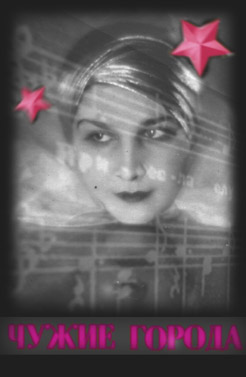
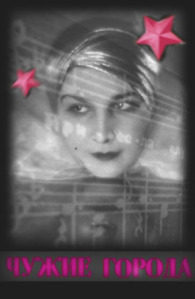
Image: Film poster for Strange Cities Чужие города – Russian film poster (AFC) my grandmother Xenia Vladimirovna & Sergei’s musical score
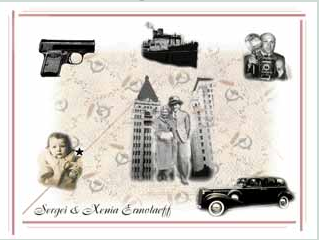
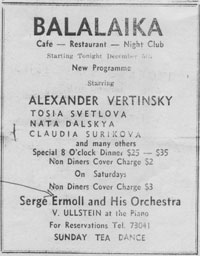
My grandmother Xenia Vladimirovna was born in Russia 1908. Her father was in the Tsarist Russian navy. After the Bolshevik revolution 1917 he did not return from sea. After a brief marriage to a widowed vet surgeon with five sons, Xenia told me, her mother Eugenia and three sisters Helena, Galya, and Marya made the journey by Trans-Siberian railway to Harbin, Manchuria in 1923 to find husbands in China. As a singer and dancer at the Modern Hotel, Harbin across the ballroom she met my grandfather Serge Ermolaeff (Serge Ermoll and His Music Masters). “I didn’t think Serge would notice but he did, we Russian girls wore beautiful gowns because at least we got paid, not like my Chinese friend Rose, who had to make money in other ways….” she told me half her life lease later in Sydney. Later in Shanghai she married Serge 1933 where they re-met at the majestic Hotel. My father Serge Jr was born 1943 in Shanghai during the Japanese occupation in China. After a successful career as a jazz orchestra leader in the big clubs and hotels of Shanghai: Paramount, Cathay Hotel, Ladlow’s Cassinova, the French Club, Wagon Lits my grandfather Sergei accepted passage on the Chan Cha ship to Hong Kong and then Sydney Australia 1951. Decadent jazz music became unfashionable with the Chinese Communist revolution, but he managed to continue working at the Russian Club, in Pitt Street Sydney. He brought with him my father Serge, his wife Xenia, his musical scores, and one Trumpet. The Australian government gave them a peppercorn lease on a Deco house on Monterey Street in Sans Souci. My grandmother always told my father a young jazz pianist also……”don’t dream about Melbourne “its such an old fashioned town!”…her sister Galya married a British businessman from the Shanghai Texaco Company and relocated there….Xenia and Sergei made the train trip on the Sydney-Melbourne over night express many times.
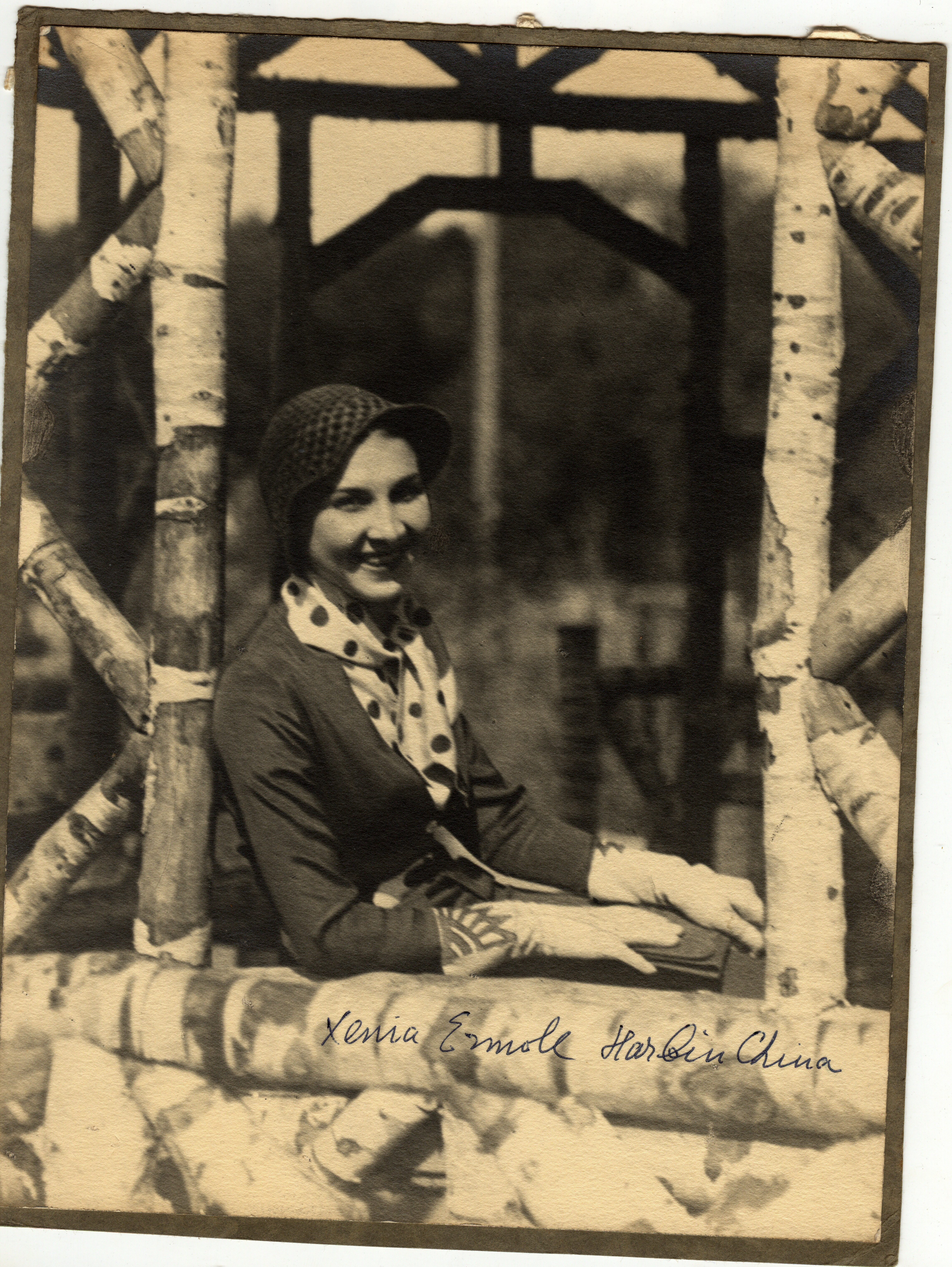
Xenia Vladimirovna, Harbin, Manchuria, China
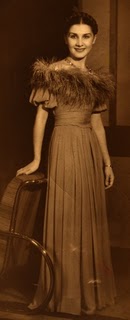
Xenia a Russian Lady from Shanghai
This is a portrait of my grandmother Xenia Vladimirovna Ermolaeff
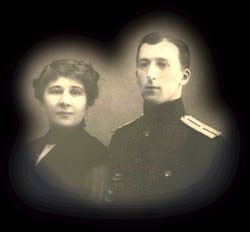
Eugenia and Vladimir an Admiral in Russian Tsarist Navy, c. 1920
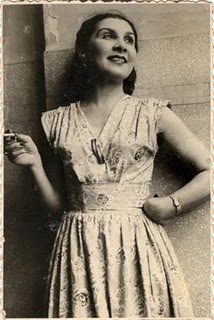
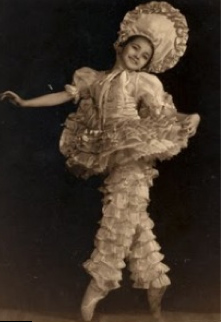
This is a portrait of Asja Mercoolova as a girl, my grandmother Xenia’s goddaughter. Xenia wanted me to be a dancer like Asja. She wanted me to be on the stage. She would ask me to sing and perform songs for her in the old fashioned lounge-room with the radio on in the background. They sent me to dance classes – modern, jazz, tap and later I studies Flamenco. I still wear Flamenco shoes every day to work (!) I grew up listening to my grandfather Sergei’s jazz. He would practise in his music room on the trumpet, at the piano and at his vibes. One day in the future I would be packing away his musical scores, piled high on top of his piano, and he would be gone and buried. River Lights club in Sans Souci is a vivid memory, staying up too late, and watching him play. He wore exquisite tailored suits and painted on his eye-brows, cabaret style. The music was a melange of Russian folk ballads, American jazz, and Chinese pop. The compositions were for a famous crooner he remembered, Alexander Vertinsky, writer of the legendary tune “Immortal Road”, that world sings today as “Those Were The Days My Friend!”.
Xenia Ermolaeff::Shanghai
Before my grandmother (Xenia Ermolaeff) died, she gave me a set of hand painted studio portraits she had produced while living in Shanghai (1923-1951). Wrapped in tissue, when she was feeling sentimental, she would produce these from the musty old wardrobe that was filled with beautiful dresses and shoes. When she went out to the club for lunch, I would try these on and pretend I was her, standing in front of the large oval mirror. In the noirish light through the blinds in her bedroom, wearing her oversized patent-leather shoes, I painted on her lipstick. These portraits conjure the decadent life of a a beautiful young Russian woman living in Shanghai at its zenith. The mystery in those eyes reveals suffering a life of extremes. In Sydney, in the Holden, we would sit waiting for Serge, as she sipped sherry from a silver hip flask, telling me about her feelings. As a young girl in Russia, she was the daughter of a wealthy Tsarist naval officer, but was reduced to stateless person seeking refuge in Harbin, Manchuria after the Bolshevik Revolution in Russia (1917). Later she married my grandfather Sergei, a wealthy Russian big band leader in Shanghai (husband No#2). The Shanghai sojourn was a wild ride, until she was made refugee once more with the Chinese Revolution. Her life ended in the Sydney suburbs with a three acre block and hills hoist – and a moonshine plum orchard. I was a great joy in her later life – the daughter she longed for. When she pointed to photographs of her god- daughter Asja the ballerina, she told me that she had married a Broadway musical director, and would I be a dancer like her?
Vertinsky:: Serge Ermoll and His Orchestra:: Shanghai
Into the Music this week pays tribute to local jazz pianist Serge Ermoll, who died last October 2010, with a feature that rips open his intense personal and professional life. Also, internationally acclaimed musician and U2 frontman Bono, reading his poetic tribute to his greatest influence, Elvis Presley, as part of an award-winning radio feature.
A HEART RIPPED OPEN: THE LIFE AND TIMES OF SERGE ERMOLL
Australian jazz pianist Serge Ermoll died last year, and to acknowledge his contribution to and life in the Australian jazz scene, Into the Music rebroadcasts this feature, first heard in 2004 on Radio National’s Radio Eye program.
For nearly 40 years, pianist Serge Ermoll was the wild man of Australian jazz. His group Free Kata, formed in the 1970s, ‘ripped open the heart of music aesthetics in Australia’ (John Shand, Sydney Morning Herald, August 2003). Ermoll played with some of the greats of the international jazz scene, such as the trumpet player Dizzy Gillespie; but his desire to ‘be free’ — and a chaotic life — has kept him out on the wild frontier of Australian music making.
With a black belt in karate, and a day job as a private eye, Ermoll was always a ‘character’, but years of wild living and a lifetime without any regular income took their toll, both on Serge Ermoll and those closest to him.
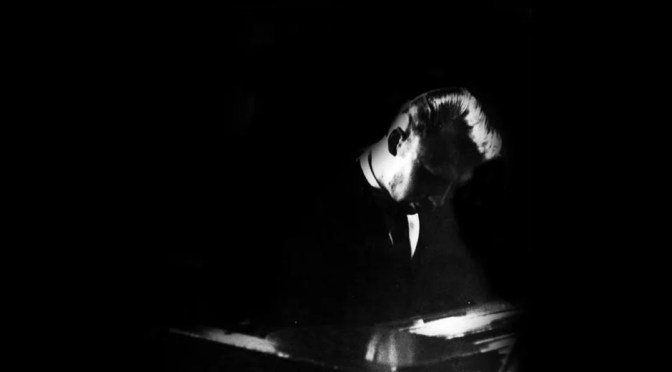
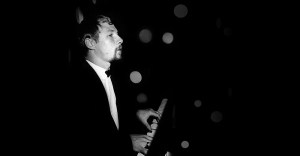
In this program, Serge played the piano and talked about his life, while his daughter, the artist Tatiana Pentes, provided candid commentary on a life spent following a madman around the country — from gig to gig, from all-day sessions in a Chinese restaurant to late nights in dim and dank clubs.
‘A Heart Ripped Open’ is a wild ride — the Free Kata gang still used to get together from time to time, Serge didn’t always turn up sober, if he turned up at all; he got into fights; there were tears and rages. Finally, the program ended at Serge’s 60th birthday party, and the gang partied on.
Presenter: Tatiana Pentes
Producers: Eurydice Aroney and Kirsty Lee
Sound Engineer: Steven Tilley
Broadcast on Radio Eye July 8, 2004, 2006, Into the Music 2011
by Gerry Carman and Damien Reilly
The Age, October 18, 2010
SERGE Ermoll, one of Australia’s greatest and most colourful jazz pianists who played with many of the best exponents of the jazz idiom, has died of a heart attack in his flat at Parramatta in Sydney, aged 67. Given to expressive outbursts not just on the keyboard, he had talents ranging beyond music to martial arts as well as the dark art of private detective. But it was music that elevated him far beyond the fifth-dan black belt that he held in karate. For nearly 40 years he pushed boundaries with his exceptional musical skills, refusing to conform. He featured on 29 internationally released albums and was nominated for an Aria award for his album, Jungle Juice.
Serge Ermoll Jr one of Australia’s greatest and most colourful jazz pianist was born in Shanghai, China.
His group, Free Kata, which he formed in the 1970s, ”ripped open the heart of music aesthetics in Australia”, John Shand wrote in The Sydney Morning Herald in August 2003. Earlier, in the late 1960s, while visiting Britain, he was invited to fill in with the Dudley Moore Trio when the musician-comedian went to Hollywood. In no time he was an integral member of the group, which included Chris Karen, the drummer from Melbourne, and bassist/vocalist Peter Morgan. He also either collaborated, recorded or performed live with a who’s who of jazz artists such as Richie Cole, Lester Bowie, Don Moyee, Phil Woods, Art Pepper, Joe Henderson, Eddie Moore, Herb Ellis, Ray Brown, Sonny Stitt, Ernestine Anderson, Odeon Pope, Banford Marsalis, John Lee and others. Ermoll, in fact, was destined to be a jazzman.
He was born in Shanghai to White Russian parents Xenia, a singer and dancer, and Sergei Ermolaeff, a Manchurian-born Russian jazz drummer and famous orchestra leader in Shanghai in the 1930s and ’40s.
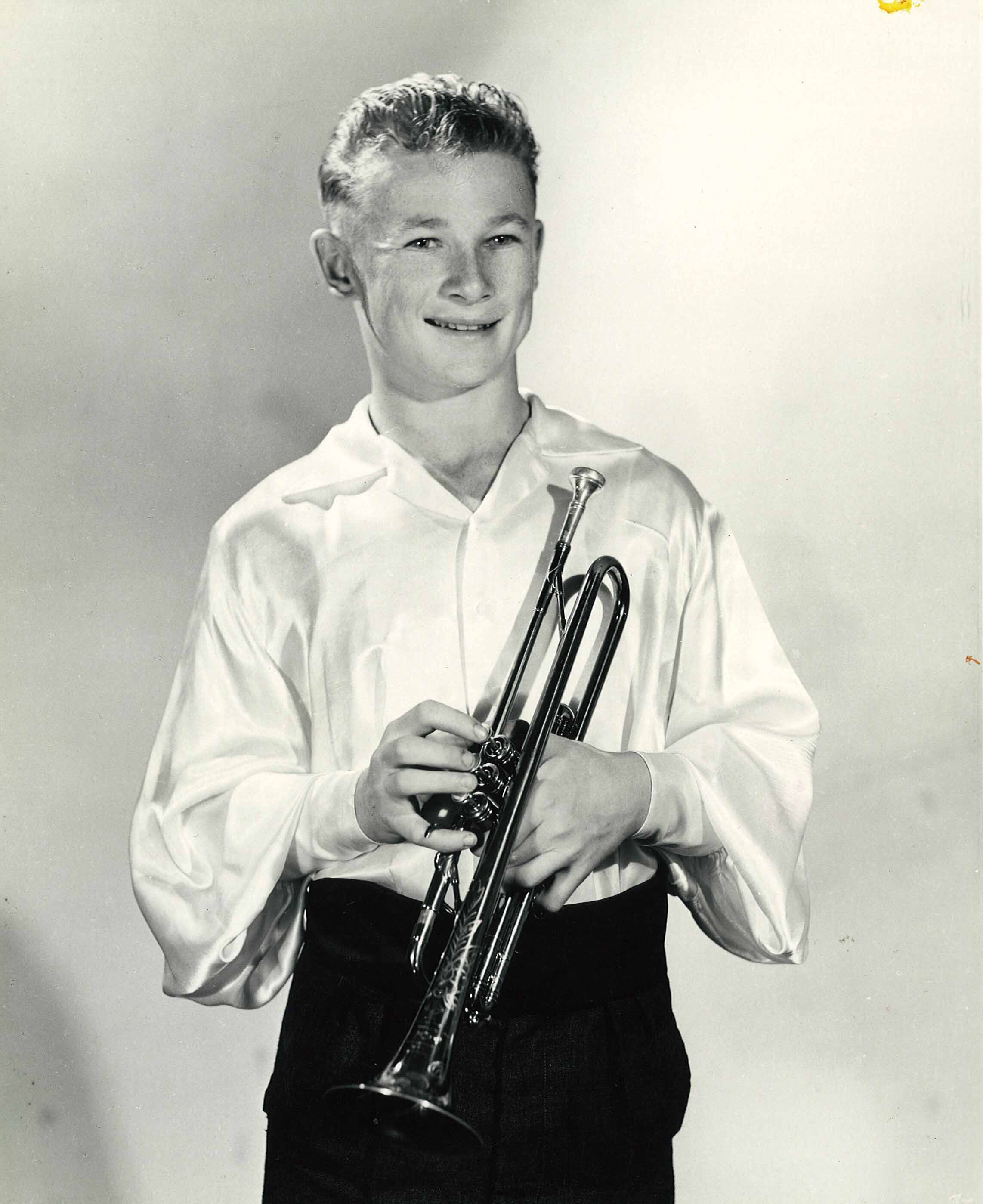
In 1951 the family fled China for Australia in the aftermath of the communist revolution and his demanding father made him practise the piano for hours a day from age five; he also learnt to play the trumpet.
Serge Ermoll Jr born Shanghai, La Concession Française de Changhaï 1943
In his late teenage years he heard Dizzy Gillespie for the first time and was hooked on jazz, to his father’s disgust. Years later he would lead the support band when Gillespie toured Australia. An incredibly complex man with a mercurial temperament, Ermoll, a recovering alcoholic, could be difficult, yet was also incredibly kind. Martin Jackson, who worked with and promoted Ermoll, recalled how he had a certain persuasiveness about him: on one occasion while he was working as a private detective – he was licensed to carry a gun – the wife of a Sydney musician paid him to find her bounder of a husband. Ermoll tracked him to Melbourne, grabbed him out of the clutches of his girlfriend, bundled him into his Monaro and drove him back to Sydney with firm advice not to stray from home again. He didn’t.
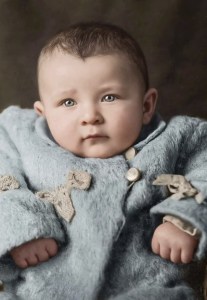
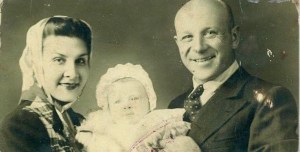
Xenia (mother), baby Serge Jr, Sergei Ermolaeff (father) stage name Serge Ermoll
And, on his last gig in Melbourne in Bennett’s Lane, Ermoll threatened to shoot the owner with the gun he carried – but apologised later. However, even Ermoll knew when to be prudent. His detective work so angered one of Sydney’s biggest gangsters that he was ”firmly advised” to leave town. Luckily for him, he took the trip to London – and found fame with the Dudley Moore Trio.
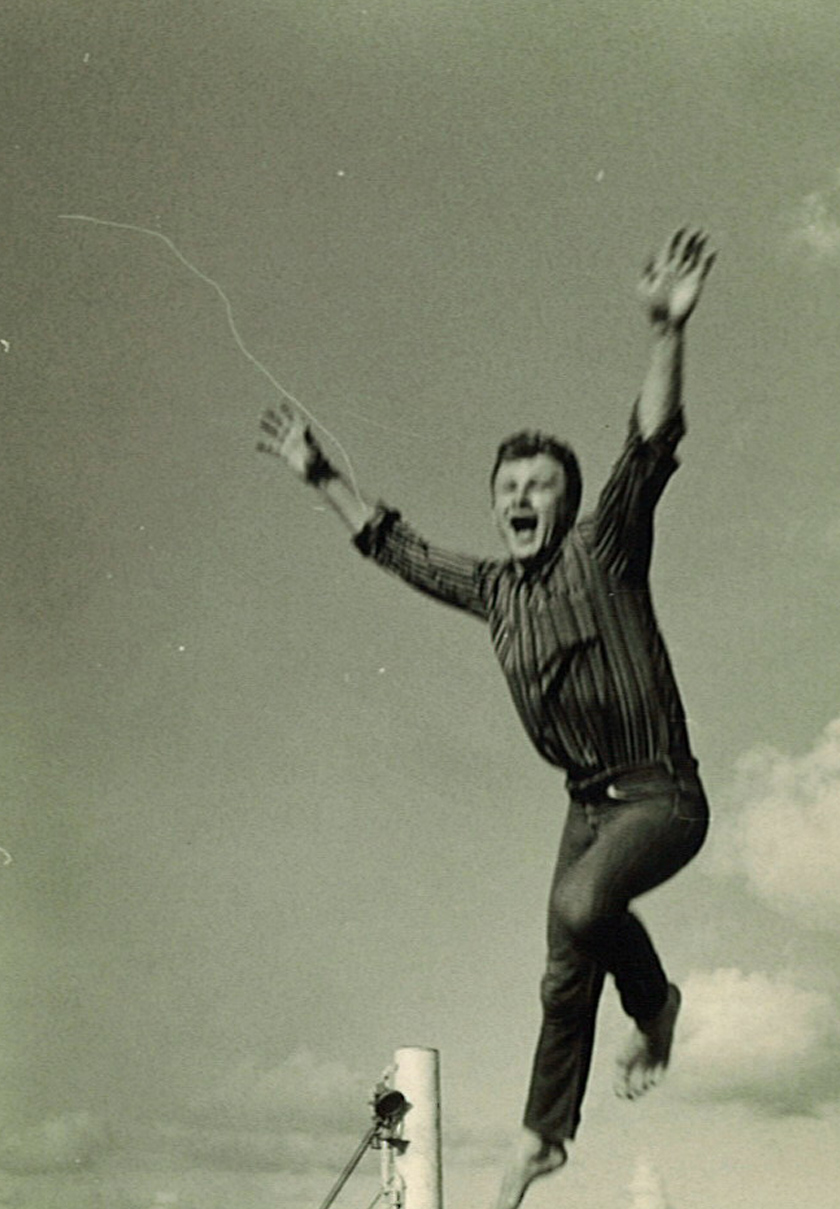
Serge Ermoll Jr: The Patris ship to UK 1964
Tribute to Serge Ermoll 1943-2010 by SIMA Spontaneous Improvisational Musicians Association
by John Clare
Wednesday 10 November 2010
The death of pianist/composer Serge Ermoll late last month came as no surprise to those who knew him. He was very overweight and had been warned by his doctor that one more drinking binge would most likely be his last. In fact it was a cancer which many of us were unaware of that killed him. While the end was no surprise, it came as a shock. Serge’s erratic energies, his rages, exuberance, friendships, vendettas, deep glooms and high elations were like the elements. Surely they would never go away.
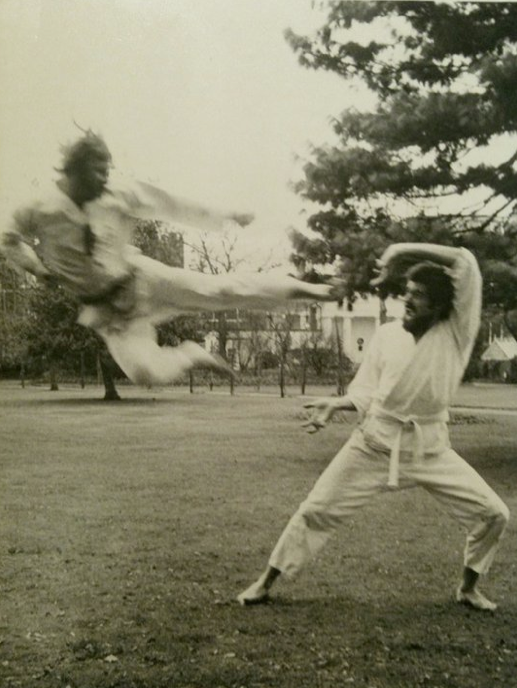
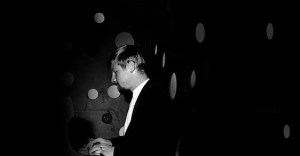
If it was hard to believe that Ermoll had gone, it was almost as hard to believe that the latter day Serge was the same fit, seemingly disciplined, trim and quite handsome, hip young bebop pianist and seventh dan black belt karate player who had appeared at the famous El Rocco, Kings Cross, in the late 1950s and again, after a sojourn in Britain, in the late 1960s, leading a trio that was to some extent modelled on the popular American piano trio The Three Sounds. Sometime back in those days, Ermoll, in his karate outfit and already sporting a Stalinesque moustache, was featured in a short interlude on ABC TV, working out on the grass in the Sydney University Quad. In black and white. Ermoll seemed to live several lives, sometimes simultaneously. He was also a private detective. This element would have made the ABC spot even more intriguing.
Ermoll was born in Shanghai of Russian parents. His father was a trumpet player and band leader. Serge studied the piano from five years of age, but when the family moved to Australia, they could not afford to buy one. Nine year old Serge was given a trumpet instead. Still very young, he played in a father/son duet with Ermoll senior. The two wore black trousers with cummerbunds and shirts ruffed at the cuffs. They played popular Spanish and Eastern European melodies.
After playing with British drummer Jackie Dougan (whom I had befriended when he was playing at Ronnie Scotts before he migrated to Australia) in its very last days, Serge returned to London and played with several notable British musicians. Back in Australia in the 1970s, he embraced the Free Jazz movement, drawing from its American and European aspects to create a highly distinctive piano approach – explosive, fiercely fragmented and turbulent, but also encompassing a singular lyricism and a sustained rolling power. In 1974 Ermoll teamed up with expatriate Russian tenor saxophonist Eddie Bronson, bassist Graham Ruckley and drummer Ross Rignold to form the first edition of the band Free Kata. They made an album of that name for Phillips. At this point they were playing themes by Ermoll and Ruckley but improvising on them very freely. Soon the themes disappeared and everything was freely improvised. And the level of energy and seeming abandon rose dramatically.
After one or two personnel changes (bassist Richard Ochalski figures somehwere along the way) the most successful edition of Free Kata coalesced: Ermoll, Bronson, and very young drummer Louis Burdett. Successful is the operative word. Arguably the most successful musically, it was also surprisingly popular for such free and sometimes violent music. The power and fierce intensity – and the complete absence of any concessions or compromises – drew some quite large audiences, including full houses at The Basement (in its earlier location further along Rieby Place). At this point I joined the band, intending to read some poetry with them. Ermoll insisted that I improvise, as they did. Improvise words, sounds and shapes that is. I pulled back at first from this, having no confidence in my ability to do it. Following threats and urgings from Serge I took the stage at The Basement and discovered an unsuspected facility to invent at high speed – a facility I also used in collabrations with Roger Frampton, Bernie McGann, Jon Rose and others. Even the major free jazz artists, when they used words, read poems with minimal improvisation. Our verbal/instrumental interaction was completely improvised and may well have been unique. It was Serge’s idea, not mine!
In that period, Serge, Eddie and Louis were among the very few in this country who had a real grasp of free, non-metric time. It was conducive to improvising with words as well as notes. The American saxophonist Howie Smith (then head of jazz studies at the Conservatorium) asked if he could appear with the band and, after an extraordinary “reharsal” at the Con (someone left an abusive note on the door of our rehearsal room) we all appeared at The Basement, where we had drawn a full house. The place was packed with fans as well as those who had come to jeer. The pro faction steadily drowned the anti claque and we finished to a standing ovation. On one occasion we actually played at a poetry reading and were enthusiastically recived. A very successful tour of melbourne followed, with the band playing at universities and at Brian Brown’s club. That is Brian brown the musician.
Free Kata made two more albums (on the Kata label) featuring Ermoll, Bronson and Burdett on the first and adding myself on the third. Both were recorded without re-takes or rests on the same day. At the height of Free Kata’s popularity, the erratic Serge temporarily abanded the concept and formed a series of largely indifferent fusion and bebop bands. Later he reformed Free Kata with Burdett, bassists dave Ellis and Steve Elphick alternating, plus my son Mathew on alto saxophone. He also performed some solo improvisations. Some of these were powerful. During others he spoke in a maudlin and/or abusive fashion to the audience. Ermoll’s prodigious drinking was having an obvious effect.
That some of Ermoll’s problems seemed to be self-inflected makes them no less tragic to the onlooker.
It is tempting to shrug Serge Ermoll off by saying “he had something.”
In fact he had a considerable talent and, at the time, a definite influence. An influence I can still hear in some of the free improvisers today. A further account of my involvement can be found the 2nd edition of Extempore magazine.